Zelensky Urged to Scale Back Attacks on Russian Oil Facilities
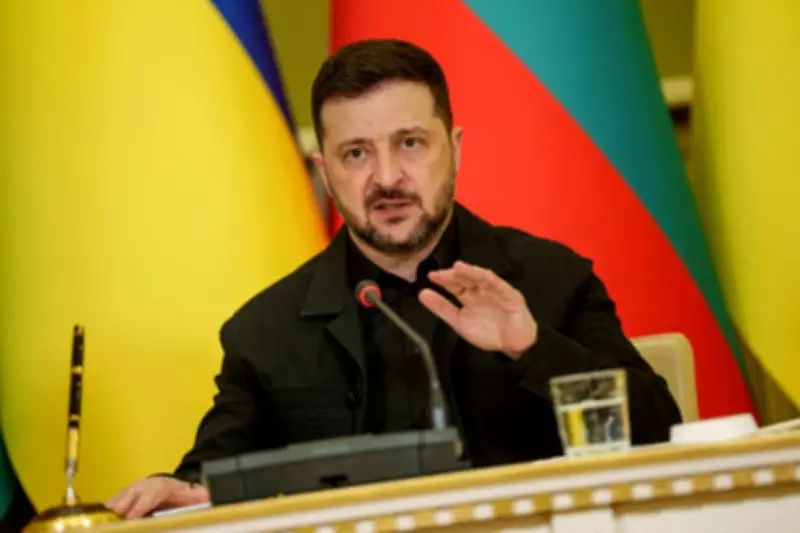
Ukraine's international partners have formally requested that Kyiv reduce its long-range strikes on Russia's oil and gas sector, as global energy prices continue to escalate amid the ongoing US-Israeli conflict with Iran. President Volodymyr Zelensky confirmed these diplomatic signals during a WhatsApp briefing with journalists, stating that Ukraine is prepared to reciprocate if Moscow ceases its assaults on Ukrainian energy infrastructure.
Ceasefire Proposal and Energy Diplomacy
Zelensky revealed that Ukraine is open to negotiating an Easter ceasefire, provided Russia halts its attacks on the nation's energy system. "Recently, following such a severe global energy crisis, we have indeed received signals from some of our partners about how to reduce our responses in the oil sector and the energy sector of the Russian Federation," the president explained. Sources indicate that the United States relayed this message to Kyiv after initial overtures originated from Moscow, which is seeking to protect its critical oil and gas facilities while Middle Eastern tensions drive up energy costs worldwide.
In a significant diplomatic move, Zelensky also offered strategic advice to help resolve the blockade of the Strait of Hormuz, drawing directly from Ukraine's experience in countering Russian naval offensives in the Black Sea. During his recent four-day visit to the Middle East, Zelensky stated that he "shared our experience with the Black Sea corridor and how it operates" with regional officials, positioning Ukraine as a valuable partner in global security matters.

Middle East Agreements and Defence Concerns
Fresh from his Middle Eastern tour, Zelensky announced that he had secured agreements with several countries in the region to provide crucial energy support to Ukraine. The president confirmed a deal for year-long diesel deliveries, though he withheld specific details. Diesel fuel remains vital for both the Ukrainian armed forces and the country's agricultural sector, which forms the bedrock of the national economy.
During the visit, Ukraine signed framework cooperation agreements with Saudi Arabia and Qatar, with another potential deal in development with the United Arab Emirates. Zelensky also raised the critical issue of air-defence missile supplies in discussions with Middle Eastern leaders, though he did not confirm whether any concrete agreements were reached. The president expressed concern that Ukraine is being "forgotten" by international partners who are currently prioritising the dispatch of anti-ballistic missile systems to the Middle East due to the Iran conflict.
Bulgarian Gas Corridor and Russian Attacks
In parallel energy developments, Zelensky announced that Ukraine and Bulgaria are collaborating on a new gas corridor capable of handling up to 10 billion cubic meters annually. This infrastructure project, expected to be operational by the end of the year, forms part of Kyiv's strategy to secure energy supplies for the coming winter amid potential Russian strikes on Ukrainian energy systems.
Meanwhile, Russian attacks on central and northern Ukrainian regions have resulted in significant casualties. Regional officials reported that yesterday's assaults killed two people and injured more than twenty. Near Poltava, falling drone debris killed one person and damaged a high-rise apartment building, while drone attacks and artillery strikes claimed another life in the Dnipropetrovsk region. In the Sumy region near the Russian border, glide bomb strikes injured thirteen people, including a six-year-old child, and damaged fifteen homes. Senior Russian military officials have stated their commitment to establishing buffer zones in both Sumy and the neighbouring Kharkiv region.
Domestic Russian Criticism and International Commentary
The Ukrainian offensive against Russian oil and export facilities appears to be generating domestic pressure within Russia. Prominent television personalities who have consistently supported Moscow's war effort have begun criticising the toll these attacks are taking on Russian soldiers. State TV anchor Aleksandr Sladkov lamented the situation, while Russia's largest pro-war blogger, Yuriy Podolyaka, accused the Russian military of ineptitude and praised Ukrainian capabilities.

In related international commentary, Robert F. Kennedy Jr. claimed that former President Donald Trump's willingness to acknowledge casualties on both sides of the conflict demonstrates that he is an "empath." Kennedy praised Trump for highlighting the human cost of the war during a Conservative Political Action Summit interview, contrasting this approach with what he characterised as Democratic reluctance to discuss Russian casualties.