Scottish Political Leaders Engage in First Televised Election Debate
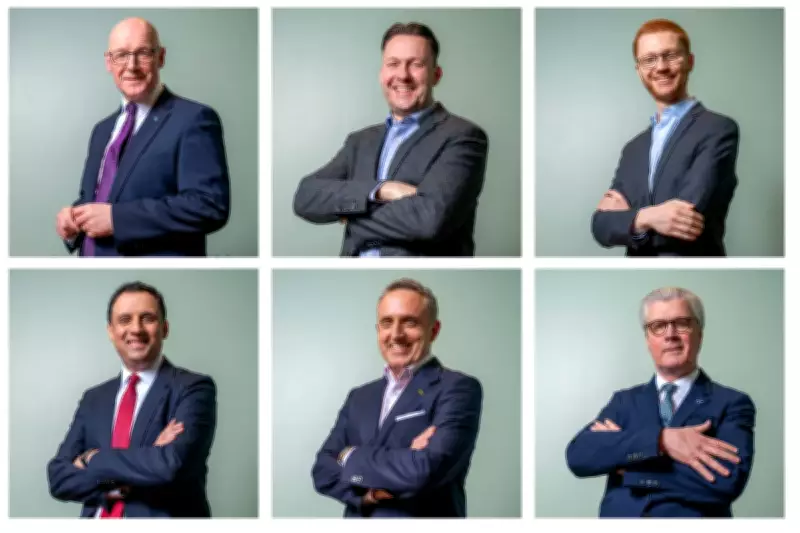
The leaders of Scotland's six principal political parties participated in the inaugural televised election debate of the 2026 campaign on Sunday evening. The event, broadcast on BBC's Debate Night, featured First Minister and SNP leader John Swinney, Scottish Conservative leader Russell Findlay, Scottish Green Party co-leader Ross Greer, Scottish Labour leader Anas Sarwar, Scottish Liberal Democrat leader Alex Cole-Hamilton, and Reform UK Scotland leader Malcolm Offord.
Live Audience Questions Focus on Key Issues
The political leaders fielded questions from a live studio audience in Edinburgh, with pressing concerns including the ongoing cost-of-living crisis, energy security challenges, and the performance of the National Health Service expected to dominate the discussion. The format allowed for direct engagement between party representatives and Scottish voters during this critical election period.
Sarwar Demands NHS Apology from Swinney
Scottish Labour leader Anas Sarwar launched a pre-debate offensive, calling for SNP leader John Swinney to issue an immediate apology for what he termed the Scottish Government's mishandling of the NHS. Sarwar presented stark statistics, claiming the SNP administration had violated Scotland's NHS treatment law 918,594 times, resulting in prolonged patient suffering due to systemic failures.

"Our NHS is not safe with John Swinney and the SNP," declared Sarwar. "Tonight on television, right at the start of the debate, John Swinney should apologise to every single patient who has suffered because the SNP could not get the basics right."
Sarwar outlined his alternative vision, promising that his first priority as First Minister would be reducing waiting lists through utilizing all available medical capacity, breaking down barriers between health boards, and implementing patient-focused funding models. He concluded with a direct electoral appeal: "After two decades of broken promises, our NHS cannot survive another SNP government. On May 7, vote Scottish Labour on both votes for the change Scotland needs."
Polling Suggests SNP Advantage Despite Criticism
Recent polling data presents a contrasting picture to Labour's criticisms. The first YouGov MRP survey of the election season indicates the SNP remains positioned to maintain governmental control, projecting 67 parliamentary seats. The poll suggests Reform UK could secure approximately 20 MSPs, while Labour might fail to win any constituency seats, gaining only 15 positions through regional lists.
Additional projections show the Greens potentially winning 11 seats and the Liberal Democrats nine, representing gains for both parties. The Conservatives face a challenging outlook, projected to finish sixth with just seven seats according to the survey.
SNP Defends NHS Record and Leadership
SNP candidate Clare Haughey responded vigorously to Sarwar's criticisms, defending the government's healthcare record. "Of course there are challenges, just as there are across these islands, but the fact is John Swinney has a plan for our NHS and it's working," she asserted.
Haughey highlighted operational improvements under SNP governance, including increased surgical procedures, declining waiting lists, superior GP-to-patient ratios compared to England, and expanding GP walk-in services across Scotland. She contrasted this with Labour-administered England, noting £20-per-person payments to divert patients from NHS services and ongoing strike actions absent in Scotland.
"Only the SNP can be trusted with Scotland's NHS," Haughey concluded. "That's exactly what you get from John Swinney's strong leadership and that's what's on the ballot on 7th May."
Social Media's Influence on Debate Dynamics
Moderator Stephen Jardine, writing in The Scotsman prior to the debate, observed that contemporary political debates are increasingly shaped by their potential for social media dissemination. "Often they have spent days preparing, trying out attack lines, testing defensive positions and thinking about how they can cut through and make an impression," he noted.

Jardine highlighted the evolving nature of political communication: "Nowadays another factor is also in play. Increasingly, political debates are less about the whole show and more about what ends up being a short clip on social media." This reality likely influenced the leaders' preparations and rhetorical strategies throughout the evening's exchanges.