Avá-Guarani Fight for Justice 50 Years After Itaipu Dam Displacement
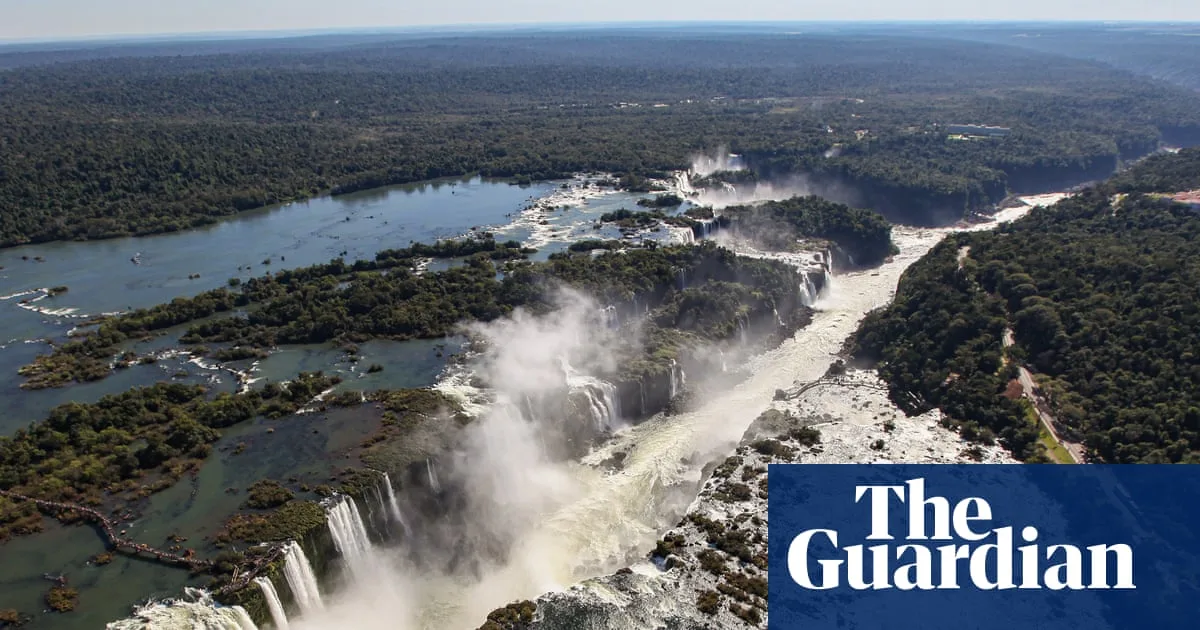
The Iguaçu River, which feeds the spectacular Iguaçu Falls on the border between Brazil and Argentina, represents just one part of a complex river system that has shaped Indigenous life for millennia. For the Avá-Guarani people, the Paraná River once structured their entire existence along its banks, until the 1970s construction of the Itaipu hydroelectric dam submerged their lands and displaced hundreds of families.
The River That Died
Indigenous leader Teodoro Alves remembers the Paraná River before the Itaipu dam transformed the landscape forever. "I saw the Paraná River before the Itaipu dam was closed. Now I see an immense lake. The river died completely. It died with the Avá-Guarani people," Alves says with profound sadness. The concrete wall, standing 196 metres high and stretching almost 8 kilometres across the Brazil-Paraguay border, created one of the world's largest hydroelectric plants while destroying the continuity of Indigenous life along the riverbanks.
When the dam construction began under both countries' military governments, approximately 380 Avá-Guarani families lived in the Ocoy-Jacutinga community along the Paraná. The project marked what Indigenous communities describe as a deep rupture with their territory, their tekoha - territories of life encompassing housing, farming, spirituality and collective practices in the Guarani language.
Five Decades of Struggle
Fifty years later, the Avá-Guarani - part of the broader Guarani people living across Paraguay, Brazil, Bolivia and Argentina - continue fighting for justice. In 2025, a Brazilian court agreement secured partial reparations including 3,000 hectares of land and a public apology from Itaipu Binacional, the dam operator. However, Indigenous leaders insist these measures fall far short of true territorial recognition.
Pedro Alves, Teodoro's older brother now aged 66, recalls the forced displacement: "When the land measurements began, and the project moved forward, many families had to leave. Most fled. Only four or five stayed. That's why Itaipu says it found few families there." The construction dried out part of the river's original course and submerged the sacred Sete Quedas waterfalls, also known as Guaíra Falls, under vast flooded areas.
Borderless People, Bordered Injustice
"For us, Guarani, there is no Brazilian, Paraguayan or Argentine Guarani. We are one people," Teodoro Alves emphasizes, highlighting how state borders fragmented their continuous territory across the Paraná, Iguaçu, and Paranapanema river basins. This unity contrasts sharply with the divergent treatment they've received from different governments.
While Brazil has made some reparatory gestures, affected communities in Paraguay have received little or no compensation, as authorities deny their ancestral claims. According to Amnesty International, any compensation awarded in the 1980s based on crop and house values proved insufficient to purchase new land, with many people receiving nothing at all.

Systematic Denial and Documentation
Geographer Osmarina de Oliveira explains how Brazilian state agencies sent officials to determine who qualified as Indigenous in dam-affected areas, applying exclusionary criteria that denied many Avá-Guarani recognition. "This was used to deny rights and responsibilities of both the state and Itaipu," she states. The Brazilian Anthropological Association later challenged this approach with independent reports recognizing these families as Guarani.
The quest for justice gained momentum in 2015 with the creation of a Guarani Truth Commission led by the Guarani people themselves. "We worked together with researchers to document violations of Avá-Guarani rights. This work continues," says Teodoro Alves. Their efforts culminated in Indigenous agencies taking the Brazilian state and Itaipu Binacional to court seeking comprehensive reparations.
Partial Justice, Continuing Struggle
In March 2025, Brazil's supreme court ordered Itaipu to purchase 3,000 hectares for Guarani communities and issue a formal public apology. The operator acknowledged displacing Avá-Guarani communities, losing traditional lands and sacred sites, and admitted decisions were based on the mistaken assumption the region was uninhabited. Itaipu reports acquiring 447 hectares so far with an investment of 240 million reals (approximately £34 million).
Deputy prosecutor-general Eliana Torelly cautions: "The agreement approved by the court is only partial; the merits of the case have not yet been fully resolved." Communities echo this concern, with Teodoro Alves noting: "The 3,000 hectares amount to an emergency land purchase. That is not enough to recognise the flooded territory. Recognition has to become real living conditions."
The Paraguayan Silence
Despite developments in Brazil, Avá-Guarani communities in Paraguay still lack reparations. Hugo Valiente of Amnesty International Paraguay explains: "Forced displacement carried out under a military regime and in the context of crimes against humanity is a continuing violation, which persists until territorial restitution or an equivalent alternative is provided."
Paraguayan authorities and Itaipu Binacional's Paraguayan office do not formally recognize affected Indigenous peoples or their right to ancestral territory. Valiente adds: "There have been formal requests and no response. We are very far from any restitution. The territory is still waiting."
Sarambi: The Forced Dispersal
This waiting has a name in Guarani: sarambi, the forced dispersal caused by damming the Paraná River for Itaipu's construction. Pedro and Teodoro Alves experienced sarambi as children when they crossed into Paraguay by canoe with their siblings. "We took only clothes, a blanket and a dog. Everything else was left behind," Teodoro recalls.
The displacement scattered relatives across Brazil, Paraguay and Argentina, fragmenting a community once united by river, language and ritual life. Decades later, sarambi remains a daily reality for more than 30 Avá-Guarani communities living in precarious encampments without regularised land or adequate living conditions.
Teodoro Alves articulates their fundamental request: "We ask for funding for the communities themselves to build houses, plant crops, buy machinery or support handicrafts. So that we can decide for ourselves what we need to live." Their struggle continues, a testament to resilience five decades after the waters rose over their ancestral lands.