

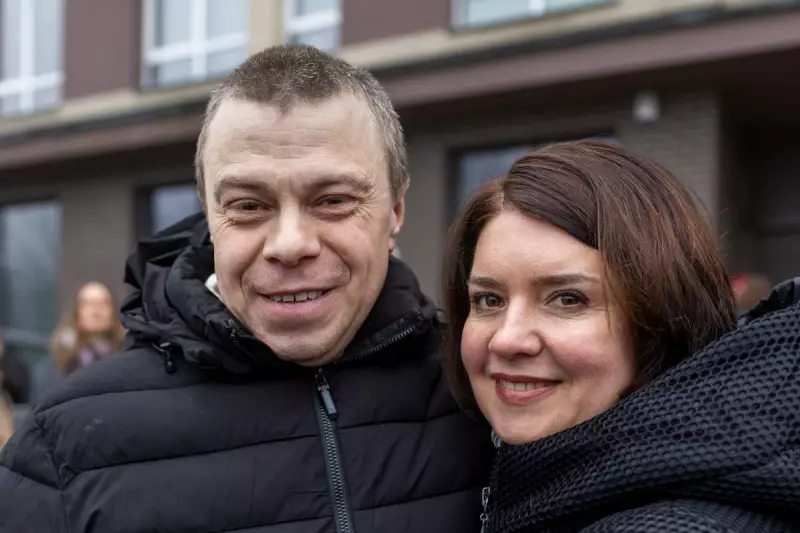
Dozens of prisoners recently released by Belarus's authoritarian government have reported a final, punitive act from officials: the confiscation of their passports before being forcibly deported. This move, described by one freed human rights advocate as a "dirty trick," leaves individuals stateless and facing immense bureaucratic hurdles as they attempt to rebuild their lives abroad.
A Cruel Finale to Imprisonment
Uladzimir Labkovich, a 47-year-old human rights advocate, was among 123 prisoners released by Belarus on 13 December 2025 in a swap for the easing of some US trade sanctions. His only document upon release was a piece of paper bearing his name and mugshot. "After four and half years of abuse in prison, I was thrown out of my own country without a passport or valid documents," Labkovich told The Associated Press from Ukraine.
The release, part of President Alexander Lukashenko's recent efforts to mend relations with the West, saw most prisoners taken to Ukraine, with nine, including Nobel Peace Prize laureate Ales Bialiatski, driven to Lithuania. However, the moment of freedom was marred by what opposition leader Sviatlana Tsikhanouskaya called a "forced deportation in violation of all international norms."

Systematic Humiliation and Bureaucratic Obstacles
This pattern of confiscating identity papers appears systematic. In September 2025, over 50 pardoned political prisoners were taken to the Lithuanian border, with at least fourteen arriving without passports. Activist Mikalai Dziadok stated Belarusian security operatives tore up his passport in front of him, while journalist Ihar Losik said all his papers were confiscated. "My passport was simply stolen," Losik said.
Nils Muižnieks, the UN special rapporteur on human rights in Belarus, described the process as "not pardons, but forced exile." The individuals, he noted, were "expelled from the country, left without means of subsistence and, in some cases, stripped of identity documents," forcing them into complex legalisation processes abroad.
Ongoing Repression at Home and Abroad
Despite the recent releases, the crackdown in Belarus continues unabated. The human rights group Viasna, for which Labkovich and Bialiatski worked, declared 176 new political prisoners since September 2025 alone. More than 1,100 political prisoners are believed to remain behind bars.
Conditions for those imprisoned are harsh. Labkovich reported spending over 200 days in solitary confinement, while former presidential candidate Vitkar Babaryka recounted waking from a fainting episode in 2023 with a broken rib, torn lung, and 23 scalp cuts. The regime also extends its reach beyond its borders, with Belarusians abroad unable to renew passports at embassies, and activists in exile facing criminal trials in absentia and property seizures.
As Tsikhanouskaya and activist groups work to raise funds and secure Western support for the newly exiled, the international community is urged to see the prisoner releases for what they are. Marie Struthers of Amnesty International warned that if this is a political bargain, it "only underscores the Belarusian authorities’ cynical treatment of people as pawns." For those released without the key to their identity, the struggle for freedom is far from over.






