César Chavez Legacy Faces National Reckoning Over Abuse Allegations
For supporters of the iconic labor leader César Chavez, a profoundly painful question has emerged: how to reconcile his celebrated legacy with shocking allegations of sexual abuse. The revered figure who fought tirelessly for farmworkers' rights now stands accused of grooming and sexually abusing women and young girls, sending shockwaves through communities nationwide.
Personal Anguish and Public Fallout
Antonio Bustamante, a former Chavez security team member who has displayed a watercolor portrait of the leader in his Yuma, Arizona law office for over thirty-five years, embodies this painful conflict. "I'm trying to figure out how emotionally and intellectually I'll be able to understand my perception of him as an extremely good man," Bustamante confessed, his voice heavy with emotion, "compared to these things that are said he did."
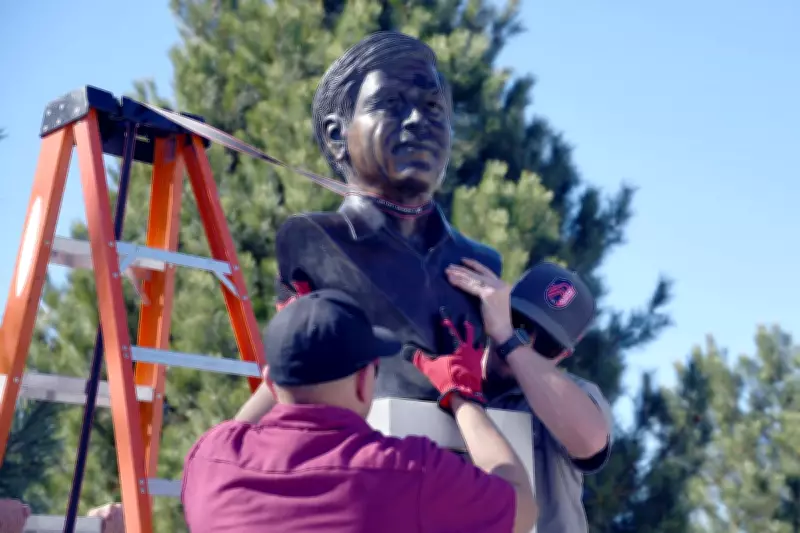
The allegations, detailed in a recent New York Times report, have triggered swift public consequences. Across the United States, Chavez's name and image have been erased from monuments, streets, and murals. Celebrations tied to the federal César Chavez Day on March 31 have been cancelled or renamed, while political leaders from both major parties have condemned the alleged abuse.

Historical Achievements Versus Personal Failings
Chavez built a formidable national reputation through his organizing work in agricultural fields. Alongside co-founder Dolores Huerta—who has also been identified as one of his victims—he established the United Farm Workers union. Their strategic campaigns included a historic hunger strike, a groundbreaking grape boycott organized with Filipino farmworkers, and successful pressure on growers to negotiate improved wages and working conditions for Mexican American laborers.
Teresa Romero, current president of United Farm Workers, articulated the unavoidable contradiction now facing the movement. "We have in one hand César Chavez, the man who committed horrible acts that we're not going to justify," Romero stated. "On the other hand, we have César Chavez, the organizer who brought thousands and thousands of people together to improve farmworkers' lives and working conditions."
Movement Versus Individual Leadership
For many activists and historians, this crisis highlights why social movements should never become overly dependent on single individuals. Sehila Mota Casper, executive director of Latinos in Heritage Conservation, emphasized that the farmworker movement was fundamentally driven by collective effort. "The rights and protections that came from it belong to the people that built it," she asserted. "It wasn't just one individual."
This perspective offers a potential path forward: acknowledging Chavez's organizational role while ensuring it doesn't overshadow the contributions of countless others, including Huerta and the many women who sustained the movement. Advocacy organizations like Voto Latino have adopted similar positions, noting that "the women who organized, marched, and sacrificed alongside farmworkers carried this movement on their backs."
Political Reactions and Historical Preservation
The allegations have generated varied political responses. Some Republican figures, including Texas Governor Greg Abbott, have cited the accusations as part of broader criticism of Chavez's progressive legacy. Abbott announced that Texas—a state maintaining dozens of Confederate monuments—would no longer celebrate César Chavez Day, claiming the allegations "undermine the narrative that elevated Chavez as a figure worthy of official state celebration."
Meanwhile, organizations like the nonpartisan Latino Victory Project stress that this moment should not distract from ongoing civil rights battles. Paul Ortiz, a labor history professor at Cornell University and director of graduate studies for Latino Studies, maintains that the movement's fundamental achievements remain unchanged. "Those legacies are all about people power," Ortiz emphasized.

An Inevitable Asterisk
For longtime supporters like Bustamante, what seems certain is that an asterisk will forever accompany Chavez's name in historical memory. "Does that take away the greatness of what his accomplishments were, the meaning of them? No, it doesn't," he reflected. "But can we look past that to honor him? That's the tough part."
As communities nationwide continue grappling with these revelations, the fundamental question persists: how to preserve the historical significance of the farmworker movement while honestly confronting the deeply troubling allegations against one of its most iconic leaders.