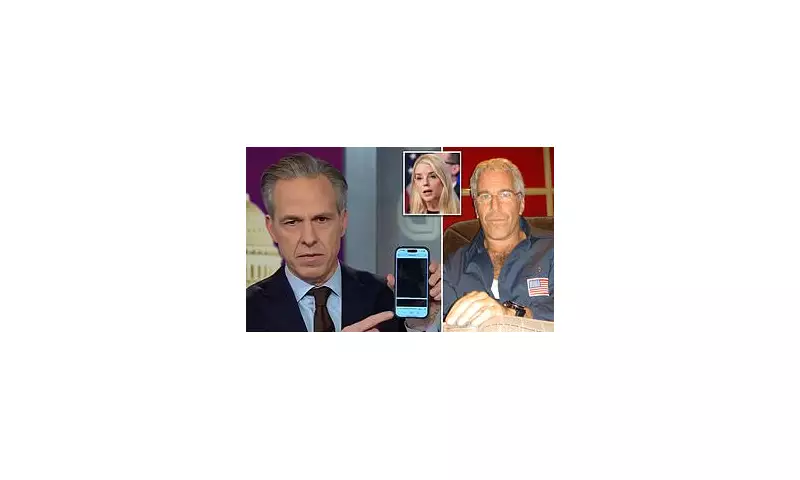
The long-awaited release of documents related to the Jeffrey Epstein case by the US Department of Justice has ignited a fierce political row, with prominent figures accusing authorities of excessive secrecy and failing to meet legal transparency requirements.
On-Air Frustration: A 100-Page Blackout
CNN anchor Jake Tapper gave a visceral demonstration of the issue during his Friday night broadcast. In clear exasperation, he scrolled through his phone, showing viewers hundreds of pages of newly released material that were almost entirely obscured by black redaction boxes. Holding his device up to the camera, Tapper highlighted one particular document spanning 100 pages, noting it was 'all black' and criticising the level of transparency on offer.
This visual protest aligned with complaints from Democratic lawmakers. Representative Ro Khanna, a co-sponsor of the bill that compelled the release, has gone so far as to call for impeachment proceedings against Attorney General Pam Bondi. The core allegation is that the Justice Department did not disclose the legally mandated amount of information concerning the convicted billionaire paedophile's crimes.

A Trove of Details and High-Profile Names
The documents, posted on the DOJ website in four datasets, offer new glimpses into Epstein's world. They include photographs from his properties, showing rooms decorated with nude pictures and distinctive bright blue carpeting. The files also detail Epstein's associations with a slew of famous individuals, including Michael Jackson, Sir Mick Jagger, Kevin Spacey, and Richard Branson.
Former President Bill Clinton appears prominently in the records, pictured smiling at parties and swimming with women. Clinton has since issued a strong denial, stating he had no knowledge of Epstein's criminal activities. The release also contained a novelty check for $22,500 from Donald Trump, bearing a signature reading 'D. Trump'—the only new piece of information directly linking Trump to Epstein in this batch, though the former president was already known to be in Epstein's contact book.
The White House Pushback and Ongoing Fallout
The White House has sharply criticised the media's focus on the documents. Spokesperson Abigail Jackson took to social media to defend the redactions, stating they were made to protect victims and questioning why the 'liberal media' would want a document labelled 'masseuse list' to be public.
An initial review suggests the released papers stem from three separate investigations: a 2005 Palm Beach police probe, the subsequent federal investigation that led to Epstein's controversial 2008 plea deal, and a later case launched by Manhattan prosecutors in 2019, which ended when Epstein died in jail while awaiting trial. The Trump administration has described itself as the 'most transparent in history' following the disclosure of over 600,000 pages related to Epstein this year.
It is crucial to note that being named or pictured in these files is not in itself an indication of wrongdoing related to Epstein's crimes. The debate, however, continues to rage over how much of the truth behind one of the most notorious sex abuse cases in modern history remains hidden from public view.