The Independent's journalism remains supported by our readers. When you purchase through links on our site, we may earn commission.
Britain's Epstein Scandal: A Political Earthquake Beyond Profumo
In contemporary Britain, the Jeffrey Epstein scandal is rapidly evolving into what historians may ultimately judge as an even more significant political earthquake than the legendary Profumo affair of 1963. The disturbing parallels between these two epoch-defining crises involving powerful men, vulnerable young women, and high-society facilitators should send genuine shivers through the current Labour administration, according to political observers.
A Reputation in Ruins
Presently, Peter Mandelson finds himself isolated within a Wiltshire estate cottage on the property of a wealthy acquaintance, his once-formidable political, diplomatic, and business careers lying in complete tatters. Formerly courted for his sharp wit and tactical Labour insights, he now faces widespread shunning. This dramatic fall followed Prime Minister Keir Starmer's solemn declaration to the House of Commons that one of his most trusted allies had fundamentally "betrayed our country."

The initial destruction of Mandelson's reputation stemmed from his ill-advised and complex entanglement with the prolific financier, convicted child sex abuser, and trafficker Jeffrey Epstein. However, the scandal has since broadened considerably to encompass serious allegations of unseemly financial relationships. At the very heart of this damaging nexus within the United Kingdom stood two figures central to British politics and royalty: Mandelson and the then Prince Andrew. Both have been brought devastatingly low by their documented closeness to, and apparent reliance upon, Epstein, though both continue to deny any personal wrongdoing.
Political and Royal Fallout
We remain in the mere foothills of comprehending the full implications of this crisis. For the government, which ignored multiple warnings before appointing Mandelson to the prestigious role of US Ambassador, the repercussions are only beginning. Simultaneously, the royal family must contend with an apostate brother who has inflicted enormous damage upon the institution into which he was born a prince, now existing in the uneasy limbo as Andrew Mountbatten-Windsor.
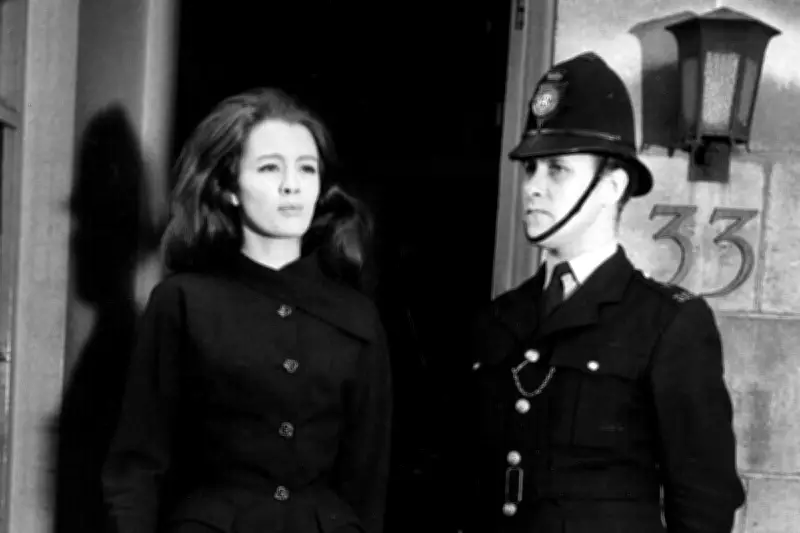
The profound political fallout—shaping public perception of elites and fueling both justified and conspiratorial theories about the roots of misconduct—draws direct comparison to that other defining scandal: the 1963 Profumo affair. That crisis unveiled a shadowy world of seedy glamour through the relationships of Christine Keeler and Mandy Rice-Davies with men at the absolute core of the British establishment, including War Secretary John Profumo and aristocrat Lord Astor.
Echoes of a Bygone Era
While the Profumo affair echoes today in another scandal intertwining money, sex, and privilege, the more significant similarity is that both events represent defining moments in Britain's social and political history. The merry-go-round of affairs among interconnected society figures essentially marked the end of a post-war culture where privacy could be guaranteed and private sins remained secret. The public became a captivated audience to the Profumo-Keeler spectacle, just as we are today to the Maxwell-Epstein drama.
An intriguing, almost random link between these stories emerges through osteopathy. Stephen Ward, who in 1961 introduced the teenage Keeler to Profumo, was a society osteopath. Decades later, Reinaldo da Silva, Mandelson's husband, had his osteopathy training funded by Jeffrey Epstein. It must be clearly noted that there are no allegations of wrongdoing whatsoever against da Silva.
Patterns of Exploitation
Mandelson maintains he was never sexually entangled with Epstein's network and, despite appearing in the released files in a photograph in his underwear within Epstein's Paris flat alongside a woman in a white dressing gown, insists he was wholly unaware of the oversexualised nature of Epstein and Ghislaine Maxwell's circuit. This miasma of dubious characters mirrors the "Cliveden Set," where a bohemian atmosphere thinly veiled sexual licentiousness and exploitation.

The testimony of Christine Keeler in 1963 feels hauntingly relevant today, revealing the ghastly underside of the so-called swinging sixties and her own tragic delusion. "I never considered myself a prostitute or a call-girl," she stated. "Stephen said that you have to have the mentality of a prostitute, which I didn't have..."
Like many recruited within the Epstein-Maxwell operation, Keeler also introduced other girls she met to Ward, acting under his direction. This pattern of the vulnerable being used and then compelled to recruit others is starkly evident in the memoirs of Virginia Giuffre, the Epstein victim who accused Prince Andrew of sexual abuse when she was seventeen—allegations he continues to deny, along with ever having met her.
Technological Trails and Political Lies
When the Keeler-Profumo affair ultimately unraveled, it was a traditional paper trail—handwritten letters—that triggered the larger revelations. Today, information emerges in digital glugs: released files and BlackBerry messages, the technology itself a signifier of a different era. A common factor remains a toxic mix of brazen entitlement and haughty naivety among those who believe they have slipped the bonds of normal social behavior.
Profumo infamously lied to the Commons about his affair. Once again, the Epstein story turns on numerous lies and half-truths told by those who consorted with him. Prime Minister Starmer told Parliament that Mandelson "lied repeatedly" during the ambassadorial appointment process. Politically, the Epstein scandal now feels as treacherous for the incumbent government, and for wider public trust in political and financial elites, as the Profumo affair did. Then-Prime Minister Harold Macmillan was so badly damaged by the scandal—compounded by economic troubles, another parallel—that he departed Downing Street before the year's end.
A Different Kind of Aftermath
"Jack" Profumo, as known to his inner circle, maintained a lifelong silence about the case but sought a form of absolution through decades of devoted charity work in East London. It would constitute a monumental surprise if the central figures currently in the eye of today's storm were to vindicate themselves through similarly selfless, quiet dedication. In this crucial regard, the times—and perhaps the characters involved—are profoundly different indeed.
Anne McElvoy serves as executive editor at 'Politico' and co-hosts the 'Politics at Sam and Anne's' podcast.