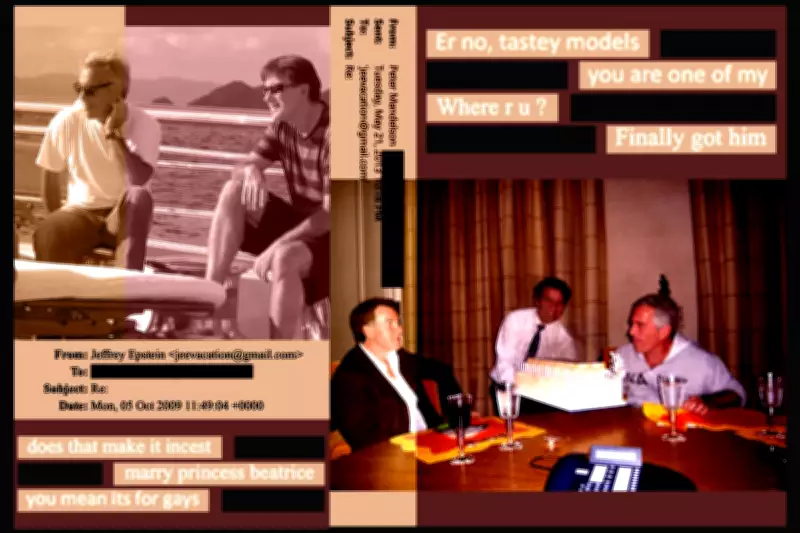
Epstein Files Reveal Paedophile Operated as Secret Cabinet Member
The release of the Epstein files has uncovered one of the most disturbing political revelations in modern British history: a convicted paedophile effectively functioned as a secret member of the UK Cabinet. What is only now beginning to be fully comprehended is the allegation that the infamous financier Jeffrey Epstein secured what amounted to a seat right at the heart of British government, according to analysis by Chris Blackhurst.
Shocking Intimacy Between Mandelson and Epstein
Jeffrey Epstein might as well have been a formally appointed, sworn member of the British Cabinet, given the extraordinary closeness of his relationship with Peter Mandelson and the constant, detailed communication flowing between them. From their numerous texts and emails, now made public, it is evident that the American sex offender was deeply embedded within Mandelson's world, which encompassed critical affairs of state.
Epstein was not merely a passive recipient of information; he actively guided Mandelson on a broad spectrum of subjects. Mandelson, in turn, consistently heeded the advice from Epstein and the network of contacts Epstein briefed. In practical terms, this made Epstein a clandestine cabinet member—a foreign national, a convicted felon with hidden agendas and unknown financiers, who owed no loyalty whatsoever to the British government or the nation.

A Facade of Harmlessness
Within government circles, this reality was completely unknown. Mandelson was perceived as asking probing questions, involving himself in diverse issues, gathering intelligence, and offering opinions—ostensibly all for the benefit of the nation, Prime Minister Gordon Brown, his colleagues, and the Labour Party. The truth, however, was starkly different.
What was publicly known about Epstein was his image as a socialite, a wealthy American with a circle of admirers, who mingled with a gilded elite. He was friends with figures like Mandelson and Prince Andrew, alongside Sarah Ferguson. While his conviction for sex offences involving young girls was on record, he was largely dismissed in security terms as an exotic, harmless character not to be taken seriously by the state.
Secret Allegiance to Banking Interests
Today, we understand this assessment was catastrophically mistaken. Unbeknownst to Prime Minister Gordon Brown, the conscientious Chancellor Alistair Darling, their advisers, and presumably the security services monitoring such matters, Mandelson—via his conduit Epstein—was not serving British interests but those of another side. This was not the typical foe of Russia, though that possibility cannot be entirely ruled out, but rather the banking sector.
During the bleakest days of the credit crunch, the pressure on Brown, Darling, Bank of England Governor Mervyn King, and financial regulators was intense and unceasing. Through Epstein, Mandelson was actively assisting the very banking institutions that had precipitated the economic disaster. These were not necessarily the specific corporations directly at fault, but they were integral parts of the same industry that the government was striving to rescue while also seeking to penalise and hold accountable for systemic failures.
A Quisling at the Heart of Government
The banks, true to form, refused to acknowledge their culpability. They could not comprehend how their practice of awarding enormous bonuses for investing others' money was reckless and had nearly collapsed global capital markets. As thousands faced job losses, sound businesses failed, and public services were cut, bankers remained detached and impervious.
Mandelson acted as a quisling within the governmental machine, tipping off the banks, advising them, and ferrying messages through Epstein. Together, they ensured the banking sector was privy to confidential discussions, forewarned and thus forearmed. Their collaboration extended beyond banking.

Broad Policy and Political Collusion
Epstein partnered with Mandelson on wide-ranging policies and political tactics. Their discussions covered virtually everything: from curbing bankers' bonuses to Gordon Brown's future as Prime Minister—Mandelson, it transpires, was no supporter despite Brown having reinstated him—and even whether Mandelson himself should seek the party leadership. They deliberated on UK economic policy and later, the negotiations to form a coalition government and the shape of the next administration.
This was profoundly sensitive material, intended only for those physically present in meetings or on official distribution lists. Yet, Epstein—an individual not physically present nor listed in any 'cc' field—was copied into communications, sometimes within minutes of Mandelson receiving a top-secret bulletin. Epstein knew, his well-connected associates knew, and he relayed their collective thinking back to Mandelson.
An Unprecedented Deception
This reveals a level of deception arguably without precedent in modern British politics, surpassing even Cold War espionage tensions. During this febrile period, which felt like a raging conflict, the stakes were immense. While there were no conventional battle casualties, the financial ruin led to suicides and severe health deteriorations for many. Prime Minister Brown fought desperately to salvage the UK and global financial systems, while one of his key comrades was secretly aligned with the opposing side.
The Epstein files lay bare a profound betrayal at the highest levels of British government. Peter Mandelson's actions, in effectively granting a convicted paedophile and foreign operative a backdoor seat in the Cabinet, represent a shameful chapter in political history that demands full accountability and reflection.