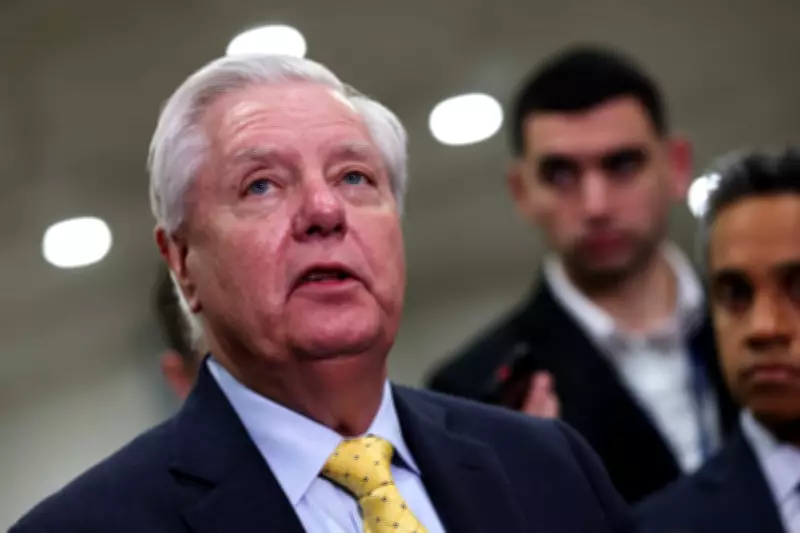
South Carolina Senator Lindsey Graham, a prominent advocate for U.S. military engagement in the Middle East, skillfully deflected inquiries regarding the potential electoral consequences of the ongoing Iran war for the Republican Party in the approaching midterm elections. During a recent interview on Fox News, host Bret Baier directly questioned whether the conflict, alongside disputes over immigration enforcement, might damage Republican reelection prospects this autumn.
Graham's Evasive Response on Electoral Fallout
When pressed by Baier on Saturday, Graham sidestepped the electoral implications, instead launching into a defence of presidential policy. "I think President Trump is stopping a homicidal maniac regime from acquiring a nuclear weapon, and if you don’t treat them that way, you’ve missed a lot in the last 47 years," Graham stated. He added, "And if we can get a deal, let’s do it," without elaborating on how the war might influence voter sentiment or GOP campaign dynamics.
Unwavering Support for Operation Epic Fury
The senator has consistently been one of the most vocal supporters of President Donald Trump's military campaign in Iran, known as Operation Epic Fury. Graham has long publicly expressed a desire for military action against Iran and has persistently praised both the president and Israeli forces throughout the conflict.

His fervent advocacy has extended to criticising other nations in the broader Arab region, as well as countries like Cuba and Spain, for not taking aggressive stances against Iran. This intensity has even provoked criticism from within his own party, with Republican Congresswoman Anna Paulina Luna recently challenging him on social media to personally volunteer for combat if he is so keen on warfare.
Political and Economic Ramifications of the Conflict
Despite Graham's optimistic rhetoric, recent polling data indicates that President Trump's approval ratings have been declining steadily over recent months, with a notable drop following the initiation of hostilities on February 28th. The war has resulted in significant casualties among U.S. service members and has severely impacted domestic fuel prices due to disruptions in global oil markets.
The closure of the Strait of Hormuz, a critical maritime passage handling approximately twenty percent of global oil trade, has triggered dramatic spikes in fuel costs worldwide, with American consumers feeling the pinch at gasoline pumps. These economic pressures, combined with the human cost of the conflict, present substantial challenges for Republican candidates as they approach the midterm elections.
Electoral Mathematics and GOP Vulnerabilities
According to analysis from the Cook Political Report, Republicans face an uphill battle to maintain their narrow majority in the House of Representatives. The GOP would need to secure an improbable seventy-six percent of currently uncertain seats to retain control, suggesting that the Iran conflict and its associated issues could indeed influence electoral outcomes.
Graham's avoidance of these electoral questions highlights the delicate balancing act facing Republican lawmakers who must reconcile strong support for military action with growing voter concerns about economic stability and war fatigue. As the midterms approach, the party's ability to address these interconnected challenges may prove decisive in determining the political landscape following the November elections.