Mongolia Confirms New Prime Minister to Break Political Deadlock
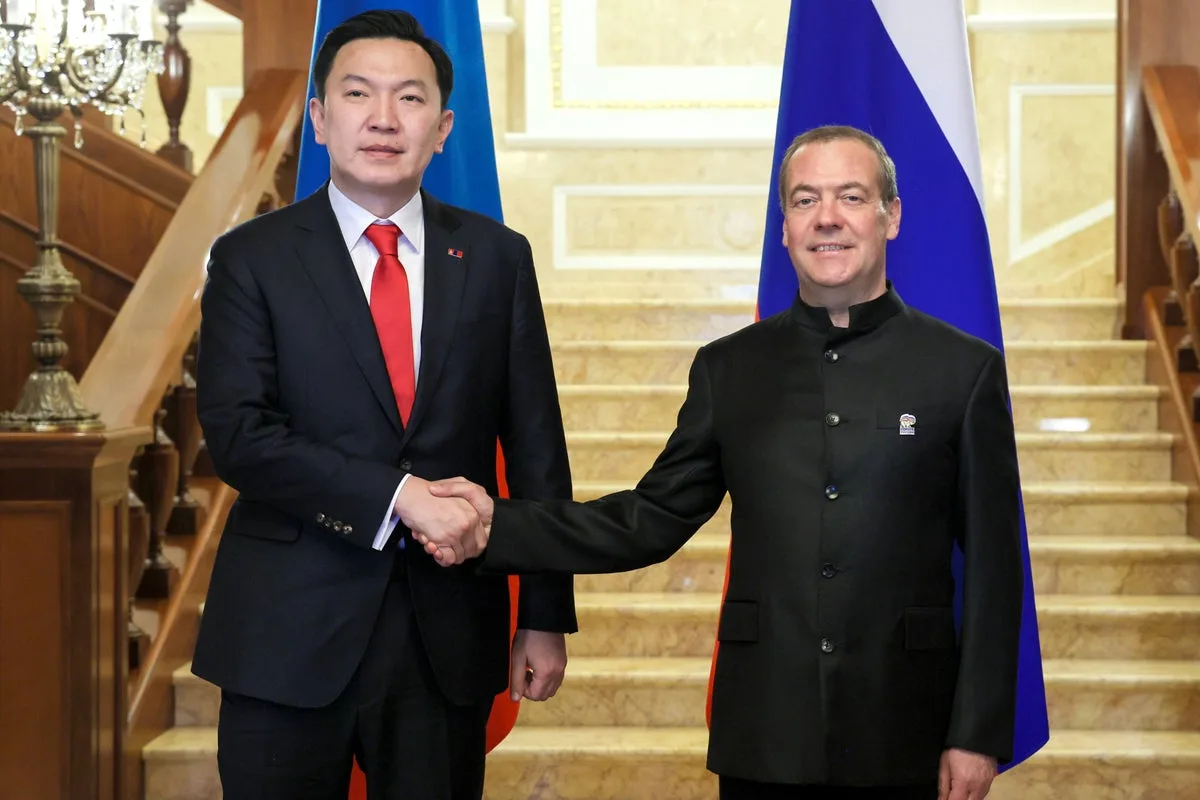
Mongolia's parliament has officially confirmed Uchral Nyam-Osor as the country's new prime minister, marking the third leadership change within a year. This decisive move aims to resolve a prolonged legislative gridlock that has paralyzed governance amid mounting economic pressures for the landlocked, resource-dependent nation.
Vote Results and Political Context
In a late-night session on Monday, 107 of the parliament's 126 lawmakers participated in the crucial vote. An overwhelming 88 members, representing 82.2% of those voting, supported Uchral's appointment, clearing the path for the 39-year-old leader to assume office immediately. His confirmation comes after outgoing Prime Minister Zandanshatar Gombojav submitted his resignation on Friday to help resolve the ongoing political crisis.
The legislative body had been unable to function properly for approximately two weeks due to a boycott by the opposition Democratic Party and internal factional disputes within the ruling Mongolian People's Party. This left parliament without the required quorum to conduct essential votes, creating a governance vacuum at a critical time.
Uchral's Background and Reform Agenda
Uchral Nyam-Osor brings a distinctive profile to the premiership. Before entering politics, he gained public recognition as a hip-hop artist performing under the stage name "Timon." His political career includes serving as Minister of Digital Development and Communications, where he championed transparency reforms and digital governance initiatives.
In his address to lawmakers following the confirmation vote, Uchral emphasized the urgent need for political unity. "As other nations unite to confront global crises, we cannot afford political infighting that further weakens our already vulnerable economy," he stated, acknowledging that internal disputes have exacerbated external challenges facing Mongolia.
The new prime minister has positioned himself as a reform-minded leader focused on modernizing Mongolia's regulatory environment. A key priority includes streamlining the complex permitting systems inherited from the country's Soviet-era legacy. Mongolia transitioned to democracy in 1990 after decades of single-party Communist rule, and many bureaucratic structures from that period remain in place.
Political Compromise and Economic Concerns
Uchral's appointment represents a carefully negotiated compromise between competing factions within the Mongolian People's Party. He bridges divisions between those loyal to the president and supporters of former Prime Minister Oyun-Erdene Luvsannamsrai, who served for four years before resigning last June after losing a parliamentary confidence vote.
The leadership transition occurs against a backdrop of renewed concern among foreign investors regarding Mongolia's political instability, frequent policy reversals, and reputation for corruption and regulatory unpredictability. These factors have created significant headwinds for the nation's economy, which relies heavily on mineral exports and foreign investment.
Outgoing Prime Minister Zandanshatar Gombojav, who assumed office just nine months ago, faced mounting pressure to resign not only due to the parliamentary deadlock but also because one of his senior ministers confronted serious corruption allegations. Zandanshatar, who maintains close ties with the president, had originally replaced Oyun-Erdene following last year's confidence vote.
All three recent prime ministers—Oyun-Erdene, Zandanshatar, and now Uchral—hail from the Mongolian People's Party, highlighting both the party's dominance and its internal divisions that have contributed to the ongoing political turbulence. The new administration faces the dual challenge of restoring legislative functionality while implementing economic measures to stabilize the nation's financial outlook.