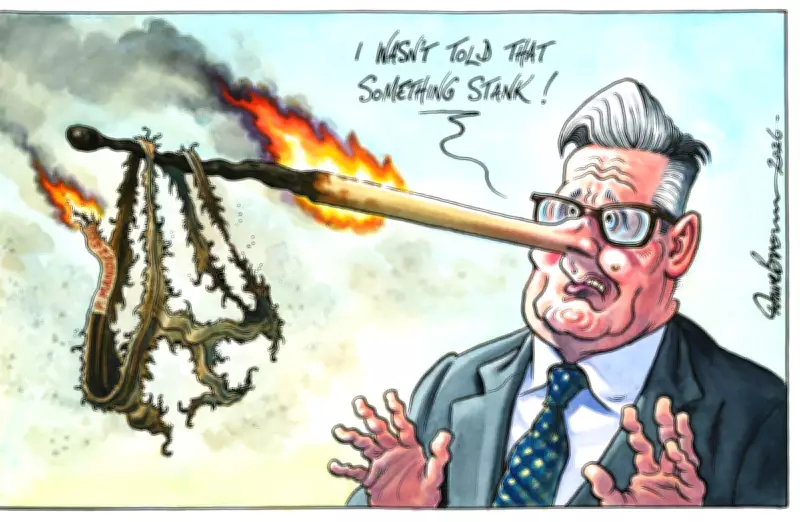
Prime Minister Faces Parliamentary Inquisition Over Ambassador Appointment Fiasco
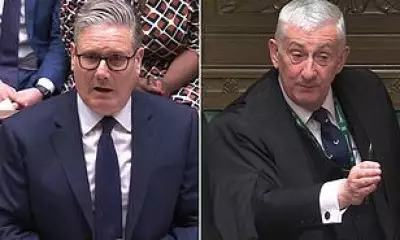
Sir Keir Starmer is set to confront a hostile House of Commons today regarding the escalating Peter Mandelson vetting scandal, with mounting pressure on the Prime Minister to accept ultimate responsibility rather than attributing blame elsewhere. This critical parliamentary appearance marks a pivotal moment for Starmer's increasingly precarious premiership, as he responds to furious MPs about his involvement in what critics have labelled a "tawdry and shaming" affair that has rocked Westminster.
Accusations of Ministerial Code Breaches and Parliamentary Misleading
The Prime Minister stands accused of violating the Ministerial Code by failing to promptly inform Parliament that new evidence had emerged contradicting his previous assurances about "full due process" being followed during Mandelson's appointment as US ambassador. Despite facing resignation demands from Labour backbenchers, peers, and opposition leaders who describe his actions as "catastrophic" misjudgments, Starmer has signaled his intention to deflect responsibility, stating he would make "crystal clear" to MPs that he was deliberately kept uninformed about the developing situation.
Ten Critical Questions Demanding Answers
As Sir Keir prepares for his parliamentary interrogation, these are the fundamental questions MPs will demand he addresses comprehensively:


- Did Sir Keir deliberately mislead Parliament? The Prime Minister repeatedly told MPs that "full due process" including "security vetting" had been completed before Mandelson's appointment. His close associate Darren Jones maintained this was technically accurate due to the Foreign Office's obscure power to override vetting concerns, but Starmer nevertheless faces damaging allegations of dishonesty regardless of his awareness at the time.
- Why did the Prime Minister delay correcting the parliamentary record? The Ministerial Code explicitly requires government members to rectify "any inadvertent error at the earliest opportunity" when inaccurate information has been provided to Parliament. Having learned about the vetting scandal on Tuesday evening, Starmer must explain why he failed to correct the record before Wednesday's Prime Minister's Questions session.
- Was Sir Keir genuinely the last to know about the developing crisis? Cabinet Office Permanent Secretary Cat Little received documentation revealing the vetting failure in late March and discussed it with Dame Antonia Romeo, the nation's top civil servant. The Prime Minister was informed weeks later, raising questions about how many Downing Street officials knew before him and whether he accepts being deliberately excluded from crucial information.
- Should the Prime Minister have been properly informed about the situation? Foreign Office mandarin Sir Olly Robbins, who made the controversial decision to appoint Mandelson, claims he was prohibited from disclosing vetting concerns. However, numerous Whitehall veterans assert they would have been notified about similar red flags regarding other candidates, suggesting unusual procedural deviations.
- What specific concerns prompted security officials to reject clearance? Although Lord Mandelson has been associated with Russia, China, and convicted sex offender Jeffrey Epstein throughout his extensive political career, the precise reasons behind UK Security Vetting officials' recommendation against granting developed vetting clearance remain undisclosed.
- Has the Prime Minister personally reviewed the security verdict documentation? Downing Street officials finally obtained the document confirming that "the recommendation from the vetting officer had been that developed vetting should not be granted to Peter Mandelson" last month. Starmer may claim that privacy considerations prevent disclosure of the detailed reasoning behind this security assessment.
- Did Mandelson access top-secret intelligence materials despite failing vetting? Beyond developed vetting, Mandelson required additional STRAP clearance to review classified intelligence reports. MPs will demand clarification about whether he obtained this clearance despite failing initial checks or was permitted to access sensitive files regardless of security concerns.
- How thoroughly did Downing Street investigate early warning signs? Journalists approached Number Ten as early as September with allegations about Mandelson's failed vetting but received assurances about normal procedures being followed. While Downing Street insists officials repeatedly questioned the Foreign Office about the process, the specifics of these inquiries and responses remain unclear.
- Why was the Foreign Secretary kept uninformed about the developing crisis? Foreign Secretary David Lammy revealed he only learned about the debacle last Thursday, despite being responsible for the Foreign Office during the relevant period. His Conservative predecessor Sir James Cleverly has emphasized that Lammy should have proactively investigated the situation.
- Was the dismissed official merely following instructions? Sir Olly Robbins, who was dismissed by Starmer last week, told MPs in November that "it was clear that the Prime Minister wanted to make this appointment himself." This raises questions about whether Starmer or his then chief of staff Morgan McSweeney communicated that Mandelson's appointment should proceed regardless of security concerns.
This parliamentary confrontation represents a defining moment for Starmer's leadership, with the Prime Minister's responses likely to determine whether he can weather this escalating political storm or face intensified calls for his resignation over what opponents characterize as a fundamental breach of ministerial responsibility and parliamentary trust.