Scottish Families Face Financial Uncertainty as Swinney Leaves Door Open for Tax Rises
Scottish households are confronting renewed financial pressures after First Minister John Swinney declined to rule out additional income tax increases, while simultaneously attempting to refute allegations that the SNP has violated a key manifesto commitment. The SNP leader asserted that a 2021 pre-election promise to freeze income tax rates and bands remains unbroken, despite his party implementing a series of significant tax hikes in the years since.
Manifesto Pledge Under Scrutiny Amid Series of Tax Increases
In the SNP's manifesto for the 2021 Holyrood elections, a central pledge was to freeze income tax rates and bands while increasing thresholds by a maximum of inflation. However, the Scottish government added an extra 1p to the top two tax rates in the 2023/24 financial year, followed by the introduction of a new advanced 45p rate in 2024/25 on earnings exceeding £75,000.
When questioned about the apparent breach of this promise, Swinney responded, "I don't accept the characterisation. The manifesto set out the basis on which we would take our tax decisions, which took into account the fact you might find a very changed economic landscape during the five-year term." He cited a hyper-inflation spike not seen in at least three decades as justification for the policy shift.

No Guarantees for Future Tax Policy
Critically, Swinney refused to provide any assurance that further income tax increases would not be imposed if the SNP secures victory in May's election. When pressed on this point, he stated, "Our tax plans will be set out in the manifesto when we launch that." This non-committal stance leaves Scottish taxpayers uncertain about potential future financial burdens.
Independence Rhetoric Dominates Campaign Launch
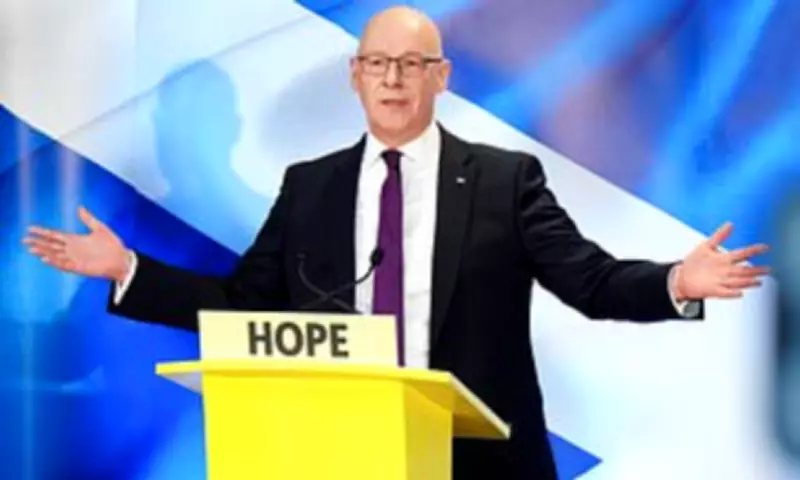
During his campaign launch speech at the Citizens Theatre in Glasgow, Swinney emphasized that Scotland could only achieve a fresh start through independence from the United Kingdom. He positioned the upcoming election as crucial for securing an independence referendum and preventing Nigel Farage's Reform UK from gaining influence in Scottish politics.
Swinney warned of a potential "grubby, backroom deal between Labour and Reform" if the SNP fails to secure a majority, citing examples of Reform councillors supporting Labour on Fife Council. He dismissed accusations that this scenario constitutes a scare story, insisting it represents a genuine political risk.
Opposition Criticism and Rejection of Coalition Talks
Scottish Labour leader Anas Sarwar strongly criticized Swinney's remarks, accusing him of arrogance and attempting to distract from his government's record. Sarwar stated, "It demonstrates how arrogant John Swinney is. Why is he even pretending Reform has a chance of holding power in Holyrood? The only reason he's doing it is because he thinks it helps the SNP."
Sarwar categorically ruled out any cooperation with Reform UK, declaring, "Let me make it absolutely clear – no coalition, no deals, no stitch-ups. We are not going to touch Reform because they are a distraction in this election campaign, not the alternative." He emphasized that Labour's sole focus is removing the SNP from power and delivering governmental change.
Leadership Claims and Future Ambitions
At the campaign event, Swinney promised strong, experienced leadership and committed to working tirelessly to regain voter trust. When asked about his political future, he confirmed he would serve a full five-year term if elected, followed by a bid to become Prime Minister of an independent Scotland in 2031.
Alastair Cameron, chairman of Scotland in Union, criticized the campaign launch's focus, saying, "John Swinney could have used this launch to explain the SNP's plans to make up for 20 years of their own mismanagement. Instead, he majored on the Nationalists' obsession with splitting Scotland from the rest of Britain." He argued this emphasis underscores the need to remove the SNP from power on May 7.