Why Your Weather App Cannot Adequately Warn You About Impending Winter Storms
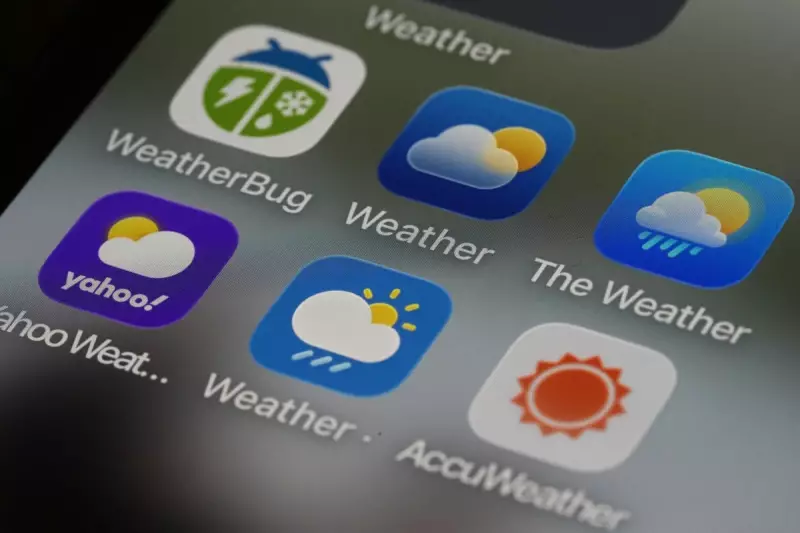
As millions of Americans brace for a severe multi-state winter storm, meteorologists are issuing a crucial warning to the public. While smartphone weather applications offer undeniable convenience for everyday conditions, experts emphasise that human expertise must be prioritised when confronting dangerous, complex winter weather systems.
The Limitations of Automated Forecasting
The current storm sweeping across the United States, characterised by a perilous mix of heavy snowfall, treacherous ice accumulation, and sub-zero temperatures, starkly illustrates the shortcomings of simple app-based forecasts. Meteorologists interviewed by The Associated Press highlight that rapidly changing data and subtle geographical variations—which determine whether precipitation falls as snow, sleet, or freezing rain—are often beyond the scope of automated summaries.
"Weather apps are really bad at storms that have multiple types of precipitation, and it really makes messaging hard," stated Marshall Shepherd, a meteorology professor at the University of Georgia and past president of the American Meteorological Society. "Apps don’t understand the details of why snow, sleet or freezing rain happens."

Jason Furtado, a meteorology professor at the University of Oklahoma, underscored the critical importance of human insight, particularly local knowledge, in such complex scenarios. "For extreme weather events, it is especially important to know there are human forecasters interpreting the data and making the best localised forecasts for your area," Furtado explained. "Unfortunately, many weather forecast apps use AI methods to either make the forecast or ‘interpolate’ from larger grids to your hometown, introducing the potential for significant errors."
Distinguishing Between App Capabilities
Forecasters note that not all weather applications are created equal. Some can be useful, particularly those that pair National Weather Service data with professional meteorologists' expertise. James Belanger, vice president of The Weather Channel's parent company, described their approach as "an all-hands-on-deck kind of approach" that utilises numerous models, data sources, weather observers, and staff.
Victor Gensini, a meteorology professor at Northern Illinois University, cautioned that many apps "oversimplify uncertainty and present highly precise-looking numbers that imply more confidence than actually exists." He identified complex winter storms as situations where applications are weakest, as they typically fail to capture crucial nuances.
Steven DiMartino of NY NJ PA Weather highlighted the fundamental difference between data provision and expert interpretation. "The problem with the weather app is that it just provides data, but not explanation," DiMartino said. "Anyone can look at data, but you need a meteorologist, you need that human touch to look at it and say, ‘Hmm, that looks like an error; we’re gonna tweak this.’"
The Human Element in Modern Forecasting
Cory Mottice, a National Weather Service meteorologist who developed the EverythingWeather app, emphasised the strength of applications that leverage professional expertise. "You have actual meteorologists that are experts in their field at different places all over the country for that specific area, looking at the data, adjusting it, making the forecast as needed," Mottice explained.
Belanger detailed how The Weather Channel app combines decades of experience with technological advancement. The application uses information from multiple sources, including the National Weather Service, over 100 weather models, and input from more than 100,000 citizen observers, all synthesised by artificial intelligence. Crucially, however, a team of more than 100 meteorologists always maintains final editorial control over what appears on the application.
"One of the things that has been a lesson and a principle that we’ve adopted is that it’s the combination of advancements in technology with the human oversight," Belanger stated, "that allows the company to provide the best forecasts—especially in situations like the current winter storm."

Additional Hazards: Social Media Misinformation
Forecasters also warn against relying on social media for weather information during severe events. Victor Gensini noted that while social platforms can help amplify official sources like the National Weather Service, "it’s also where misinformation spreads fastest." He observed that "weather is complex, and social media tends to reward confidence and drama, not nuance."
Kim Klockow McClain, an extreme weather social scientist at the University Corporation for Atmospheric Research, expressed concern about public trust erosion. "When people are continually exposed to only worst-case forecasts, research suggests they will lose trust over time," she cautioned, noting that people are "getting misled by hyped forecasts."
As winter storms continue to test forecasting systems, the consensus among meteorologists remains clear: while technology provides valuable tools, human expertise remains indispensable for navigating the complexities of dangerous weather.