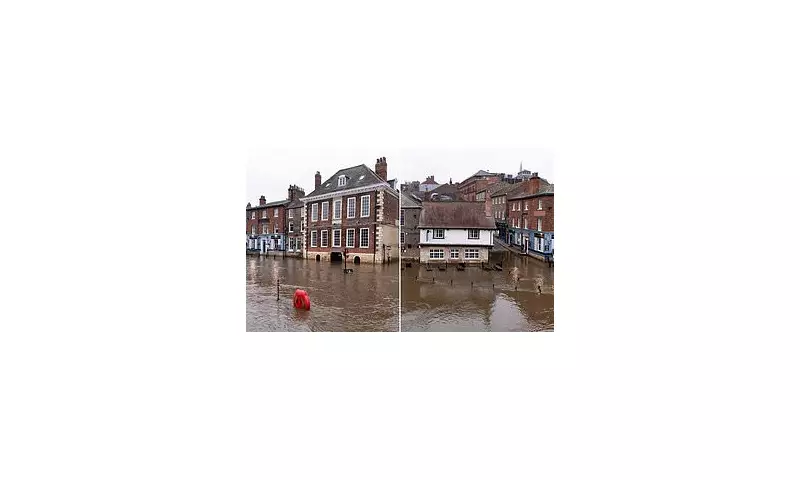
Major flooding has submerged significant areas of York, leaving numerous residents trapped inside their homes after the River Ouse dramatically burst its banks. The Environment Agency issued urgent flood warnings for riverside properties across the historic city, advising locals to strictly avoid walking, cycling, or driving through the dangerous floodwaters on Sunday afternoon.
Critical Warnings and Rising Water Levels
A second specific warning was activated for the St George's Field and Queen's Staith areas, where homes are now at immediate risk. The Viking Recorder station recorded the River Ouse's level at a concerning 3.38 metres by Sunday evening. Property flooding becomes a serious possibility whenever levels surpass the 3-metre threshold, a benchmark that has now been exceeded.
Defensive Measures and Visual Impact
In response to the crisis, flood gates and the crucial Foss Barrier were deployed and operational in York city centre throughout Sunday afternoon. Disturbing photographs from the scene illustrate the severity, showing water levels rising above residents' front doors along entire stretches of riverside homes. Everyday items like signposts, outdoor tables, and chairs have been completely submerged.

The Environment Agency has issued a direct plea to local residents, urging them to "start acting on your flood plan" and to "activate any flood protection products you may have," such as specialised flood barriers or air brick covers.
Context of Recent Severe Weather
This flooding event follows closely on the heels of Storm Ingrid, which battered Britain just days earlier with powerful 60mph gusts, torrential downpours, and large coastal waves. That storm triggered hundreds of flood alerts nationwide and caused significant disruption, including rail line shutdowns.
Ongoing Weather Warnings and Safety Advice
The Met Office had previously issued a yellow weather warning for wind and rain, covering South West England and South Wales from the early hours of Friday until Saturday morning. Meteorologists warned that coastal routes and sea fronts in these regions could be affected by spray and large waves, leading to difficult driving conditions, potential power cuts, and delays to public transport including trains, buses, planes, and ferries.
Official government advice for those in flood zones is clear and critical:
- Turn off gas, electricity, and water supplies if safe to do so, but crucially, do not touch an electrical switch if standing in water.
- Move family members, pets, vehicles, and important items to a safer place, ideally the highest floor of the property.
- Use any available flood protection products immediately.
- Seek and follow specific advice from the local council if feeling in danger.
Political and Official Responses
Earlier this month, following flooding incidents in Lincolnshire and Leicestershire, Labour leader Sir Keir Starmer addressed flood-hit communities, stating, "My thoughts are with all those affected and my thanks to responders working hard to keep communities safe. Anyone in these areas should follow advice from the emergency services."
An Environment Agency spokesperson reiterated the urgency on Sunday, confirming, "We are monitoring rainfall and river levels and [urge you to] start acting on your flood plan if you have one and activate any flood protection products you may have." The situation remains under close observation as authorities work to manage the crisis and protect residents and property in York.