Storm Chandra Brings Severe Flooding and Power Cuts Across Ireland
Forecasters have issued warnings of possible further disruption as Storm Chandra continues to track across Ireland on Tuesday evening. The storm has already caused widespread flooding, power cuts, and significant travel disruption across the island.
Widespread Weather Warnings in Place
Wind and rain warnings are currently in effect across both Northern Ireland and the Republic of Ireland. In Northern Ireland, warnings remain until midnight on Tuesday, while the Republic faces a nationwide wind warning and specific rain alerts for south-eastern counties until 11pm.
An amber wind warning was active until 9pm in Antrim, Down, and Derry, with a yellow rain warning covering all six counties until midnight. The public has been alerted to numerous dangers including flying debris, large coastal waves, travel disruption, building damage, flooding, fallen trees, and potential power cuts.

Significant Impact on Infrastructure and Services
The storm's effects have been substantial across multiple sectors. Hundreds of schools were forced to close their doors, while tens of thousands of people experienced power outages. Travel networks faced severe disruption with flooded roads and fallen trees reported across the island.
In Northern Ireland specifically, more than 300 schools remained closed, and at least 30 flights were cancelled at Belfast City Airport. The Strangford Lough Ferry Service was suspended until conditions improved, and Translink advised passengers to expect delays throughout their journeys.
Power Outages and Emergency Response
Northern Ireland Electricity reported that power outages peaked at 9am with approximately 10,000 properties without supply. Meanwhile, in the Republic of Ireland, ESB confirmed that around 20,000 homes, farms, and businesses lost power at the storm's peak, with reconnection efforts expected to continue through the night.
The Government announced an Emergency Response Payment to support residents in Co Wexford, one of the worst-affected areas. Housing Minister James Browne confirmed that the National Directorate for Fire and Emergency Management, local authorities, and state agencies have been coordinating since Monday to manage Storm Chandra's impact.
Localised Flooding Incidents
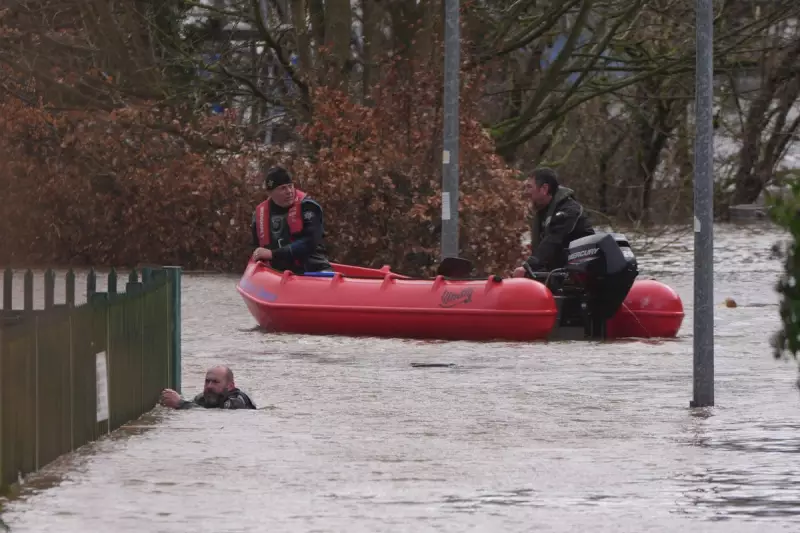
Enniscorthy in Co Wexford experienced particularly severe flooding after the River Slaney burst its banks. This marks the sixteenth time the town has flooded since 2001. In one dramatic incident, grandmother Elaine Grant, her daughter Casey, and her three-week-old grandson were rescued from a flooded apartment by Slaney Search and Rescue.
Dublin Fire Brigade responded to multiple flooding incidents in the capital after the River Dodder overflowed. In Dundalk, firefighters rescued two ambulance crew members whose vehicle became trapped in floodwater under the Castletown Road railway bridge around 6am.
Transport Disruption Continues
Travel networks remain significantly affected. Iarnrod Eireann reported disruptions to Dart services, while several ferry sailings between Dublin and Holyhead have been cancelled. Dublin Airport confirmed approximately 20 flight cancellations by Tuesday afternoon due to Storm Chandra, with warnings that further disruption remains possible as strong winds persist.
Ongoing Weather Concerns
Met Eireann forecaster Matthew Martin indicated that Storm Chandra would continue tracking northwards on Tuesday, with unsettled weather expected throughout the remainder of the week. He specifically warned of potential for further travel disruption and flooding overnight.
The Met Office has issued a yellow-level ice warning for all of Northern Ireland between 3am and 10am on Wednesday morning, indicating that poor weather conditions are likely to continue. Housing Minister Browne noted that while weather warnings were only at Yellow Level, impacts in some areas have been severe due to pre-existing ground saturation from previous rainfall.