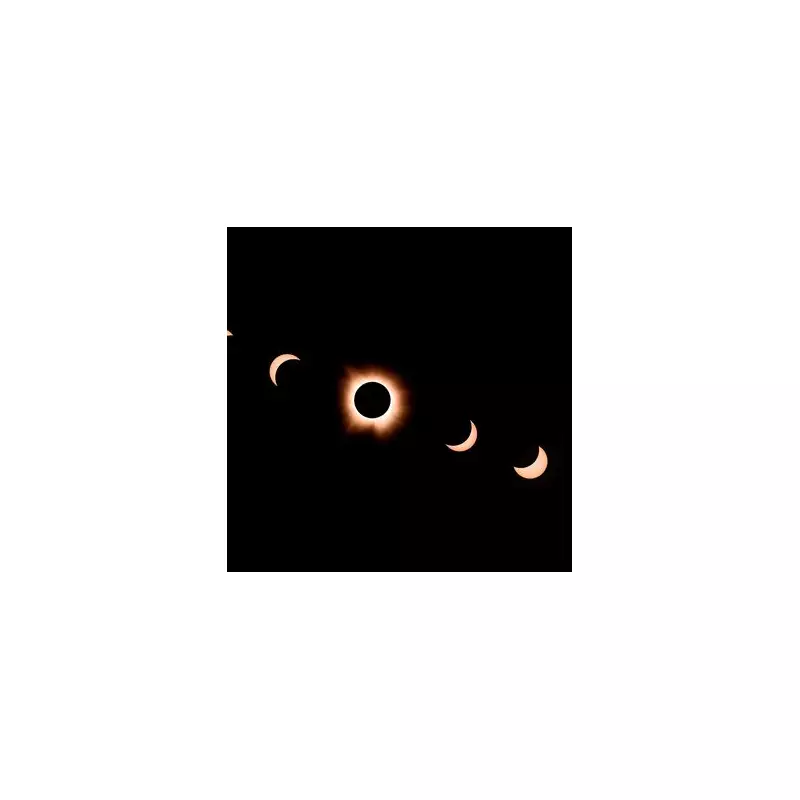
A magnificent celestial event, heralded as the 'eclipse of the century', is set to captivate observers later this year, offering a breathtaking display of cosmic alignment. This total solar eclipse, where the Moon completely obscures the Sun, promises to be a rare and awe-inspiring spectacle for those positioned along its narrow path of totality.
A Historical Phenomenon with Profound Impact
Solar eclipses have fascinated and inspired humanity for thousands of years, influencing culture, art, and even the course of historical events. One of the most famous instances occurred in the sixth century, when a total solar eclipse famously halted a six-year war between the Lydian and Medes kingdoms in what is now modern-day Turkey. Both sides interpreted the sudden darkness as a divine signal for peace, demonstrating the profound psychological and societal impact of these astronomical occurrences.
The last total solar eclipse visible from Britain took place on August 11, 1999, an event witnessed by millions who donned special protective glasses to watch the daytime sky turn to an eerie pitch black. Since then, skywatchers across the UK have eagerly awaited the next opportunity to experience such a dramatic celestial show.

The 2026 Eclipse: A Journey to Iceland and Spain
Regrettably, the United Kingdom will not experience another total solar eclipse until the year 2090. However, for those willing to travel, an extraordinary opportunity arises on August 12, 2026. On this date, a total solar eclipse will be perceptible along a specific corridor stretching from eastern Iceland, across Spain, and down to the Balearic Islands.
Precise Viewing Times and Durations
The eclipse will present slightly different viewing experiences depending on your location within the path of totality:
- Reykjavík, Iceland: The eclipse will peak at 5:48 PM local time, with totality lasting just over one minute.
- Gijón, Spain (northern coast): Totality begins at 8:28 PM local time, offering a longer duration of approximately one minute and 45 seconds.
- Burgos and Zaragoza, Spain: The event reaches its peak around 8:28 PM to 8:29 PM, with totality lasting about one minute and 25 seconds in Zaragoza.
- Mallorca, Balearic Islands: Viewers here can expect the eclipse to appear at 8:31 PM local time, with totality enduring for around one minute and a half.
What Can Skywatchers in the UK Expect?
While the UK will not fall within the path of totality for the 2026 event, residents will still be treated to a significant partial lunar eclipse on the same date, August 12. This will not result in complete darkness but will create a notably dimmed sky, similar to a heavily overcast day or the twilight hours.
At its peak, expected around 7:13 PM BST, the Moon will obscure between 89% and 91% of the Sun across most of the country. This will be the deepest partial eclipse visible from the UK since the 1999 total event. Observers will be able to see an impressive crescent shape formed by the remaining sliver of sunlight.
The Isles of Scilly, off the coast of Cornwall, are poised for the best view within the UK, with an expected 96% coverage of the Sun, resulting in a much darker sky than the mainland.
Looking Ahead: The 2027 Eclipse
For dedicated eclipse chasers planning further ahead, August 2, 2027 promises one of the longest-duration total solar eclipses in a century. The prime viewing locations will be in North Africa, including Egypt, Morocco, and Tunisia. Interestingly, the British territory of Gibraltar will also lie just within the path of totality for this event.
Back in the UK, the 2027 eclipse will be a more modest affair, with only roughly 42% of the Sun expected to be obscured by the Moon. This ongoing cycle of celestial events continues to offer unique opportunities for public engagement with astronomy and the wonders of our solar system.