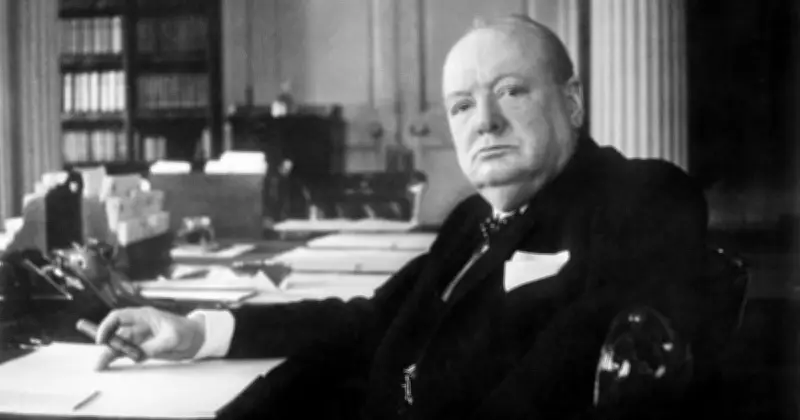
Historian James Holland has condemned what he calls "vile nonsense" surrounding Winston Churchill's alleged role in the Bengal Famine of 1943, after the National Portrait Gallery pulled a video installation by artist Helen Cammock that accused the wartime prime minister of the "willful starvation of the Indian population."
Churchill an Easy Target for Historical Myths
Writing as a guest columnist, Holland expressed amazement at how "bad history takes root," comparing the famine accusations to persistent conspiracy theories about Hitler's survival. He noted that Churchill, as a towering figure who saved Britain from Nazi Germany, makes an enticing target for critics. "It's quite a thing to accuse anyone of deliberately starving others, let alone Churchill," he wrote.
The Bengal Famine, which killed an estimated three million people, was caused by a "terrible combination of factors," according to Holland. These included a cyclone in autumn 1942 that brought three tidal waves, destroying 450 square miles and damaging a further 3,600 square miles, affecting up to 2.5 million Bengalis. A fungus then hit remaining rice stocks, and the misery was compounded by the earlier confiscation of boats to prevent a Japanese invasion—a decision made in Calcutta and New Delhi, not Downing Street.

Relief Efforts and Wartime Constraints
Holland emphasized that there was a concerted relief effort, including food, loans, and grants for boats and homes. However, most Bengalis lived precariously, with ten million dependent on agriculture and no social welfare system. India had been importing food for over a decade, primarily from Burma, which was now closed due to Japanese occupation. The Allies also faced severe shipping shortages.
In August 1943, Churchill was not in a position to send food immediately. Furthermore, after 1935, the central government in New Delhi had ceded powers to provinces, where democratically elected Indian governments introduced trade barriers that blocked aid. Eventually, British Governor General Lord Wavell forced the issue by threatening legal and military action, leading to substantial grain shipments.
Overseas Aid and Final Verdict
Contrary to claims of no overseas aid, Holland noted that 30,000 tons of grain were sent in 1942, followed by 303,000 tons in 1943 and 639,000 tons in 1944. While insufficient, this was a huge commitment during wartime. "Many things can be laid at the feet of Winston Churchill, both good and bad, but the terrible loss of life in the Bengal Famine is not one of them," Holland concluded.
He welcomed the National Portrait Gallery's decision to pull Cammock's video, stating: "Yes, art and history are different, but not art and lies."