McDonald's Sauce Policy Triggers Widespread Customer Backlash
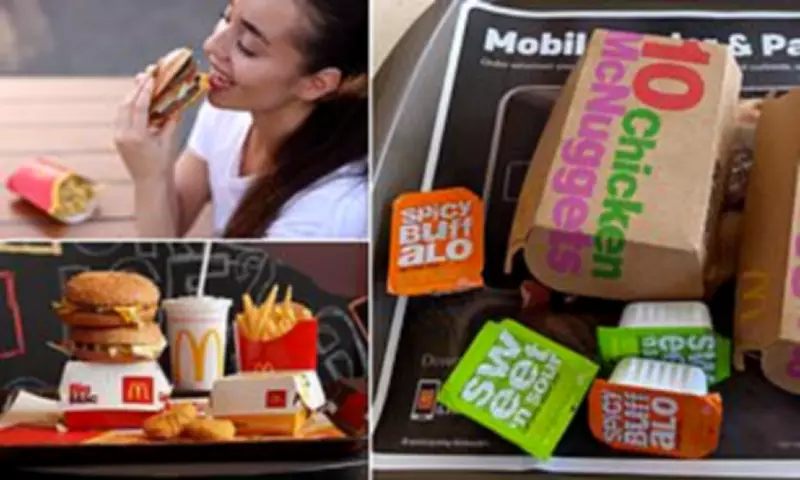
McDonald's, the global burger behemoth, faces mounting criticism as one of its franchises implements stringent new sauce restrictions. For many patrons, the iconic fries and McNuggets serve primarily as vessels for an array of dipping sauces, from Tangy BBQ to Sweet N Sour. However, these essential condiments now come with a strict limit: only one 'courtesy' sauce packet per order, regardless of the size of the purchase.
Strict Limits on Sauce Packets Cause Mathematical Dilemma
This controversial policy means that even a substantial order of 40 McNuggets receives a mere six sauce packets. For dedicated customers who adhere to a sacred nugget-to-sauce ratio, this allocation falls drastically short. With six sauces for forty nuggets, each packet must cover approximately six to seven nuggets, assuming no double-dipping and zero spillage occurs. The mathematical imbalance has provoked frustration among sauce enthusiasts.
One disgruntled fan voiced their displeasure in a viral Reddit post, stating, 'What is with all these companies being so cheap? It's part of doing business - people need their dipping sauces for the overpriced food they paid for!' The sentiment reflects a broader discontent with perceived cost-cutting measures in the fast-food industry.

Franchise Autonomy Leads to Variable Pricing and Policies
It is important to note that sauce limits and additional charges are determined by individual franchise operators rather than constituting a new national policy from McDonald's corporate headquarters. The Daily Mail has contacted McDonald's for an official comment on the matter, but a response is still pending.
Meanwhile, the cost of extra dipping sauces exhibits significant regional variation. In New York City, patrons at the Madison Square Garden location pay 22 cents per additional packet, while at JFK Airport, the price rises to 30 cents. In Belleville, New Jersey, customers face a staggering 39 cents per extra sauce, highlighting the discretionary power of local franchisees.
Staff Defend Policy While Customers Compare Competitors
Restaurant employees have defended the sauce restrictions, with one worker describing the limit as 'very understandable,' citing instances of customers taking excessive amounts of condiments. They argue that if a store depletes its sauce supply, staff members bear the brunt of customer complaints and operational disruptions.
Nevertheless, customers have drawn unfavorable comparisons with other fast-food chains. One social media user noted that Chick-fil-A generously provides 'a years worth of sauce' upon request, although the company's official policy caps it at ten one-ounce dipping sauces per family-style meal. Another Reddit user praised Taco Bell's approach, stating, 'You ask for one type of sauce and they give you 15. If you ask for different flavors they give you the whole bag's worth.' They added that the Taco Bell app allows customers to add numerous sauces without extra charges, contrasting sharply with McDonald's new limitations.
Expert Analysis Links Sauce Limits to Broader Economic Shifts
Darin Leonardson, a former McDonald's employee turned professional chef and founder of Transformed Culinary Solutions, interprets the sauce debate as indicative of a larger transformation in fast-food economics. He explained, 'From a business standpoint, limiting condiments is about cost control and waste management. In high-volume systems like McDonald’s, even a few cents per packet multiplied across millions of transactions becomes real money.'
Leonardson also highlighted a shift in hospitality standards, noting that brands like Chick-fil-A have set new expectations with their visible, abundant sauce stations that communicate generosity to customers.
Rising Costs and Profitability Pressures Drive Policy Changes
The cost of McDonald's menu items has surged at a rate exceeding general inflation, prompting franchise owners to seek alternative methods to maintain profitability. Charging for extra sauces represents one such strategy to mitigate further price increases on core menu items.

Chef and food industry expert Mike Haracz elaborated on this point, stating that sauce charges help offset rising expenses for raw materials, packaging, ingredients, and transportation. He added, '[Franchise owners] are looking to maintain their profitability so this type of pricing adjustment is to keep that consistent. This is also the reason why employee wages are kept as low as they can.'
Despite the sauce uproar, McDonald's retains its status as one of the world's most recognizable franchise giants, even after a disappointing performance in a recent survey ranking America's favorite fast-food chains. The controversy underscores the delicate balance between customer satisfaction and operational efficiency in the competitive fast-food landscape.