Testing 'Quiet' Kitchen Appliances Reveals Remarkable Noise Reduction Benefits
I recently conducted comprehensive testing of Quiet Mark certified kitchen appliances, including coffee machines and kettles, to determine whether quieter models genuinely make a noticeable difference to everyday life. The results were more significant than anticipated.
The Hidden Impact of Household Noise Pollution
Noise surrounds us constantly in modern life, from external sources like traffic, construction sites, and public transport to internal household appliances. Washing machines, tumble dryers, vacuum cleaners, hair dryers, coffee makers, televisions, and blenders rank among the noisiest items in our homes - and most people rely on them daily.
What many don't realize is that both noise and light pollution can seriously harm human wellbeing by interfering with sleep patterns and disrupting our natural body clocks. Studies from the UK Health Security Agency suggest approximately 130,000 healthy life years are lost annually due to noise pollution. Research further indicates that noise pollution increases irritation levels and elevates the likelihood of developing severe health problems, including stroke and cardiovascular disease.

Despite these significant consequences, noise pollution is frequently labelled a "neglected pollutant," with comparatively few regulations established to lessen its impact, according to the UK Government's Science and Technology Committee.
The Quiet Mark Certification Initiative
This oversight is precisely why environmental consultancy Quiet Mark has dedicated the last fifteen years to identifying some of the most silent appliances available. Established by Poppy Szkiler - whose grandfather John Connell founded the Noise Abatement Society in 1959 - the organization helps consumers select products engineered to minimize noise in daily life.
"Sound affects our brain waves, heart rate, and emotional balance," Poppy explained. "Our minds and bodies are constantly processing layers of noise in our homes and workplaces, which can become exhausting over time."
She elaborated further: "The human brain can only cope with one and a half conversations at a time, so it can become exhausting, irritating, and a build-up of loud appliance noise can cause noise rage, as our bodies were not designed to cope with an overload of sound continually in safe places. Our fight-or-flight mechanisms can kick in, causing cortisol levels to rise - and irritability is a sign of that taking hold."
Quiet Mark has certified hundreds of approved items from major retailers including John Lewis, Philips, LG, Samsung, Dyson, and Russell Hobbs. Products undergo rigorous examination in dedicated acoustic facilities, where elements such as pitch, tone, and frequency are evaluated alongside overall volume.
Importantly, it's not simply about decibel levels. Quiet Mark evaluates both the intensity and the character of sound, as devices with identical decibel readings can be experienced quite differently. "Two products with the same decibel levels can have polarising effects," Poppy noted. "One may have harsh, intrusive tonal peaks, whilst another has smoother, more even and calming tones."
Testing Quiet Mark Certified Coffee Machines
With my mornings frequently interrupted by the grinding din of a coffee machine and the rumbling of a kettle, I questioned whether opting for quieter appliances would actually transform how my home - and headspace - felt.
One coffee machine bearing Quiet Mark certification is manufactured by Swiss brand Jura. Their bean-to-cup machines are specifically engineered to reduce noise, positioning them among the quietest in their class. The JURA Z10 coffee machine (£2,500) boasts an advanced Product Recognising Grinder (PRG), designed to operate more quietly than conventional grinders.
When I initially powered it up, the contrast was instantly apparent. Rather than the harsh, mechanical roar I'd grown accustomed to, the sound was mellower and less obtrusive - more of a gentle hum than an aggressive grind. The difference was considerably less irritating than standard machines.

The most significant contrast emerged when preparing coffee early in the morning. Typically, I'd think twice about using my machine if others were sleeping, but with the JURA Z10, it didn't feel disruptive. The noisiest element was the milk steaming, but compared to my previous De'Longhi machine, the piercing screech had mellowed into a softer, less grating steam.
This development resonates particularly in my own household situation. With a partner who rises later than me, and a little one on the way, being able to brew coffee without waking everyone has suddenly become far more significant. Performance-wise, there wasn't any sacrifice whatsoever - the coffee remained piping hot, full-bodied, and delicious as ever.
Naturally, it wasn't entirely noiseless - no machine is. However, set against typical models I've previously owned, it was considerably more subdued. The sole genuine downside is the cost, which sits above many conventional coffee makers - though it does appear designed for longevity.
Evaluating Quiet Mark Certified Kettles
Kettles represent another daily necessity - and frequently rank among the loudest kitchen appliances. That fierce, thunderous boiling is difficult to overlook before 7am.
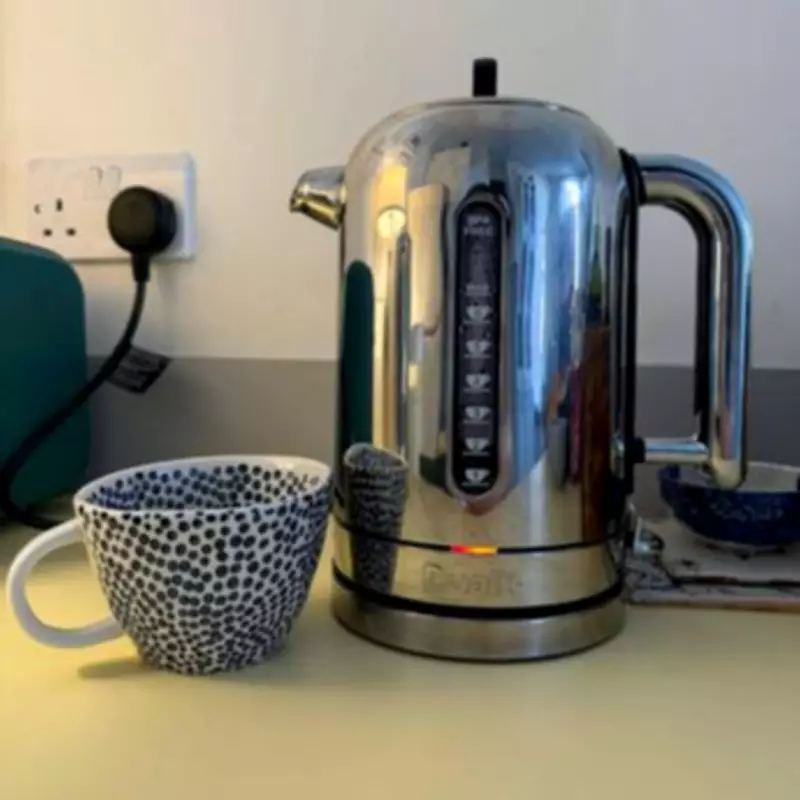
I tested the Quiet Mark-certified Classic Kettle from Dualit (£159.99), which sports a vintage aesthetic and features a "whisper boil function" that pledges to "drastically reduce unwanted boiling noise." On the packaging, you'll spot the distinctive purple Quiet Mark certification badge.
Regarding volume, it proved markedly gentler than traditional kettles I've experienced previously. Rather than the harsh, clattering boil I'm accustomed to, the sound came across softer and more measured - more of a gradual crescendo than an abrupt eruption, with minimal steam production.
I also evaluated the Edge Low Steam Kettle from Breville (£74.99), which claims to offer "steam surge control" with 75% steam reduction, generating "less condensation." The moment I switched it on, the contrast was striking. There was no aggressive rumbling, no steam once it had finished heating, and a subtle "click" was the sole sign it was complete - I was genuinely impressed by the difference.
Long-Term Benefits and Future Outlook
Following several weeks of relying on Quiet Mark-certified gadgets, my morning ritual of preparing tea and coffee has become considerably more enjoyable. I've come to understand it's not merely about how loud something is - the character of the sound can frequently make the most significant impact.
While kitchens are seldom entirely noiseless environments, the grating, abrasive quality of loud appliances has vanished, leaving me feeling considerably calmer throughout my morning routine. As Poppy explains: "The product's sound quality is very often much more relevant to how we experience sound."
She continued that "there's a very big job to do, and if we all buy quiet, design quiet and specify quiet together, we could powerfully reduce unwanted noise over the next decade or more."
By 2026, Quiet Mark has approved more than 1,000 products from upwards of 90 brands spanning over 60 product categories, with its emblem being a distinctive purple Q-shape. This growing certification program represents a meaningful step toward addressing the often-overlooked problem of household noise pollution.