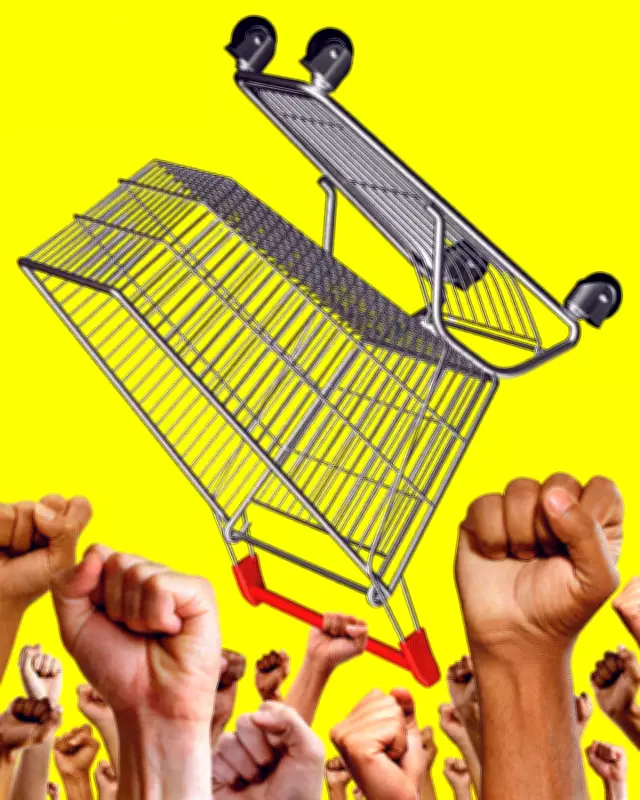
American consumers are increasingly angry, with nearly 80% reporting a service or product problem in 2025, and about two-thirds of those experiencing rage, according to the National Consumer Rage survey. This frustration stems from a mix of overcharges, poor customer service, defective products, and billing errors that often favor companies, all amid soaring prices and inflation.
Factors Behind Consumer Rage
A combination of company consolidation, regulatory rollbacks, court decisions limiting consumer power, tech-driven cost cuts, private equity takeovers, pandemic-era business changes, a struggling media landscape, and the rise of AI customer service has fueled this anger. However, potential solutions exist.
The Guardian plans to examine the causes, impacts, watchdogs, and solutions in coming weeks. Readers can share their stories.

The Annoyance Economy
Lisa, a 60-year-old marketing executive in Washington DC, faced three corporate battles in two days: her vet overcharged $500, a supermarket failed to apply a coupon, and her insurer rejected a $1,100 dental bill. She described it as "Whac-A-Mole." Sally Greenberg of the National Consumers League called it "a war on consumers" with a "tsunami of fees and hidden charges."
Peter Fader, a Wharton marketing professor, noted that while consumers have more choices, "a lot of the cool data and technology is being used against them."
US households lose an estimated $165 billion annually to the "annoyance economy," according to the Groundwork Collaborative. This affects quality of life in a country already divided. Chad Maisel, co-author of the Annoyance Economy report, said it creates a "toxic cycle" where frustrated consumers disengage from community activities.
Scott Broetzmann of CCMC linked the public reaction to the killing of United Healthcare CEO Brian Thompson to widespread frustration with health insurers. He warned of "brittle systems, high stakes, and very low trust."
A Federal Retreat
Consumer advocates say the Trump administration is weakening watchdogs. In late 2023, Toyota Motor Credit was ordered to pay $60 million for selling unwanted insurance products. The CFPB found the lender directed customers to a dead-end hotline. However, acting CFPB head Russell Vought terminated the payout in May 2025, part of broader cuts that have gutted the agency.
By October 2025, Vought had dismissed 42 agreements with companies, according to Protect Borrowers. Sally Greenberg said this tells companies to "go ahead, rip off, lie, cheat."
One exception is the FTC, which under Chris Mufarrige has acted against auto dealers, Instacart, and Meta. States like California are also stepping up, with a case against Amazon. New York City and a bipartisan bill aim to revive the "click to cancel" rule.
Overall, federal agencies have seen budget cuts and policy rollbacks, accelerating under Trump, Greenberg said. Supreme Court rulings have weakened consumer protections, backed forced arbitration, and made restitution harder.
The Nader Era
The 1960s and 1970s were a golden age of consumer protection, with Ralph Nader's work leading to safety standards and the Fair Credit Act. But a conservative pushback in the 1980s and 1990s labeled activists as "busybodies." Lawrence Glickman of Cornell University said corporate power is "enormous and pretty much unchecked."
Despite frustration, Glickman noted a deep suspicion that government can help or regulate corporations. Nader, now 92, said the outlook for consumers has "never been worse," citing "corporate power supremacy."
Ira Rheingold of the National Association of Consumer Advocates said lobbying to fix consumer law is "a useless premise" now. Instead, a wave of civil litigation is coming, as law firms see increased demand because the federal government has "abdicated its responsibility."
Journalism's 'Death Valley'
Mainstream media, once a powerful watchdog, has lost its bite since the 1970s. Chris Elliott, a former journalist, called consumer journalism "Death Valley" in a news desert. In 1970, at least 50 regional papers had consumer reporters, but advertiser pushback and political opposition weakened the movement.
The collapse of local journalism has seen 3,500 newspapers vanish since 2000. Jane Sasseen of CUNY noted many small papers lack a business section or consumer reporter.

Nonetheless, some outlets like Consumer Reports, ProPublica, and the Guardian's The Price We Pay series continue investigations. Citizen journalists online share tips on cutting medical bills and grocery costs. However, Jeffrey Timmermans of Arizona State University said fewer journalists mean companies get away with more.
In coming weeks, Consumed will explore common frustrations, corporate changes, and consumer advocates. Readers can share their experiences at consumed@theguardian.com.