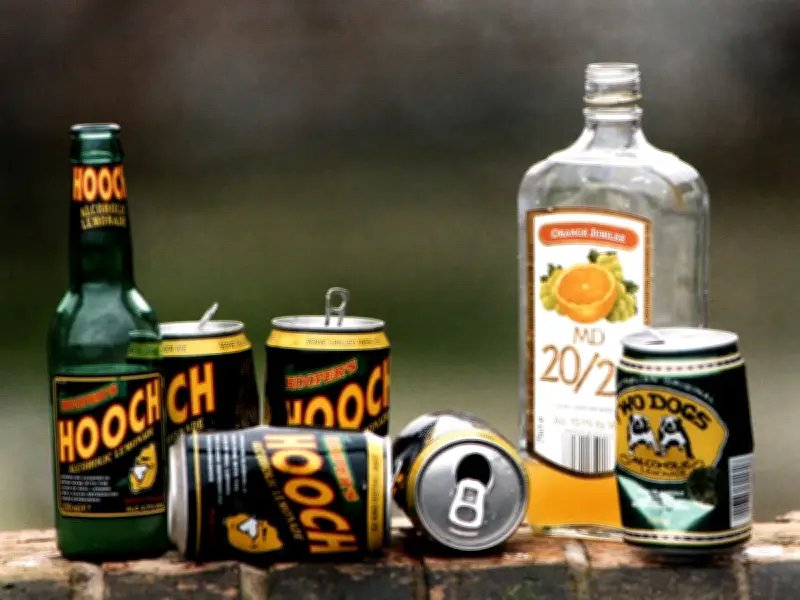
The 1990s was a regrettable decade for drinks. Three decades ago, a new breed of beverage swept through pubs, nightclubs and supermarkets. Boasting garish labels, alluring names and exotic flavours, these drinks triggered a wave of alarm across the media and even amongst politicians. We are, of course, referring to the "alcopop" — a previously unheard-of term that also spawned further concoctions like the "turbo shandy" (which involved adding a shot of vodka to an already potent drink).
The Rise and Fall of Alcopops
The 1990s and early 2000s were the heyday for these beverages, which Alcohol Concern described as "a pretty cynical attempt to recruit young drinkers who don't naturally like the taste of alcohol by tempting them with flavours more likely to be found in soft drinks". It wasn't long before the public backlash prompted certain manufacturers to redesign their packaging, with some supermarkets outright refusing to stock them. While many still exist today, they are largely a shadow of their former selves compared to their 1990s and 2000s heyday.
And, naturally, alcopops weren't the only drinks that defined the era — who could forget the iconic Boddingtons adverts featuring a young Melanie Sykes, the unmistakable bottle of "Newcky Brown" or the widespread fondness for an Archers and lemonade? How many of these did you drink?

Hooch: The King of Alcopops
Hooch was arguably the drink that epitomised the alcopop phenomenon of the 1990s. It launched in 1995 and swiftly dominated the market, with millions of bottles being consumed by young drinkers weekly. Its alcoholic content stood at 4.7% during the 1990s. It was withdrawn from sale in 2003 due to declining sales and shifting preferences, before making a comeback in 2012.
WKD and the Cheeky Vimto Legacy
WKD and its recognisable blue hue was a major player amongst alcopops that carried us through the late 1990s and into the 2000s. Thanks to Charlotte Church it also forms one half of the now legendary "cheeky Vimto". The other half being port.
MD 20/20: Mad Dog
MD officially stands for the name of the drink's producer, Mogen David. But you will know it simply as "Mad Dog", presumably due to the impact it had on those who consumed it. Flavours included blue raspberry and electric melon.
Reef: The Non-Carbonated Sensation
Reef proved extremely popular during the 1990s in its signature orange and passionfruit flavour (though how much of either orange or passionfruit was actually in it remains debatable). It wasn't carbonated so you could drink it with alarming speed, which many naturally did. It was discontinued in the early 2000s then discount chain B&M started stocking it again in 2024, priced at £8.50 for a pack of ten.
Bacardi Breezer: A Cultural Phenomenon
It's been called a "massive cultural phenomenon" which "defined the original alcopop and ready-to-drink [industries]". Its vibrant colours and flavours like zesty orange, zingy lime and crisp watermelon became synonymous with UK nightlife in the 1990s (it arrived on the UK market in 1993, the same year as Jurassic Park and Mrs Doubtfire hit the cinema and I Will Always Love You dominated the charts). It remained available for 22 years before being withdrawn in 2015 then brought back in 2025.
Boddingtons: The Cream of Manchester
It wasn't just alcopops ruling the popular drinks sector in the 1990s. Boddingtons transformed from a regional Manchester brewery into a nationwide sensation, thanks largely to its advertising campaign featuring Melanie Sykes and memorable lines like "By 'eck it's gorgeous". Its portrayal of Manchester as Venice has even been recognised for influencing the development of the city in subsequent decades. Unfortunately, it didn't have the same impact on "the cream of Manchester" itself: its original brewery shut in 2005 and the beer is now produced elsewhere.
Metz and the Judderman
You may not recall the drink, which never gained the widespread popularity of WKD or Bacardi Breezer, but you will recall the Judderman advert that accompanied it. A black schnapps drink, Metz first appeared in 1996, but it was in 2000 it truly left its mark with an advert that was sufficient to give anyone nightmares.

Two Dogs: The Original Alcoholic Lemonade
Although Hooch is the iconic alcopop of the 1990s, Two Dogs actually came first and is frequently referred to as the "world's first brewed alcoholic lemonade". It originated in Australia, reportedly because an Australian lemon farmer needed something to do with all the excess lemons he was growing.
Smirnoff Ice: The Beer Alternative
Smirnoff Ice was marketed as an "alternative to beer" when it launched in 1999. It proved an almost immediate success, becoming Britain's best-selling alcopop and a fixture in pubs and nightclubs throughout the 2000s. Its popularity waned, but in 2025 its parent company Diageo announced ambitions for Smirnoff Ice to reassert itself as a firm favourite amongst a new wave of young adults.
Archers: The Peach Schnapps Staple
Archers Peach Schnapps was enormous in the 1990s, a cornerstone of the decade's nightlife, routinely mixed with lemonade and frequently used as the foundation for beloved cocktails such as Sex on the Beach. "Archers and lemonade" still trips off the tongue 30 years on, so commonplace was the phrase.
Aftershock: The Potent Shot
Apologies if you had long since buried the memory of what Aftershock did to you — the mere mention of the name has probably brought it flooding back. Aftershock was a particularly potent shot (30%) that produced a distinctive "hot-and-cold" sensation in your mouth. It remains available today, though it no longer commands the cultural influence it enjoyed in the 1990s.
Caffreys: The Aspirational Beer
If Boddingtons was the unapologetically mainstream beer of the 1990s, Caffreys was the aspirational, premium alternative. It entered the UK market in 1994 at a slightly steeper price than rival beers. Its identity was never entirely straightforward. It resembled bitter in appearance, was as chilled as lager and produced the cascading, settling effect of a stout once poured. Whatever its classification, at 5.2% it had a notable impact on one's capacity to stay coherent.
Special Brew: The High-Strength Lager
Another beer with absolutely no pretensions. At 9%, Carlsberg Special Brew packed 4.5 units of alcohol into every can and seemed to have little point other than to get you drunk quickly. Confusingly, the beer proclaimed on the tin that it was "by appointment to the Royal Danish court" while also claiming to have been first brewed in honour of Winston Churchill.
Lambrini: The Prosecco Predecessor
Long before Prosecco dominated the scene, there was Lambrini. Launched in 1994, Lambrini was 6% upon its introduction and was the go-to tipple for teenage girls and young women everywhere. Bet you can almost taste it now.
Diamond White: The Gut Rot Cider
Nicknamed by some as "gut rot", Diamond White was a high-strength cider available in bottles, cans or, for youngsters who consumed it in woodland or at rural bus stops, flagons. At 8.2% it was formidable. One former drinker on Reddit recalls how she buried a can in woodland near her home 30 years ago because, having finished one, she simply couldn't face another.
Newcastle Brown: The Student Union Favourite
Fondly referred to as "Newcky Brown", there's no drink quite like it. It had existed for 60 years before experiencing a surge in popularity during the 1990s and even backed Newcastle United FC throughout its successful period in that era. Its revival was especially prominent in student union bars and by the late 1990s the ale was allegedly "the most widely distributed alcoholic product in the UK".