Tradeswomen Bring Safety and Comfort to UK Domestic Abuse Refuges
In a significant shift for the UK's domestic abuse support sector, refuges are increasingly turning to female tradespeople to maintain their properties, aiming to reduce distress for survivors in a traditionally male-dominated industry. Data from the Office for National Statistics reveals that there were 48,000 tradeswomen in the UK in 2021, marking a growth of 41% from 2006. However, this still represents only about 4% of the total trades workforce, with construction consistently ranked as the most male-dominated industry in the country.
Addressing Trauma Through Female-Led Maintenance
Refuge, a leading domestic abuse charity, manages 64 homes for survivors across the UK. Lisa Cantwell-Hope, the head of property services at Refuge, explains the challenges of relying on male contractors. "The presence of men can be distressing and could trigger past traumas for our survivors," she said. "Male contractors need an escort to make our survivors feel more comfortable, and we always put a notice out to all our residents saying there will be a male presence in the building today. So it can be challenging and takes up more time."
This reliance on male workers has prompted a strategic move towards hiring more tradeswomen. Cantwell-Hope added, "If we could just use female contractors, I’d be a happy woman, but there isn’t enough currently. Having them makes our jobs a lot easier, and it makes it easier to get people in the refuges, because there’s that common understanding of the sensitivity. They say they feel much more relaxed having a female in the property."

Regional Disparities and Growth in Female Apprenticeships
Regionally, the West Midlands leads with the highest number of tradeswomen, making up 4.4% of all tradespeople, followed by London at 2.98% and the south-west at 2.24%. In contrast, areas such as the East Midlands, north-east, Northern Ireland, Scotland, south-east, and Wales have less than 1% of tradeswomen, according to 2023 data from My Local Toolbox.
Despite these disparities, there are clear signs of progress. The number of women taking construction and engineering apprenticeships rose by 73% between 2019 and 2022, indicating a positive trend towards greater gender diversity in the sector. This growth is crucial for charities like Refuge, which are slowly transitioning from handymen to handywomen to better serve survivors.
Innovative Solutions and Personal Experiences
To source female workers, Refuge is collaborating with TaskHer, an online directory of tradeswomen founded by Anna Moynihan and her husband in 2021. Moynihan started the service after struggling to find tradeswomen during her home renovation. "I found that every time a tradesperson came to our house, they were a man and they would always speak to my husband and not me," she recalled. "It was really frustrating."
TaskHer initially catered to consumers, including single women, the LGBT community, and those with religious preferences, but soon received inquiries from domestic abuse charities. "We realised that they were having essentially the same issues that we had from a personal perspective, but on a larger scale," Moynihan explained. "It wasn’t necessarily about convenience, it was about creating an environment that the women who are living in their refuges would still feel safe in." The service now works with Refuge and other charities, primarily in London, with plans to expand nationwide.
Voices from the Field: Tradeswomen Making a Difference
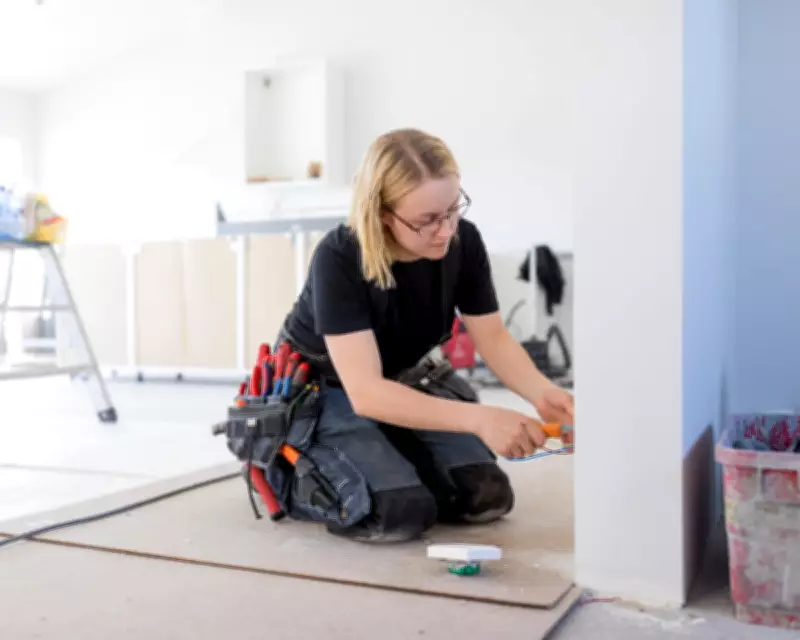
Erin, a 26-year-old electrician in London, has been working with Refuge for several months, performing tasks ranging from odd jobs to replacing consumer units in safe houses. She described the role as rewarding, emphasizing the importance of comfort in sensitive settings. "If you can make anyone feel more comfortable in a situation, why wouldn’t you want to do that anyway?" she said. "You can feel it in the air, the anxieties just lift slightly when you go in and they can see who you are."

Erin noted the scarcity of female peers in her field, though she has observed a gradual increase. "I was the only girl on my course at the time and I don’t think they had another one for at least a couple years after that," she shared. "Every day on the job and going around different sites, I never encountered any tradeswomen, never mind an electrician." She also highlighted ongoing sexism, such as older men scrutinizing her work, but remains optimistic about change, citing more women entering roles like gas engineering, plumbing, and decorating.
Looking Ahead: A Safer Future for Survivors
As the UK sees a rise in tradeswomen, their impact extends beyond statistics to tangible improvements in safety and well-being for domestic abuse survivors. Refuge's efforts to integrate female contractors reflect a broader movement towards inclusivity and trauma-informed care in support services. With continued growth in female apprenticeships and initiatives like TaskHer, the future holds promise for more equitable representation in trades and enhanced comfort in refuges nationwide.