Iran's Strait of Hormuz Threat Could Devastate Global Energy Markets
Iran has issued a stark warning that it will shut down the Strait of Hormuz if the United States and Israel launch a military conflict against it. This critical maritime chokepoint handles approximately a quarter of all seaborne oil and a fifth of global liquefied natural gas shipments, making any disruption potentially catastrophic for major economies reliant on Gulf energy supplies.
Heightened Tensions and Military Posturing
The strategic waterway has become the focal point of escalating tensions involving Iran, the US, and Israel, with energy markets already reacting nervously to the prospect of disruption. Iran temporarily restricted sections of the strait during live-fire exercises last Tuesday, citing safety concerns—a rare move that coincided with heightened friction following warnings from former US president Donald Trump about potential military action over Tehran's nuclear programme.
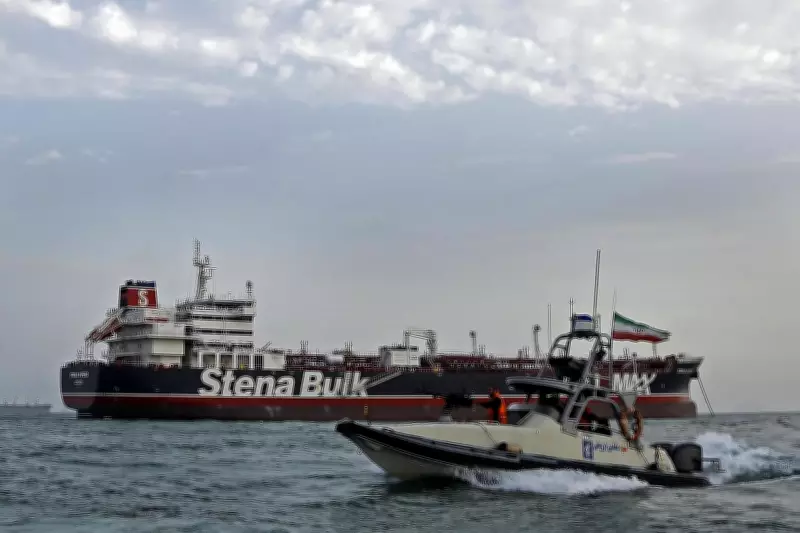
Simultaneously, the world's largest warship, the aircraft carrier USS Gerald R Ford, has been deployed to the Middle East as part of the most significant US military build-up since the 2003 invasion of Iraq. The strait, which connects the Persian Gulf to the Arabian Sea, features two shipping lanes each nearly two miles wide, separated by a buffer zone, and sees about 3,000 vessel transits monthly.

Critical Energy Chokepoint with Limited Alternatives
Bridget Payne, head of oil and gas forecasting at Oxford Economics in the UK, emphasises that the Strait of Hormuz remains "one of the world's most important energy chokepoints." She explains, "Around a quarter of seaborne oil and a fifth of global LNG shipments pass through it, mainly from Gulf producers to Asia, and most Gulf suppliers have no alternative sea route for exports."
While Saudi Arabia and the United Arab Emirates can bypass the strait via pipelines, Payne notes they can collectively reroute only about three million barrels daily of crude oil—roughly one-fifth of the typical volume transiting the strait. "The LNG risk is even more acute," she adds. "Qatar is the world's second-largest LNG exporter, and all of its LNG exports pass through Hormuz with no alternative route. Any disruption would tighten supply quickly, both in Asia and more broadly as buyers compete for available cargoes."
International Calls for De-escalation
This mounting danger has prompted several nations, including China, to urge restraint. Chinese foreign ministry spokesperson Guo Jiakun stated, "The Persian Gulf and nearby waters are an important route for international trade in goods and energy. Keeping the region safe and stable serves the common interests of the international community." He added that Beijing stands "ready to step up communication with Iran and other relevant parties to continue playing a constructive role for a de-escalation."
US secretary of state Marco Rubio warned that closing the strait would be "another terrible mistake" for Iran, describing it as "economic suicide" that would merit a response. UK foreign secretary David Lammy similarly cautioned against blockading the waterway, while EU foreign policy chief Kaja Kallas labelled such action "extremely dangerous and not good for anybody."
Escalation Risks and Strategic Signalling
Payne highlights that the current phase of tensions differs from previous episodes. "What's different this time is the risk of escalation alongside domestic unrest, which raises the chance that the regime feels its survival is at stake," she observes. "If it reaches that point, Iran may be more willing to take options that are costly to itself, including endangering its own exports and damaging relationships with neighbours and key trading partners by disrupting traffic through the strait."

Dr Mudassir Qamar, an associate professor at Jawaharlal Nehru University in Delhi, notes that the US military build-up and Iranian exercises "underline that the situation can take a deadly turn if the ongoing negotiations between Iran and the US fail to reach an agreement." He points out, "The US has on several occasions stated that Iran should agree to a deal and stop nuclear enrichment and end its quest for nuclear weapons. This has put Iran in an extremely difficult situation with only one path to avoid a military confrontation. This is indeed dangerous."
Partial Disruption Could Have Major Impact
While Iran's threats are largely viewed as strategic signalling, Payne warns that "it's credible signalling because Iran doesn't need to 'close' the strait to have impact." She explains, "The more plausible operational intent is to demonstrate it can disrupt flows on a sliding scale, through interference, jamming, spoofing, harassment, or selective actions that raise insurance and shipping costs and deter some traffic. That kind of partial disruption can move markets quickly without the economic and political blowback of a sustained, total shutdown."
Asia's Vulnerability to Supply Disruption
According to data and analytics firm Kpler, such a move would leave Asia reeling. Muyu Xu, senior research analyst at Kpler, reveals that crude oil and condensate flows through the strait currently run at about 15 million barrels per day, with refined products adding roughly 3.3 million barrels. "Roughly 85 per cent of these volumes are destined for Asian markets," Xu notes.
Kpler's data shows nearly 57 per cent of China's seaborne crude imports originate from the Middle East, along with 46 per cent of India's, 93 per cent of Japan's, and 70 per cent of South Korea's. LNG exposure follows a similar pattern, with approximately 27 per cent of Asian imports passing through Hormuz. Asian economies with high dependence on imported crude and limited inventory buffers—such as India, Vietnam, and Thailand—would experience immediate supply stress even from a two-week disruption.
Kpler lead research analyst Cairan Tyler argues, "The market should be and is concerned about the standoff between Iran and the US. Iran alone accounts for just under eight per cent of global waterborne LPG supplies. Moreover, 27 per cent of global LPG flows move through the Strait of Hormuz. As such, any lengthy closure of the Strait or shipowners insisting vessels not enter the region would significantly tighten LPG supply in Asia."
Limited Rerouting Capacity and Economic Consequences
Gulf exporters including Iraq, Kuwait, and Qatar remain structurally dependent on the strait, while Saudi Arabia and the UAE can only partially reroute exports via pipelines. Kpler estimates that seven million barrels per day could be redirected using existing alternative infrastructure, assuming full operational availability and no secondary bottlenecks—leaving approximately eight million barrels daily stranded in a full closure scenario.
Xu adds, "The annual value of crude transiting the strait is approximately $375 billion," based on 2025 average Dubai benchmark prices, highlighting the enormous economic magnitude of any disruption. Payne notes that even slight disruptions will generate outsized effects: "Even partial disruption can tighten prompt supply quickly and lift prices via higher freight, insurance, and delays. It's strategically important for gas: disruption would directly threaten Qatar's LNG exports. Qatar is the core LNG supplier to Asia, so any interruption would tighten supply rapidly, first in Asia and then more broadly through global competition for cargoes."
Legal Implications and Likely Strategy
While international maritime law protects transit through strategic waterways, any deliberate obstruction risks being interpreted as an act of war. However, experts believe Tehran's probable strategy involves calibrated signalling rather than full closure. Dr Qamar concludes, "Iran has military capability to disrupt, and even close the Strait of Hormuz, and it can utilise this as a military manoeuvre to put pressure on the US in case a war erupts. However, Iran is unlikely to use the closure of the strait as a first move to avoid a conflict."