The Rise of Prediction Markets: A New Gambling Threat for UK Youth
Prediction markets – platforms enabling users to wager on virtually any outcome – are poised to enter the United Kingdom, potentially creating the next major gambling crisis. These digital arenas, which have already captivated Generation Z in the United States, allow betting on subjects ranging from political events to alien discoveries, raising serious concerns about addiction and ethical boundaries.
From White House Briefings to Venezuelan Captures: The American Precedent
The phenomenon gained attention during a White House press briefing on 7 January, when press secretary Karoline Leavitt's speaking duration became a betting event on Kalshi, one of America's leading prediction platforms. Users traded over $40,000 on how long she would speak, with one triumphant bettor declaring it "free money." This incident exemplifies the platforms' expansion beyond traditional sports betting into political and cultural speculation.
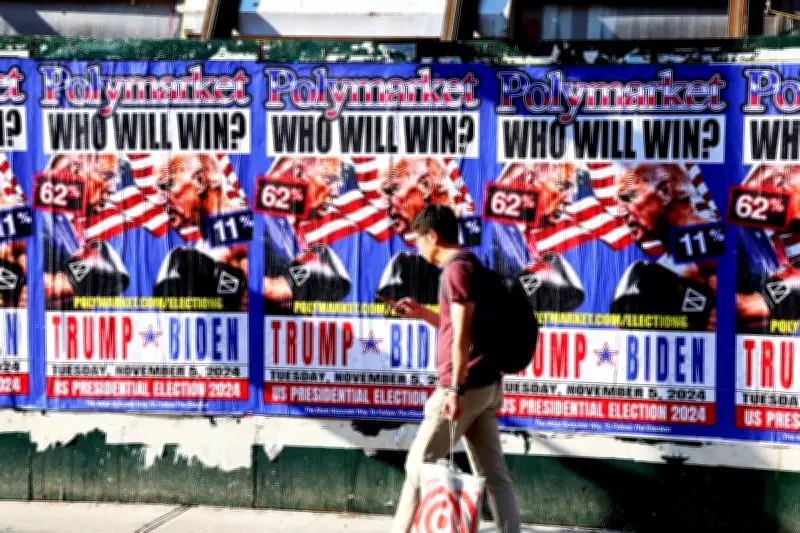
Kalshi and its competitor Polymarket enable wagers on diverse topics including Nicolas Maduro's capture, Donald Trump's potential acquisition of Greenland, Jeffrey Epstein's alleged survival, and confirmation of extraterrestrial life. With Coefficient Capital research indicating disproportionate Gen Z awareness, these platforms combine gambling, cryptocurrency, and sensational politics to attract young male users.

Regulatory Battles and UK Connections
Despite their American focus, prediction markets have British origins. Kalshi co-founder Tarek Mansour recalled during his Goldman Sachs internship how Brexit sparked interest in hedging political outcomes. Regulatory challenges have plagued both Kalshi and Polymarket since their 2018 and 2022 launches respectively, with ongoing legal battles across multiple US states.
Polymarket faced a US ban until early last year due to regulatory conflicts during the Biden administration, though the Trump administration has shown greater support for prediction market operators in key legal disputes. This regulatory landscape is crucial as these platforms approach UK markets.
How Prediction Markets Differ from Traditional Gambling
Unlike conventional bookmakers like Paddy Power, prediction markets operate without centralized odds-setting. Instead, users trade contracts as "makers" and "takers," with odds determined by market activity rather than house calculations. Under US law, these platforms are classified as financial instruments rather than gambling products, though addiction psychiatrist Dr. Timothy Fong of UCLA's Gambling Studies Program warns this distinction blurs dangerously.
"The words used – 'contracts' and 'positions' – are investment terminology, but the experience closely resembles gambling," Dr. Fong explains, highlighting how language obscures risks.
Political Manipulation and Anonymous Trading
While offering sports wagers, prediction markets gain notoriety through political and cultural questions. Suspicious trading patterns have emerged, including a mysterious user profiting half-a-million dollars before US operations in Venezuela – a move described by Better Markets CEO as having "hallmarks of insider trading." Cryptocurrency-based anonymity facilitates such activities, prompting legislative responses like Democrat Ritchie Torres's proposed bill against federal officials betting with privileged information.
Platforms market themselves as harnessing "wisdom of the crowd," with Polymarket CEO Shayne Coplan claiming his site represents "the most accurate thing we have as mankind right now." This positioning leverages Web 3.0 decentralization themes familiar from cryptocurrency and NFT trends that previously attracted young men.
The UK Incoming: Matchbook's Planned Launch
UK-based Matchbook prepares to introduce prediction markets domestically, with solicitor Tim Endersby noting their simplified yes/no format appeals to novice users. Unlike the US where prediction markets fall under Commodity Futures Trading Commission jurisdiction, UK regulation classifies them strictly as gambling, likely prohibiting trivial bets like tracking political speech patterns. However, general election markets will be offered, with companies monitoring future opportunities.

Political Alignments and Misinformation
Prediction markets display clear political biases, having accurately forecast Donald Trump's 2024 election victory when traditional polls showed narrow margins. Trump subsequently promoted their odds on Truth Social, while his son Donald Trump Jr. serves as paid strategic adviser to Kalshi and unpaid adviser to Polymarket.
These platforms increasingly blend misinformation with market creation, as when Polymarket's social media falsely suggested Don Lemon faced KKK Act charges while simultaneously opening a betting market on his potential prosecution. Such tactics create feedback loops where alarmist reporting generates betting opportunities framed as legitimate forecasting.
Addiction Risks and Psychological Mechanisms
Dr. Fong identifies young men as particularly vulnerable, noting their affinity for sports, technology, and internet engagement. Prediction markets combine sports betting excitement, trading professionalism, and political discourse fervor – a potent mix in increasingly divisive political climates where schadenfreude can monetize others' misfortune.
Anthropologist Natasha Dow Schull's research on slot machine addiction reveals parallels with prediction markets' design. Her concept of the "machine zone" – where users enter loops of risk and reward – applies to smartphone-based betting interfaces that transform life events into binary wagers. "Sports betting has turned fans into speculators," Schull observes, noting prediction markets' expansion into everyday occurrences.
The Human Cost: Oliver Long's Tragedy
The dangers manifest tragically in cases like Oliver Long, who died by suicide in 2024 after unregulated gambling websites "consumed his mind." His descent from initial winnings into addiction illustrates risks prediction markets could exacerbate through their accessible, anonymized, and constantly available formats.
As these platforms integrate with mainstream media through CNN and CNBC partnerships, and appear in Google search results, their reach expands. They transform partisan politics and get-rich-quick dreams into contractual networks, leveraging smartphone gamification and dopamine loops. With addiction specialists anticipating prediction market-specific disorders, the UK faces a looming public health challenge as this phenomenon crosses the Atlantic.