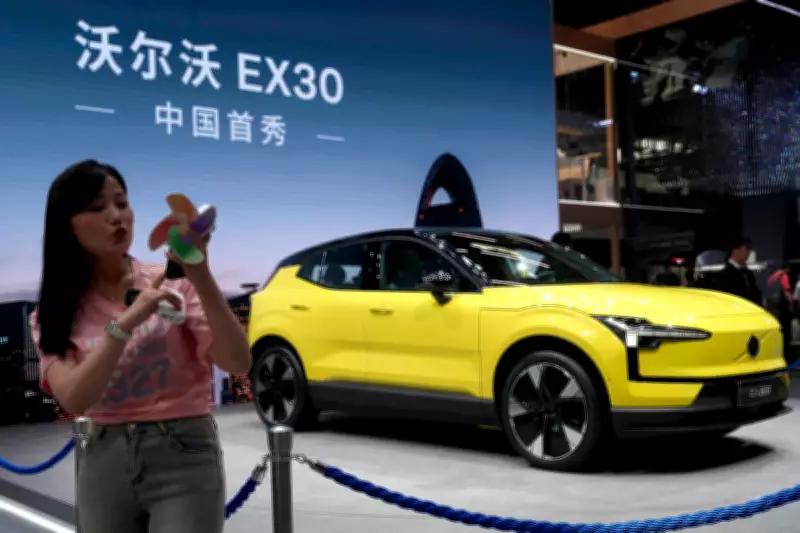
Volvo Recalls Over 40,000 EX30 Electric SUVs Amid Battery Overheating Concerns
Volvo Cars has announced a major recall affecting more than 40,000 of its flagship EX30 electric SUVs, citing a serious risk of battery pack overheating that could lead to fires. This development poses a significant threat to the Swedish automaker's long-standing reputation for safety and is expected to incur substantial financial costs, potentially running into hundreds of millions of dollars.
Details of the Recall and Affected Models
The recall, which was confirmed by Volvo to Reuters on Monday, involves replacing specific modules within the high-voltage battery packs of the compact EX30 SUV. A total of 40,323 vehicles are impacted, including both the Single-Motor Extended Range and Twin-Motor Performance variants equipped with these problematic battery cells.
Volvo, which is majority-owned by China's Geely, stated that the recall directly addresses the potential overheating hazard. "We are now contacting the owners of all affected cars to advise them of next steps," the company said in an official statement. In response to the news, Volvo's shares dropped by 4% following the Reuters report.

Strategic Implications and Industry Context
The EX30 model is a critical component of Volvo's strategy to compete with more affordable Chinese electric vehicle brands. This makes the battery safety issue particularly sensitive for the manufacturer, as it could undermine consumer confidence in a key product line.
Sam Fiorani, Vice President for Global Vehicle Forecasting at AutoForecast Solutions, emphasized the importance of this model, noting, "The EX30 especially is very important to Volvo, so they have to get it right." The recall comes at a challenging time for Volvo, as the carmaker is pursuing a $1.9 billion savings initiative and seeking deeper integration with its parent company, Geely.
Battery Supplier and Financial Impact
The batteries in question were manufactured by Shandong Geely Sunwoda Power Battery Co., a joint venture backed by Geely. Volvo has indicated that the supplier has already fixed the underlying problem and will provide the replacement battery cells. However, the financial ramifications could be steep.
According to a Reuters analysis based on estimates from Chinese battery manufacturers, the cost of the new replacement modules alone could reach approximately $195 million, excluding additional expenses for logistics and repairs. Volvo has described these calculations as "speculative in nature" and confirmed that discussions with the supplier are ongoing.
Safety Measures and Consumer Response
In the interim, Volvo has advised owners of affected EX30s to limit charging to 70% of battery capacity to mitigate the fire risk. Since December, the company has issued similar guidance to owners in over a dozen countries, including the United States, Australia, and Brazil, also recommending that vehicles be parked away from buildings.
Andy Palmer, an industry veteran who oversaw the launch of Nissan's Leaf EV, highlighted the stakes for Volvo, stating, "Volvo can't afford a safety issue because that strikes at the heart of their brand." The recall has already sparked concern among consumers, with some owners expressing dissatisfaction.
British insurance agent Matthew Owen, who chose the EX30 for its range and Volvo's safety reputation, commented, "The automaker should take responsibility because it is producing a car that is dangerous." Similarly, Tony Lu, an EX30 owner in New Zealand, reported facing higher costs due to the charging cap reducing the car's effective range, adding, "I would be absolutely delighted if they bought the car back."
Broader Industry Precedents
This incident is not isolated in the electric vehicle sector. In 2020, General Motors recalled 140,000 Chevy Bolts due to a fire risk linked to batteries supplied by South Korea's LG Electronics, a move that cost an estimated $2 billion to resolve. Such cases underscore the ongoing challenges automakers face in the rapid development and deployment of new EV technologies.

Volvo has committed to replacing the affected battery units free of charge, but the recall's impact on the brand's image and financial health remains a pressing concern as the automotive industry continues to navigate the complexities of electric mobility.