Retirement savers across the United States were confronted with significant fresh financial losses on Monday, as widespread tariff chaos triggered a sharp and substantial decline on Wall Street. The dramatic sell-off materialised after President Donald Trump unexpectedly vowed to implement a sweeping 15 percent global tariff, a move that directly contradicted recent market optimism following a pivotal Supreme Court ruling.
Market Indices Experience Steep Declines
By 12:45pm Eastern Time in New York, the Dow Jones Industrial Average had plunged a staggering 810 points, representing a precipitous drop of 1.65 percent. Concurrently, the broader S&P 500 index slumped by 1.2 percent, while the technology-heavy Nasdaq Composite fell by 1.3 percent. This collective downturn erased the brief rally that had occurred in the immediate aftermath of the Supreme Court's decision on Friday, which had struck down President Trump's earlier 'reciprocal' tariff plan.
Trump's Fiery Announcement Rattles Investors
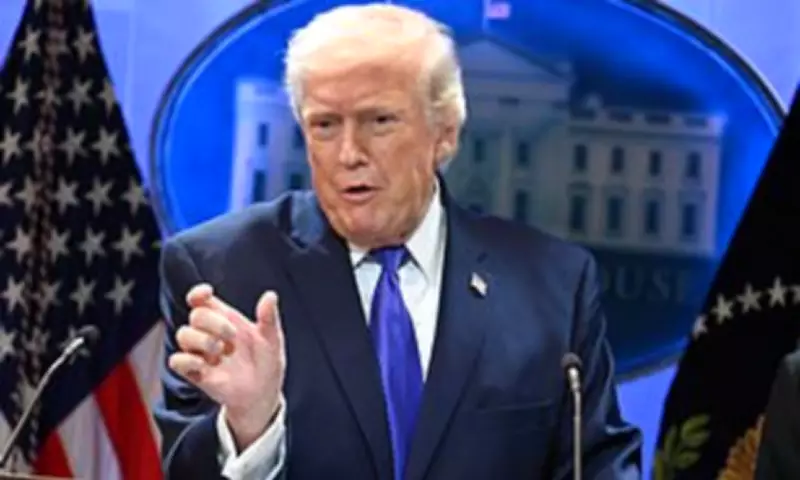
In a characteristically fiery post on his Truth Social platform, President Trump issued a stark warning to the international community. He declared that any nation attempting to 'play games' with the recent court ruling would face even higher punitive duties. The President asserted that the new blanket 15 percent worldwide tariff would take effect immediately, although considerable uncertainty remains regarding whether the necessary formal administrative paperwork has been fully completed and filed.

This sudden and aggressive policy shift profoundly rattled global investors, who had briefly harboured hopes that the Supreme Court's intervention would lead to reduced tariff levels across the board. There was even speculation that the ruling could potentially pave the way for refunds to companies that had already paid the earlier, now-invalidated levies. The swift reversal from the White House has injected severe volatility and anxiety into financial markets.
International Reaction and Broader Economic Impact
European trade officials have already signalled that ongoing negotiations with Washington could be placed in serious jeopardy. Officials stated that the current unpredictable environment is not conducive to fostering 'fair, balanced and mutually beneficial' transatlantic trade relations. They have urgently called for greater clarity and transparency from the United States administration regarding its next strategic steps and long-term trade policy objectives.
For everyday American citizens, the economic impact was both immediate and palpable. Retirement investment accounts and pension funds directly tied to the performance of the stock market witnessed account balances slide considerably. The renewed and intensified tariff push also triggered significant movements in other key asset classes, as investors scrambled to reposition their portfolios in response to the heightened uncertainty.
Safe-Haven Assets and Cryptocurrency Volatility
As investors sought traditional safe-haven assets, gold prices surged dramatically. Gold futures jumped by nearly 3 percent, propelling the precious metal above the critical threshold of $5,200 per ounce. In stark contrast, the cryptocurrency market experienced pronounced volatility, with Bitcoin tumbling below the $65,000 level at one point during the session. Although it managed to claw back some losses to trade around $66,000, the leading digital currency remains down more than 2 percent as traders rapidly pull back from riskier speculative bets.
Legal Authority and Market Prognosis
President Trump's tariff announcement is understood to rely on the authority granted under Section 122 of the Trade Act of 1974. This provision allows for the imposition of temporary tariffs for periods of up to 150 days without requiring explicit Congressional approval. However, Wall Street analysts and investment managers are growing increasingly concerned about what other unilateral trade measures the President might be contemplating, fearing further market disruptions.

Michael Landsberg, the chief investment officer at Landsberg Bennett Private Wealth Management, provided a sobering assessment of the situation. He remarked that the constant back-and-forth on trade policy is unlikely to disappear anytime soon, creating a persistent headwind for investors. 'The push and pull with tariffs is likely to be a distracting and destabilising theme for financial markets for the remainder of the year,' Landsberg stated, highlighting the prolonged uncertainty facing the investment community.