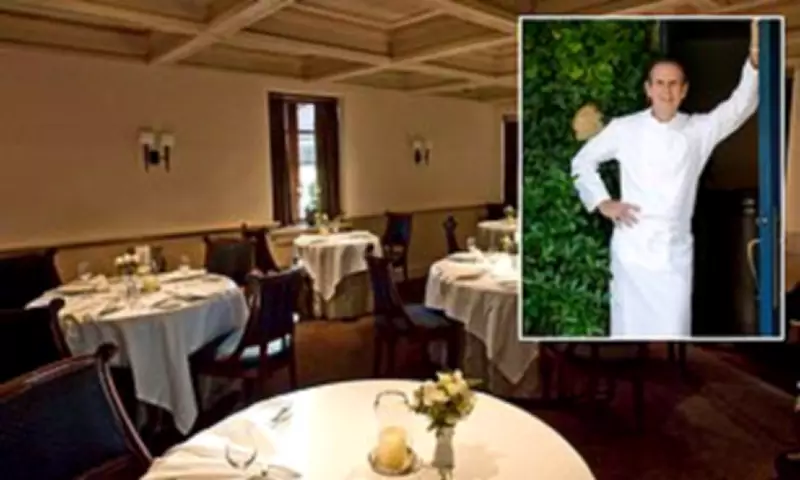
Celebrated Chef Thomas Keller Opposes Affordable Housing Plan in Yountville
Renowned bi-coastal chef Thomas Keller is leading opposition against plans for hundreds of affordable homes in the wealthy California town of Yountville, arguing the development could trigger significant economic fallout for the upscale community. Keller operates two of Yountville's most elite dining establishments: Michelin Guide-listed Bouchon and the three-Michelin-starred The French Laundry, where dinner with wine pairings frequently exceeds $1,000 per person.
The Yountville Commons Development
Yountville Commons, a mixed-use development featuring both affordable and market-rate housing, has been progressing since receiving approval last year. The project carries projected costs ranging from $40 million to $60 million and is set to replace the former Yountville Elementary School, which closed its doors in 2020. The town purchased the property for $11 million in 2024 using funds from a 2018 ballot measure that increased lodging taxes specifically to finance affordable and workforce housing.
According to town manager Brad Raulston, the development addresses a critical need since most of Yountville's employees commute into the community daily for work. The small town, with fewer than 4,000 residents, hosts several upscale restaurants and maintains a cost of living nearly 40 percent higher than the national average.

Local Business Opposition
Keller has joined other local business owners in criticizing the city for moving too rapidly and assuming the developer role without adequate consultation. His esteemed restaurant The French Laundry sits merely a two-minute drive from the proposed housing site.
'We support workforce housing and we support the Commons,' Keller stated in a release. 'But housing only works if it actually works for the people who live and work here. Before Yountville commits to a project of this size and cost, it's reasonable - and responsible - to slow down and make sure the fundamentals are right.'
Yountville's Ranch Market owner Arik Housley echoed these concerns, questioning the project's scale and potential financial risks for the affluent community. 'That means we owe it to the community to fully understand the financial exposure before moving ahead,' Housley emphasized.
Project Details and Design Concerns
The housing development could eventually total 150 units, though current plans envision approximately 120 rental homes. Town Council member Hillery Trippe, who cast the lone vote against the project last month, revealed that detailed drawings already shared with potential bidders show a studio-heavy layout with about 70 percent of studio apartments under 300 square feet and limited resident parking.
'We will be asking people to live in Yountville without a car, which is very tough, we have one very small market,' Trippe noted. Keller, speaking on behalf of his employees, criticized what he called the 'studio-heavy, dormitory-style approach' as inadequate for meeting workers' needs.
Calls for Greater Consultation
Keller and Housley have urged the town to step back and 'engage employers and workers more directly and resolve outstanding financial and design questions before proceeding with major funding and construction decisions.' Similar concerns emerged last month when Robin Chambers, owner of The Pilates Reserve, called for a complete project halt, pressing leaders to gather more local feedback and develop a detailed plan.
Raulston countered that the town has dedicated full attention to the workforce housing project since purchasing the school two years ago, conducting over 20 public meetings. 'After 23 public meetings and with key decisions like unit mix still being actively studied, we believe the responsible path is to continue the transparent process that has brought us here, not to pause it,' he asserted.
However, Trippe maintained that while outreach meetings collected community opinions, Yountville's employers—the very people the project aims to benefit—have not been 'meaningfully' consulted. 'To me, 23 meetings; that's good but it's not the end of the story,' she remarked.

Phased Development Approach
Raulston explained that the town plans to approach development in three phases of roughly 40 units each, with checkpoints after each phase to consider adjustments. This phased approach would allow Yountville to incorporate lessons from each stage and modify unit mix, design, and size accordingly.
Nevertheless, the town manager acknowledged that because most of Yountville's workforce are commuters, the new homes will not completely resolve the town's housing challenges. 'The town will continue to listen to the community as funding and phasing decisions are made by elected officials in line with established priorities, adopted plans and voter mandates,' Raulston confirmed.
The debate reached a critical point at Tuesday's city council meeting, with a study session scheduled to cover unit types and a workforce demographics report by Bay Area Economics. A subsequent meeting is slated for March 3 as Yountville continues navigating this contentious housing initiative.