Florence Police Launch Investigation Into Controversial 'Black Cube' Building
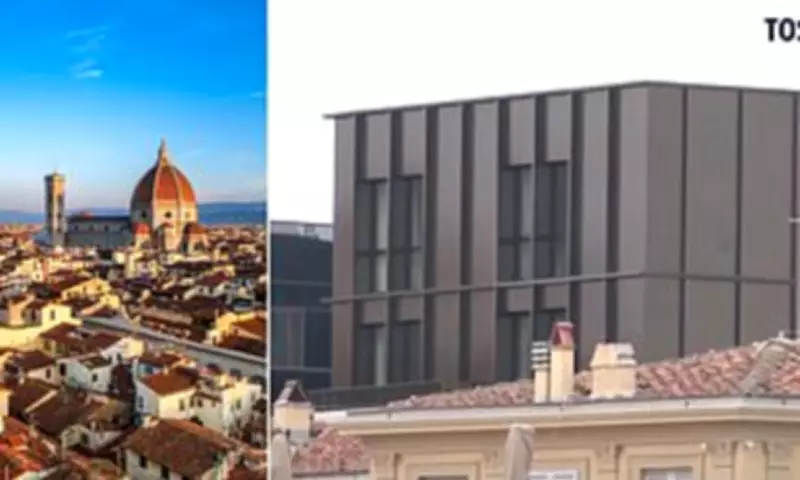
Police in Florence have initiated a formal investigation into how a new residential block, nicknamed the 'Black Cube' by outraged locals, was permitted for construction. The modern black burnished metal structure stands in stark visual contrast to the warm, earthy yellows and oranges that define the traditional Renaissance architecture of the historic Tuscan city.
Widespread Outrage and Demands for Demolition
The building's imposing presence has sparked fury across Florence, with even the city's ancient nobility condemning it as an 'affront' to the iconic skyline. A local newspaper poll conducted by La Nazione revealed that a significant 72.8 percent of respondents are calling for the structure's complete demolition. There are growing concerns that the city's UNESCO World Heritage Site status, granted in 1982, could be jeopardized by this modern intrusion.
Eike Schmidt, an opposition councillor and former director of Florence's renowned Uffizi Gallery, has been a vocal critic. 'It is totally ugly, totally out of context with Florence's cityscape and may break rules on height,' Schmidt previously told The Times. Having run for mayor in 2024, Schmidt confirmed he intends to lodge a formal complaint with UNESCO. 'We don't want Florence to lose its status, but maybe UNESCO can put pressure on the city to change the building materials and lower the height of the block,' he stated.

Police Question Twelve Over Permitting Irregularities
The investigation is focusing on potential irregularities in the permitting, planning, and zoning processes that allowed the high-rise to be built. Authorities are currently questioning twelve individuals, including architects and local councillors involved in the development. The probe also examines how the site's previous occupant, the Teatro Comunale (Municipal Theatre), was decommissioned and sold in 2013 under then-Mayor Matteo Renzi, who later became Italy's Prime Minister.
According to reports, the theatre passed through a state entity before being sold to an Italian investment subsidiary. It was subsequently purchased by major property firms Blue Noble and Hines as part of a joint venture within the Future Living fund, managed by London-based Savills. Hines maintains that the 'Black Cube' was constructed with all necessary permits in place.
Nobility and Residents Unite in Opposition
The controversy has drawn in Florence's historic noble families. Sixteen families, some tracing their lineage back to the Medici era (1434–1737), have publicly spoken out against the building. In a collective letter to the mayor, they declared, 'We must save Florence from any other ‘black cubes’. No more violence toward our city.'
Among the signatories is French Princess Claude Marie Agnès Cathérine d’Orléans, the former Duchess of Aosta, who has resided in Florence since 1964. She offered a blunt assessment: 'The Black Cube and the Social Hub on Viale Belfiore are monstrosities. I apologise to the architects who designed them, but that’s the way it is. I don’t understand why, when you do something new, you don’t try – I don’t mean copying – but perhaps taking inspiration from older buildings.'
Broader Implications for Urban Development
Officially named the Teatro Luxury Apartments, the building features a terrace, spa, sunroom, gym, and restaurant. It is situated on Corso Italia within the UNESCO-protected zone, a stone's throw from the US Consulate and Santa Maria Novella train station, and is surrounded by 19th-century buildings. The case highlights the extreme sensitivity of development in Florence, where even changing the colour of window shutters typically requires intense bureaucratic scrutiny.
Local resident Jacopo Palorni, 37, echoed a common sentiment, suggesting the luxury apartments are 'obviously not for Florentines.' Many long-term residents have been priced out of the historic centre, moving to more affordable outskirts. The investigation and public outcry serve as a stark reminder of the tensions between modern development and historic preservation, with precedents like Liverpool and Dresden having lost UNESCO status due to urban projects.