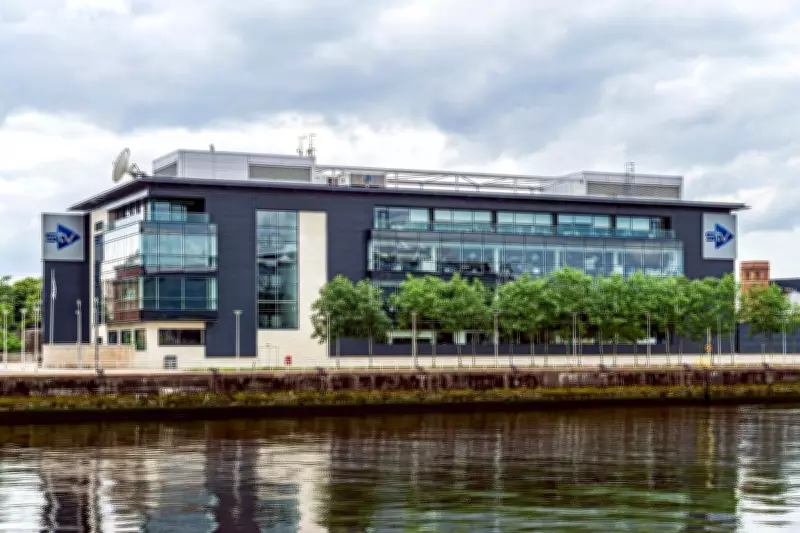
Media regulator Ofcom has approved STV's proposals to amend its regional news licences, paving the way for a revamped version of its flagship News At 6 programme. The broadcaster had applied in December to replace separate regional editions for its Central and North licence areas with a single programme produced from Glasgow, which will include dedicated regional segments.
Details of the Approved Changes
Under the new structure, the programme will feature a shared section broadcast across both licence areas, accounting for 70% of the content and incorporating contributions from across Scotland. The remaining 30% will consist of separate segments tailored specifically to each licence area. Ofcom noted that this revised proposal ensures a distinct regional character is retained, unlike STV's original request for full sharing of regional news at any time.
Ofcom's Rationale
In its verdict, Ofcom stated: "We are of the view that STV’s proposals to share more of its news programming across its two licence areas and remove the requirement to produce sub-regional opts will allow STV to continue to serve audiences with high-quality regional news." The regulator emphasised the importance of sustaining regional news in a challenging environment, adding: "It is crucial that people continue to be well served with quality regional news as their habits change. In a difficult and ever-changing environment, it must be made more sustainable so that it can be preserved."

Ofcom also highlighted that STV will maintain newsgathering resources across all its news bases, and it will be an enforceable licence condition that shared output is of particular interest to viewers in both areas. Furthermore, STV is rebalancing its news offering to increasingly reach audiences on digital platforms.
STV's Response
STV's chief executive Rufus Radcliffe welcomed the decision, saying: "We’re incredibly proud of STV News At 6, which remains Scotland’s most-watched news programme, but like all public service media companies, we must respond to the significant shift in audience behaviour. The changes Ofcom has approved to our licences will enable us to continue serving viewers with the high-quality, trusted national and regional news they expect from us. Crucially, this will be sustainable for our business and will be accessible on air and across all the digital platforms viewers now expect."
Opposition from Northern Scotland
However, the decision has drawn criticism from business and community leaders in northern Scotland. Russell Borthwick, chief executive at Aberdeen & Grampian Chamber of Commerce, expressed deep disappointment, stating: "Ofcom’s decision is deeply disappointing and flies in the face of overwhelming public opinion across northern Scotland. Our recent survey of more than 3,200 people found that 83% opposed these proposals, with fewer than one in 20 supporting them. It is difficult to understand how such clear and emphatic opposition from the communities affected has ultimately been set aside."
Borthwick added: "Local news matters. It plays a vital role in holding institutions to account, reflecting the experiences of communities and ensuring that the north of Scotland has a strong and distinct voice in the national conversation. While STV has made changes to its original proposals, the reality remains that the north of Scotland will lose its dedicated news service and the local presentation that has been a trusted part of viewers’ lives for generations."