US Government Takes Legal Action Against Illinois Over Prediction Market Regulation
The US government has initiated a lawsuit against the state of Illinois, aiming to prevent what it describes as unlawful state-level attempts to regulate the burgeoning prediction market industry. This legal move underscores a significant clash between federal and state authorities over the oversight of online platforms that allow users to wager on a wide array of events, from Oscar winners to military conflicts.
Rising Scrutiny of Prediction Markets
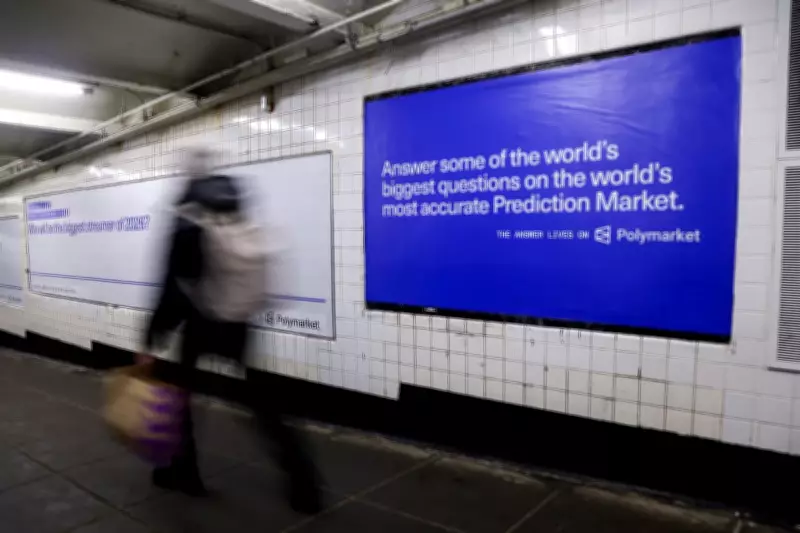
Prediction market sites, including prominent names like Kalshi and Polymarket, are experiencing increased scrutiny from both state governments and Congress. These platforms enable users to bet on virtually any outcome, a practice that many critics argue is essentially gambling under a different guise. The industry has grown rapidly, prompting regulatory debates about its classification and control.
Currently, prediction markets operate under federal commodities law, regulated by the Commodity Futures Trading Commission (CFTC), which classifies their offerings as "event derivatives." This federal oversight allows these platforms to be accessible in all 50 states to users aged 18 and older, unlike traditional sportsbooks that are restricted to states where sports betting is legalized. On these platforms, users trade against each other rather than against a house, with companies collecting transaction fees.

Illinois' Regulatory Efforts and Federal Response
Illinois introduced legislation earlier this year that would impose some of the strictest regulations in the country on prediction markets. The proposed measures include an effective ban on sports-related trades within the state, restrictions on advertising, mandatory age limits, and comprehensive consumer protections. In response, the Illinois Gaming Board issued cease-and-desist letters to companies such as Kalshi, Polymarket, and Crypto.com, alleging violations of state gambling laws through unlicensed sports wagering.
The federal lawsuit, filed in Chicago federal court, argues that Illinois' actions intrude on the exclusive authority of the federal government to regulate national swaps markets. It names gaming board officials, Illinois Governor JB Pritzker, and Attorney General Kwame Raoul as defendants. None of their offices have provided immediate comments on the matter.
Political and Industry Dynamics
The regulatory landscape for prediction markets is further complicated by political affiliations. While the Biden administration has sought to crack down on these platforms, the Trump administration has adopted a more lenient stance. Notably, Donald Trump Jr., the eldest son of former President Donald Trump, is an investor and unpaid adviser to Polymarket, as well as a paid adviser to Kalshi. Additionally, Trump's media company has announced plans to launch its own prediction platform called Truth Predict.
Resistance from states has intensified, with at least 20 federal lawsuits filed nationwide to curb prediction markets. These legal challenges dispute whether the companies should be treated as federally regulated financial exchanges or as gambling operations subject to state oversight. In Congress, bipartisan efforts are underway to introduce federal measures, including a bill that would ban sports-related wagers on these platforms and prohibit casino-style games.
Future Implications and Congressional Action
Democratic Senator Adam Schiff, who co-introduced legislation with Republican Senator John Curtis, has criticized the CFTC for enabling the growth of prediction markets. He argues that sports prediction contracts are merely sports bets by another name and calls for congressional intervention to protect state consumer protections and tribal sovereignty. As the legal battle unfolds, the outcome could set a precedent for how prediction markets are regulated across the United States, balancing federal authority with state interests in an evolving digital economy.