Whole Foods Embraces Junk Food with Secret Robotic Warehouse in Pennsylvania Store
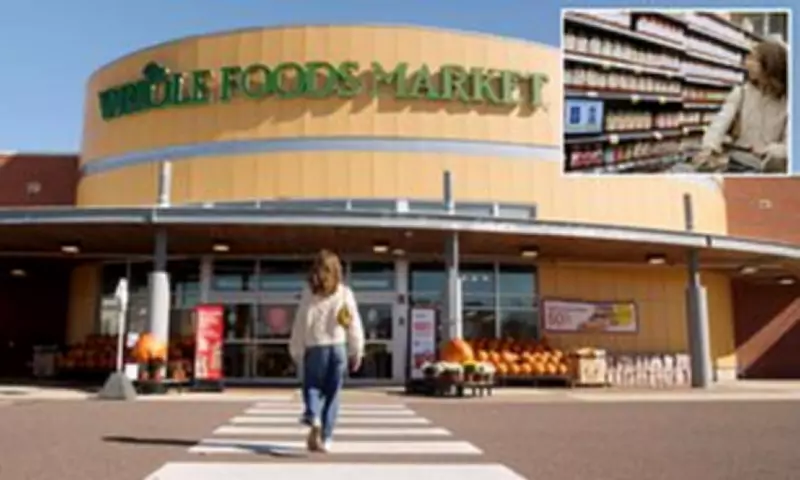
Whole Foods, the health-food empire built on organic kale and pristine labels, has taken a surprising turn at its Plymouth Meeting store in Pennsylvania. The retailer has quietly installed a hidden 10,000-square-foot robotic warehouse, where customers can now access Doritos and other classic junk food staples as part of their weekly shopping routine.
A High-Tech Hub for Guilty Pleasures
This secret tech hub, concealed from view, stocks over 12,000 products from both Whole Foods and Amazon, including many of America's favorite indulgent snacks. Shoppers can place orders online or scan QR codes scattered throughout the store, with items ready for pickup within minutes. Whole Foods CEO Jason Buechel explained in a press release: 'We've always taken pride in offering a wide selection of natural and organic products, but we understand our customers appreciate the convenience of one-stop shopping.'
The company maintains that this bold new setup allows customers to grab everything in one go—whether through a single trip or a quick click—without compromising the premium image the brand is known for. 'We're making grocery shopping more convenient for customers by thoughtfully blending our grocery offerings and leveraging new fulfillment capabilities in creative ways,' Buechel added.

Amazon's Influence and Brand Evolution
In November, Amazon, which acquired Whole Foods in 2017, announced plans for this micro-fulfillment center in the Plymouth Meeting store, signaling a potential evolution in the brand's identity. The chain has been testing the concept in recent months, which Kevin Ryan, CEO of Malachite Strategy and Research, described as essentially a high-tech back-room inventory system. 'The idea is that a large portion of the store operates as a dark area,' Ryan told Supermarket News. 'It functions as a warehouse section where consumers shop.'
More than 3,000 products from the 365 by Whole Foods Market line still adorn the shelves, alongside the nutritious, wellness-focused items that have defined the retailer's reputation. However, QR codes are now plastered across the aisles, enticing shoppers to use their smartphones to access a custom Amazon storefront with a simple scan. From there, customers can proceed to a discreet pickup area at the back of the store to collect orders for items not available on the shelves—all free of charge.
Expanding Product Range with Big-Name Brands
The store has introduced a slate of well-known brands, including Pepperidge Farm Goldfish Cheddar Crackers, Tide Pods, Nestlé Drumstick cones, Johnson's Baby Shampoo, and Swiffer refills. Ryan noted: 'Many people who shop at Whole Foods also need items that are not organic or Whole Foods-approved. Amazon sees that tension. The company is asking, 'How do we stay true to our value proposition while giving customers what they want and keeping them in our ecosystem?''
A video shared by Amazon revealed a futuristic warehouse scene: white robotic boxes swiftly transport products like Pop-Tarts to waiting workers, who then pack and seal them for delivery. This experiment is powered by technology from Fulfil, a Silicon Valley robotics company specializing in grocery operations. Amazon stated: 'The system uses autonomous ShopBots to sort, retrieve and stage products across all temperature zones—keeping fulfillment activities behind the scenes to minimize disruption to the in-store experience.'
Disrupting Traditional Retail Models
According to Ryan, this innovation shatters a decades-old merchandising model where products were confined to specific aisles. 'For years, that aisle defined how you developed products. If this concept takes hold, that model could change dramatically. It is a radical shift that many people have yet to recognize.'

On Tuesday, Facebook user Dave Gambrill shared his experience after touring the facility, writing: 'The tour was amazing. Truly. First reaction: wow. The scale, the systems, the robotics, the way everything ties together with data, analytics, and AWS. It’s honestly impressive to see how tightly engineered the whole thing is.' He added that the facility features 26 miles of conveyor systems and robotic drive units zipping around with inventory pods, all ergonomically designed and optimized. The operation runs for 22 hours straight, with only a two-hour window for maintenance.
Amazon's Grocery Ambitions and Future Plans
This move aligns with Amazon's broader strategy to expand its footprint in the grocery sector and compete with giants like Walmart. Amazon has already made inroads with other physical store ventures, such as Amazon Fresh and Amazon Go convenience stores. The company now ranks among the largest grocers in the United States, generating over $100 billion in gross sales—excluding figures from Whole Foods Market or Amazon Fresh.
In November, Amazon CEO Andy Jassy announced plans to expand the store concept in the coming years, including launching smaller versions tailored for urban locations. 'We have three that we've launched that are off to very good starts that you should expect to see more of as well,' he said, according to the Seattle Times.
Amazon has assured that pickup options will remain unchanged: shoppers can continue to use curbside service for loading assistance or enter the store to collect their packed grocery bags. Delivery is also available, with Amazon Prime members charged a $9.95 service fee per order. Prime members can alternatively pay $9.95 per month for unlimited grocery delivery on orders over $25, covering Whole Foods, Amazon Fresh, and local specialty stores through Amazon.com. The Daily Mail has reached out to Buechel, Ryan, and Whole Foods for further comment.