Coordinated Sabotage Attacks Disrupt Winter Olympics Rail Travel in Italy
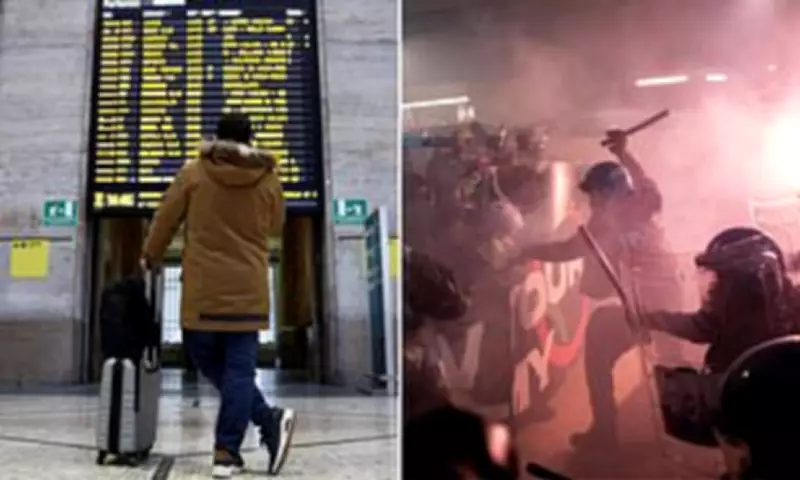
A series of coordinated sabotage attacks on Italy's railway infrastructure has plunged Winter Olympics travel into chaos, causing severe delays on the first full day of the Games near Bologna. Police confirmed that attacks at three separate locations forced the temporary closure of the state-owned Ferrovie dello Stato railway network, creating massive disruptions for athletes and spectators alike.
Unprecedented Railway Sabotage Operation
The Italian Transport Ministry described the attacks as being of "unprecedented seriousness," with incidents occurring between Bologna and Venice. A cabin containing a track switch was deliberately set on fire before dawn near the Adriatic city of Pesaro, while electrical cables used to detect train speeds were found severed in Bologna several hours later. Authorities also discovered a rudimentary explosive device by a track at a nearby location, confirming what appears to be a coordinated sabotage campaign.
These attacks resulted in delays of up to two and a half hours for high-speed, Intercity, and regional services throughout the morning. Bologna serves as a crucial junction for Italy's east-to-west rail lines and connects southern regions to northern cities including Milan and Venice, making the disruption particularly significant for Olympic travel.

Environmental Protests Escalate Near Olympic Venues
The railway sabotage coincided with escalating environmental protests against the Winter Games. Italian police deployed tear gas and water cannons against dozens of demonstrators attempting to access a highway near the Santagiulia Olympic ice hockey rink. This brief confrontation followed a peaceful march by thousands protesting the environmental impact of the Games and the presence of U.S. Immigration and Customs Enforcement (ICE) agents in Italy.
Earlier in the day, masked protesters set off smoke bombs and firecrackers on a bridge overlooking a construction site approximately 800 meters from the Olympic Village housing around 1,500 athletes. A heavy police presence secured the entire route, with temporary metal fences protecting access roads to athletes' accommodations.
Transport Ministry Responds to Crisis
Italy's Transport Ministry, headed by Deputy Prime Minister Matteo Salvini, issued a statement addressing the sabotage attacks: "These actions of unprecedented seriousness do not in any way tarnish Italy's image in the world, an image that the Games will make even more compelling and positive." The ministry confirmed that Ferrovie dello Stato traffic returned to normal by afternoon, though the investigation into the coordinated attacks continues.
Police reported that no group has claimed responsibility for the railway sabotage incidents, which appear meticulously planned to maximize disruption during the prestigious international event. The timing coincides with U.S. Vice President JD Vance's visit to Milan as head of the American delegation attending the opening ceremony.
Large-Scale Peaceful Demonstration
Separate from the violent clashes, a peaceful demonstration drew approximately 10,000 participants according to police estimates. Protesters carried cardboard cutouts representing trees felled to build the new bobsled run in Cortina, while dancers performed to beating drums and music blared from a truck leading the march.
Banners displayed messages including "Let's take back the cities and free the mountains" from a group calling itself the Unsustainable Olympic Committee. Another organization, the Association of Proletariat Excursionists, organized the tree cutouts to highlight environmental concerns.
Protester Guido Maffioli expressed concerns about the Games' organization: "They bypassed the laws that usually are needed for major infrastructure projects, citing urgency for the Games. There's worry that the private entity organizing the Games will eventually pass on debt to Italian taxpayers."
ICE Presence Sparks Controversy
The protests specifically targeted the deployment of U.S. ICE agents providing security for the American delegation. Demonstrators carried homemade signs reading "Get out of the Games: Genocide States, Fascist Police and Polluting Sponsors," with the latter reference targeting fossil fuel companies sponsoring the Winter Olympics.

Official statements clarify that only a small number of agents from Homeland Security Investigations—an ICE unit focusing on cross-border crimes—are present in U.S. diplomatic territory and not operational on Italian streets. However, protesters remain opposed to any ICE presence, following similar demonstrations last week against the agents' deployment.
Historical Context of Olympic Sabotage
This incident echoes similar sabotage during the 2024 Summer Olympic Games in Paris, where far-left militants targeted France's TGV high-speed train network in a series of attacks across the country. Those disruptions also caused significant travel chaos ahead of the opening ceremony, impacting hundreds of thousands of passengers.
The Milan-Cortina 2026 Winter Olympics represent Italy's first Winter Games hosting since 2006, with Milan serving as co-host alongside the mountain resort of Cortina, reachable via train from Venice. The coordinated nature of these sabotage attacks raises serious security concerns for the remainder of the Games.
Despite the disruptions, authorities confirmed that neither the protests nor the resulting road closures interfered with athletes' transfers to their events, all located on Milan's outskirts. The heavy police presence successfully contained the violent elements while allowing the larger peaceful demonstration to proceed before dispersing.