Seven museums have been named among the most beautiful in the world at a prestigious awards ceremony. The Prix Versailles awards assess hotels, restaurants, airports, museums, and campuses on their architecture and design, launching its latest edition at the start of the month.
For the World Architecture and Design Award, the body spotlighted seven newly designed or renovated cultural museums from around the globe that seamlessly blend architecture with storytelling. Awe-inspiring landmarks in East and Central Asia dominated the list, with just one US and one European museum included. A unique cultural centre in Lithuania, designed to honour a destroyed Holocaust village, was Europe's shining star, and the Baltic country costs from just £18 to visit from the UK.
Zayed National Museum, Abu Dhabi, United Arab Emirates
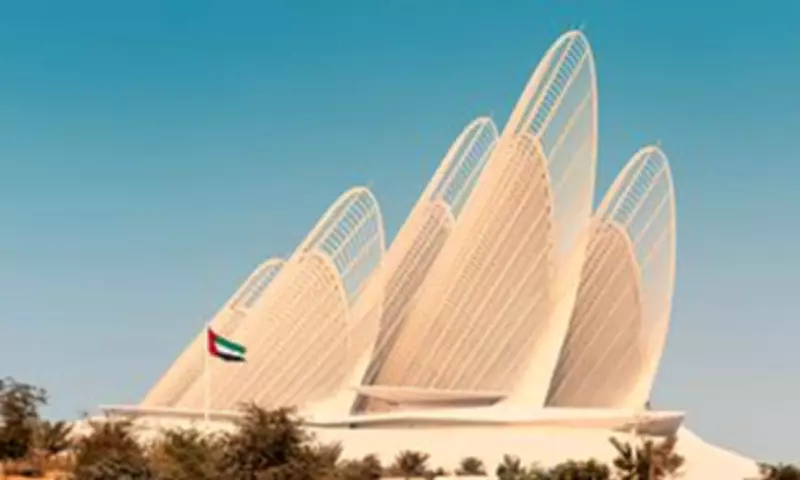
The Zayed National Museum in Abu Dhabi is characterised by its five striking towers designed to resemble falcon wings. Opened in December 2025 on Abu Dhabi's Saadiyat Island, the Zayed National Museum is a premier cultural landmark that documents the country's rich history, heritage, and the life of its founder, Sheikh Zayed bin Sultan Al Nahyan. Designed by Foster + Partners, the striking museum is defined by five, 123-metre-high towers shaped like falcon wings. Falcons are seen as a national symbol of strength and courage in Abu Dhabi, with falconry historically essential to Bedouin survival and now considered a prized traditional sport. What makes this design truly unique is its sustainability; the wings function as thermal chimneys, drawing cool air into the building to lower energy consumption. Set within an 89,000-square-metre site, the main exhibition spaces are housed in an eco-friendly mound embedded into the ground for natural insulation, surrounded by a 600-metre landscaped garden featuring 900 species of native plants and trees. The museum is home to over 1,500 artefacts displayed in six permanent galleries, covering hundreds of thousands of years of history from ancient times to modern day, including a 300,000-year-old stone tool discovered at Jebel Hafit, the nation's highest mountain. Using an 'authentic' form of storytelling, each object in the museum links the past with people's living traditions today.

Science & Technology Museum, Shenzhen, China
The Science & Technology Museum in Shenzhen, China, features a futuristic, pebble-shaped design. Opened in Shenzhen's Guangming Science City district in May 2025, the museum focuses on robotics, space exploration, and digital civilisation through interactive, AI-powered exhibits. Designed by Zaha Hadid Architects, the museum is distinguished by its futuristic, pebble-shaped design, wrapped in more than 90,000 stainless steel panels that create a gradient shifting from blue to grey. Inside, a 33-metre-high central atrium connects six floors of flexible exhibition spaces designed to make navigation easy for visitors. Sustainability is also central to the design, with solar panels, passive cooling systems, and energy-efficient ventilation that help the museum achieve green building standards.
Xuelei Fragrance Museum, Guangzhou, China
Xuelei Fragrance Museum, located in Guangzhou, China, is made up of eight red-brick cylinder shapes of differing sizes. Opened in July 2025, the museum celebrates the history, craft, and culture of perfume-making through immersive exhibitions and sensory installations. The museum combines contemporary architecture with interactive displays that explore fragrance ingredients, production methods, and the emotional connection between scent and memory. Designed as both a cultural space and multi-sensory experience by the Shenzhen Huahui Architectural Design Institute, the museum allows visitors to engage with fragrance through sight, sound, and smell. The structure itself is made up of eight red-brick cylinder shapes of differing sizes that reflect the distillation process and raw materials. Inside, visitors will discover nearly 20 thematic zones, over 50 immersive exhibits, and more than 300 interactive stations across six floors.

MoN Takanawa: The Museum of Narratives, Tokyo, Japan
MoN Takanawa: The Museum of Narratives in Tokyo, Japan, is an ascending spiral of layered wood, glass, and over 200 plant species. Opened in Tokyo's Takanawa Gateway City development in March, the museum blends art, technology, and storytelling through large digital and immersive installations. Created as a futuristic cultural space spanning nine floors, the museum encourages visitors to interact with exhibitions that combine projection mapping, sound, and AI-driven experiences. Its flexible structure, an ascending spiral of layered wood, glass, and over 200 plant species designed by Kengo Kuma & Associates, allows exhibitions to constantly evolve, making each visit different from the last. Inside, visitors will discover a 100-tatami-mat hall designed for performances, an LED-equipped theatre, rooftop foot baths with panoramic city views, multiple cafés and restaurants, and seasonal exhibitions spotlighting Japanese culture.
Lost Shtetl Museum, Šeduva, Lithuania
The Lost Shtetl Museum in Šeduva, Lithuania, resembles a small village that fits into the surrounding landscape. Opened in September 2025, the museum tells the story of Litvak (Lithuanian Jewish) life before the Holocaust, preserving the memory of the region's once-thriving shtetl communities. Designed by Rainer Mahlamäki of Lahdelma & Mahlamäki Architects, the museum's structure resembles a small village that fits seamlessly into the surrounding landscape. Through personal testimonies from Šeduva residents, historical artefacts, and multimedia exhibitions, the museum explores everyday life, traditions, and the devastating impact of World War II. Aiming to create a reflective visitor experience, it features ten thematic exhibitions, memorial spaces like The Canyon of Hope and Path of Death, and a multi-sensory exhibit that recreates the final moments of the town's Jewish population. Of all the museums on the list, Lost Shtetl is easiest accessed from the UK, with one-way Wizz Air flights from London Luton to Kaunas, a 90-minute drive away, costing just £18.
National Medal of Honor Museum, Arlington, United States
Located in Texas, the National Medal of Honor Museum features a design inspired by the five branches of the Armed Services. Opened in Arlington, Texas, in March 2025, the museum honours recipients of the United States' highest military award through immersive exhibitions and personal storytelling. Designed by Rafael Viñoly Architects, the museum's 37-ft-tall structure, a floating platform resting on five tapering precast concrete piers, is inspired by the five branches of the Armed Services. The overall design is also said to evoke the 'superhuman effort' displayed by more than 3,500 recipients of the Medal of Honor. With a focus on themes of courage, sacrifice, and service, recipients' stories are brought to life through interactive displays, archival footage, and first-hand accounts. Inside, visitors can explore virtual exhibits like Moments of Action, experience the legend and legacy of the Huey helicopter, or learn about the evolving symbol of the award.
Islamic Civilization Centre, Tashkent, Uzbekistan
Located in Tashkent, Uzbekistan, the Islamic Civilization Centre features an ornate blue, 65-metre dome. Opened in March 2025, the centre showcases Uzbekistan's rich Islamic heritage while highlighting the region's contributions to science, art, literature, and scholarship. Designed as both a research and cultural institution, the centre features exhibition halls, libraries, and educational spaces displaying rare manuscripts, historical artefacts, and Islamic art. Across the museum, visitors can observe over 100 rare Quran manuscripts, a fragment of the Kiswah (the cloth that covers the Kaaba in Mecca), and the 'Tree of Mahalla', an installation made up of 14,000 light points. Covering 10 hectares, the three-story building designed by French architecture firm Wilmotte & Associés combines traditional Uzbek design elements with modern construction, featuring an ornate blue, 65-metre dome.