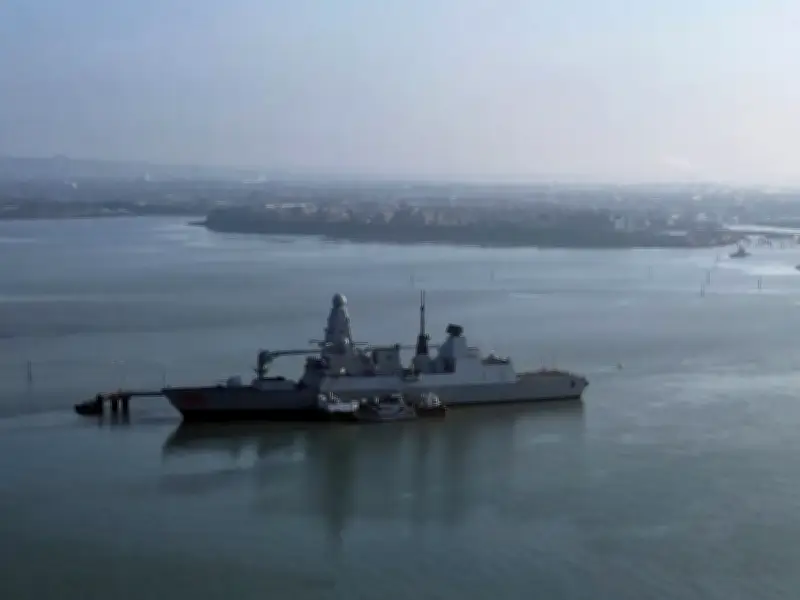
Prime Minister Keir Starmer has abandoned plans to replace the Royal Navy's ageing Type 45 destroyers with traditional guided-missile warships, instead opting for a fleet of six new "hybrid" Common Combat Vessels (CCVs). The decision, part of the long-awaited Defence Investment Plan (Dip) expected to be published this week, marks a significant shift in naval strategy.
New Warships to Counter Russian Submarine Threat
The CCVs will be capable of coordinating uncrewed systems in the air, on the surface, and underwater, addressing rising Russian submarine activity in the Atlantic near critical undersea cables. The rollout is expected from the early 2030s, replacing the current fleet of six Type 45 destroyers.
The previous plan to build a new class of guided-missile warship, the Type 83 destroyer, has been dropped from the crisis-hit Dip. The plan comes after an explosive battle over defence funding that triggered the resignations of Defence Secretary John Healey and Armed Forces Minister Al Carns earlier this month.

Funding Battle: £15bn Secured, £28bn Needed
New Defence Secretary Dan Jarvis secured an additional £1 billion on top of what Healey was offered, bringing the total closer to £15 billion over the next four years. However, this sum falls far short of the £28 billion defence chiefs reportedly need to make Britain war-fighting ready.
Jarvis said: "Our Royal Navy is a formidable force, operating to protect our nation and our allies in the Atlantic and beyond. These Common Combat Vessels will provide our dedicated sailors with hybrid ships that are designed and built for the increasing threats we face. Developed with exceptional British innovators, the new ships will be British-built, supporting jobs across the nation and giving the Royal Navy a capability built for modern warfare."
Shift to 'Hybrid Navy' with AI and Autonomous Vehicles
The plans align with First Sea Admiral General Sir Gwyn Jenkins' drive towards a new "hybrid Navy" comprising traditional crewed ships and submarines, alongside autonomous vehicles and artificial intelligence. Officials said Jarvis shifted the Dip's focus towards getting more equipment to frontline troops.
This includes £500 million to equip the UK Commando Force with high-speed boats and lethal strike drones. The elite force, capable of deploying anywhere at short notice, will see investment focused on the High North, where Russian activity is on the rise. Some funding will go towards new high-speed commando insertion craft, potentially used to seize Russian shadow fleet vessels.
Earlier this month, Royal Marine commandos helped intercept the tanker Smyrtos in the Channel in the first UK-led operation to capture a sanctioned ship.
Timing and Political Context
The Prime Minister is expected to publish the Dip as early as Tuesday, ahead of a crucial NATO summit in early July. It will be one of Starmer's last major acts before handing over to his expected successor, Andy Burnham, who is said to have signed off on the plans.