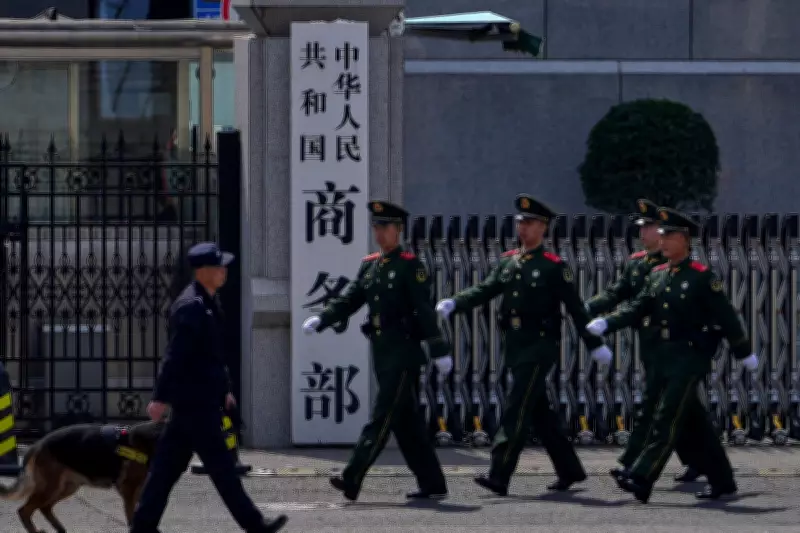
China has escalated economic tensions with Japan by implementing stringent export controls targeting numerous Japanese corporations. The Chinese Commerce Ministry announced on Tuesday that 20 Japanese companies have been placed on an export control list, while an additional 20 firms have been added to a watchlist.
Restrictions on Dual-Use Goods
According to the official statement, Chinese exporters are now prohibited from selling dual-use goods to the 20 companies on the control list. Dual-use items are products or technologies that can serve both civilian and military purposes, making them sensitive in international trade.
The ministry further clarified that foreign organizations and individuals are also banned from providing Chinese-origin dual-use items to these entities. All ongoing related activities must cease immediately, as per the directive.

Targeted Companies and Industries
The affected companies include multiple subsidiaries of major Japanese industrial conglomerates. Mitsubishi Heavy Industries subsidiaries involved in shipbuilding, aircraft engine production, and maritime machinery are among those targeted. Divisions of Kawasaki Heavy Industries and Fujitsu also feature on the list.
For the 20 companies on the watchlist, Chinese exporters must now submit individual export license applications. These applications require comprehensive risk assessment reports and written pledges ensuring the dual-use items will not be utilized by Japan's military.
Notable firms on this secondary list include Subaru Corporation, Mitsubishi Materials Corporation, and the Institute of Science Tokyo.
Official Justification and Reassurances
The Chinese Commerce Ministry stated that these measures are designed to curb Japan's remilitarization and nuclear ambitions. Officials described the actions as entirely legitimate, reasonable, and legal under international trade frameworks.
Despite the restrictions, the ministry emphasized that the measures target only a small number of Japanese entities and specifically focus on dual-use items. Normal economic and trade exchanges between China and Japan will not be affected, and law-abiding Japanese businesses have nothing to worry about, according to the statement.
Political Context and Rising Tensions
This development occurs amidst ongoing diplomatic friction between China and Japan, primarily stemming from comments made by Japanese Prime Minister Sanae Takaichi. In November, Takaichi suggested that Japan might consider military intervention if China were to attack Taiwan.
Beijing maintains that Taiwan is an inseparable part of Chinese territory and has consistently opposed any foreign statements supporting Taiwanese sovereignty. The Chinese government has repeatedly warned that it would use force if necessary to prevent Taiwan's independence.
Prime Minister Takaichi's political party recently secured a decisive victory in parliamentary elections, strengthening her position to advance conservative policies in security, immigration, and other areas. This electoral success has likely contributed to the current escalation in Sino-Japanese relations.
The export control measures represent a significant economic dimension to the geopolitical standoff, highlighting how trade tools are being deployed in response to security concerns and political rhetoric. Observers will be monitoring whether these restrictions lead to further retaliatory actions or diplomatic negotiations between the two Asian powers.