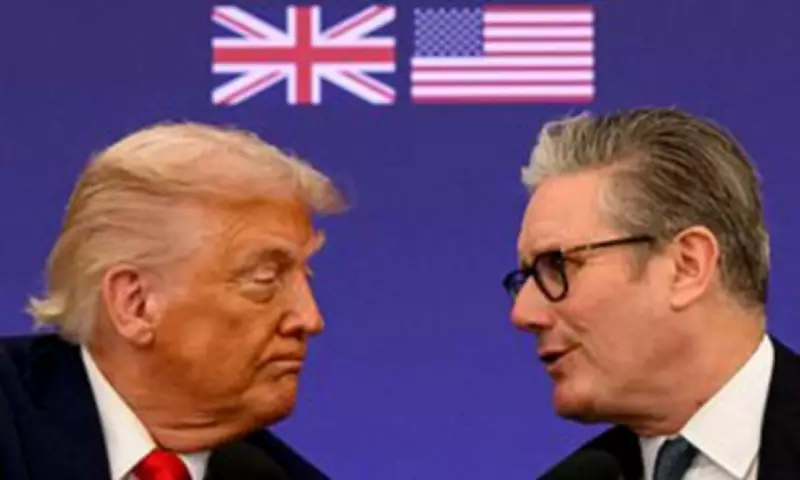
Labour leader Keir Starmer is breathing a significant sigh of relief today after Donald Trump's newly announced 'global' tariff took effect at 10 per cent, rather than the escalated 15 per cent rate he had previously threatened. This development comes as a temporary reprieve for British businesses and the government, which had been bracing for more severe economic repercussions.
Tariff Uncertainty and Business Concerns
The tariff, which officially began at 5am UK time, is set at 10 per cent and will remain in place for 150 days, until July 24. According to US law, Congressional approval may be required after this period, although President Trump has suggested otherwise. The levy applies on top of America's existing most favoured nation duties, adding another layer of complexity to international trade.
Businesses across the United Kingdom had raised considerable alarm over the US president's initial escalation, which followed a Supreme Court ruling that struck down his flagship policy. In response to that legal setback, Mr Trump announced he would introduce a new blanket 10 per cent levy instead of the 'reciprocal' rates for individual countries—a move that was found to be outside his executive powers.

Volatile Announcements and Market Reactions
However, the situation grew more tense when Mr Trump later declared on his Truth Social platform that the tariff level would be pushed up to 15 per cent. That higher rate would have exceeded the previous charges faced by Britain, prompting Downing Street to refuse to rule out retaliation. The European Union also paused the process of ratifying a major trade deal with the US, accusing Mr Trump of flouting agreed terms.
One senior government source told the Daily Mail that the UK is now 'essentially back where we were last week,' with ministers reassured that the Prime Minister's negotiated deal on steel and cars still stands. Despite this immediate relief, uncertainty lingers for UK firms exporting goods to the US.
Industry Voices and Economic Impact
William Bain, head of trade policy at the British Chambers of Commerce (BCC), highlighted the ongoing challenges. 'It shows how difficult it is for businesses to plan ahead,' he said. 'It is far from clear what will happen next and whether a higher tariff rate is still on the way. Despite the immediate reprieve, there is fresh uncertainty for UK firms exporting goods to the US.'
Mr Bain elaborated on the practical difficulties: 'This makes it very difficult for firms to understand the prices and margins they will be able to secure for their goods, currently under production, for export in several months' time. Inevitably this will have an impact on their sales and hit the economy.' He added a warning: 'The risk of further tariff pain to come is still real and the Government must do everything it can to prepare for the worst.'
Government Stance and Global Markets
Downing Street stated yesterday that 'nothing is off the table' in the UK's response to the tariff threats, leaving open the possibility of reciprocal trade levies on American goods and services. However, Number 10 insisted it remains focused on 'constructive engagement' with the Trump administration, acknowledging that a full-blown trade war would harm businesses on both sides of the Atlantic.
The tariff announcements have contributed to heightened volatility in stock markets worldwide. Yesterday, the US dollar weakened, sending investors flocking once more to safe-haven assets such as gold. The FTSE 100 held relatively steady, following a bullish run in recent weeks, but analysts noted underlying tensions.
Derren Nathan, head of equity research at Hargreaves Lansdown, observed that investors were 'on edge as AI fear and tariff uncertainty hang thick in the air,' reflecting the broader economic anxieties stirred by Trump's unpredictable trade policies.