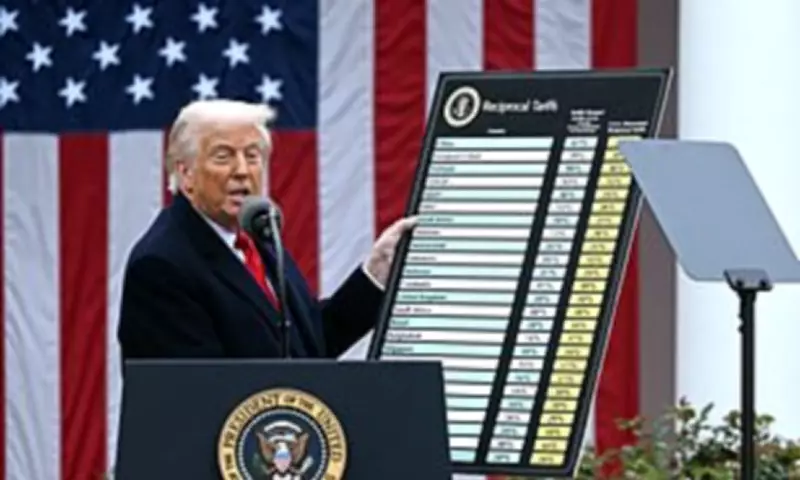
In a landmark and extraordinary legal decision, the United States Supreme Court has ruled against former President Donald Trump's controversial tariff policy. The court delivered a decisive 6-3 judgment, with the majority opinion authored by Chief Justice John Roberts.
Legal Authority Challenged
The central issue before the court was whether President Trump possessed the legal authority to impose widespread reciprocal tariffs under the International Emergency Economic Powers Act of 1977. The court's majority concluded he did not, effectively striking down the tariff regime.
National Emergency Declaration
President Trump had invoked the 1977 law to declare a national emergency, which he used as the legal basis for implementing the reciprocal tariffs. This move was part of his broader trade policy agenda, prominently announced on what he termed 'Liberation Day' on April 2.

Significant Revenue Impact
According to analysis from the Penn-Wharton Budget Model released on Friday, the tariff policy had generated approximately $175 billion in revenues since its implementation. This substantial financial impact underscores the economic significance of the court's ruling.
Judicial Division
The 6-3 split decision reveals significant judicial division over presidential authority in trade matters. While the majority found the tariffs exceeded statutory authority, three justices dissented from this interpretation of the 1977 legislation.
This represents a major development in the ongoing legal and political debate surrounding presidential power and trade policy. The ruling sets an important precedent regarding the limits of executive authority under national emergency declarations for economic purposes.