US Farmers Reject Multimillion-Dollar Datacenter Bids for Land
In a striking trend across rural America, farmers are increasingly refusing multimillion-dollar offers from tech companies aiming to acquire land for datacenter development. Despite sums that often dwarf recent land values, many landowners are choosing to preserve their agricultural heritage and lifestyle over unimaginable riches.
The Unwelcome Knock on the Door
When two men approached Ida Huddleston's Kentucky farm in May 2025, they presented a contract worth over $33 million for her 650-acre property in Mason county. Representing an unnamed Fortune 100 company, they sought the land for an unspecified industrial project, with further details locked behind a non-disclosure agreement. Huddleston, 82, whose family has farmed the land for generations, firmly declined, stating, "You don't have enough to buy me out. I'm not for sale. Leave me alone, I'm satisfied."
Similar offers have been made to more than a dozen of her neighbors, as public records reveal a new customer applied for a 2.2 gigawatt project from the local power plant, nearly doubling its annual capacity. This unknown company is building a datacenter, part of a global rush to construct facilities needed to power artificial intelligence. Globally, 40,000 acres of powered land are projected to be required for new datacenter projects over the next five years, double the current usage.

A Growing Resistance
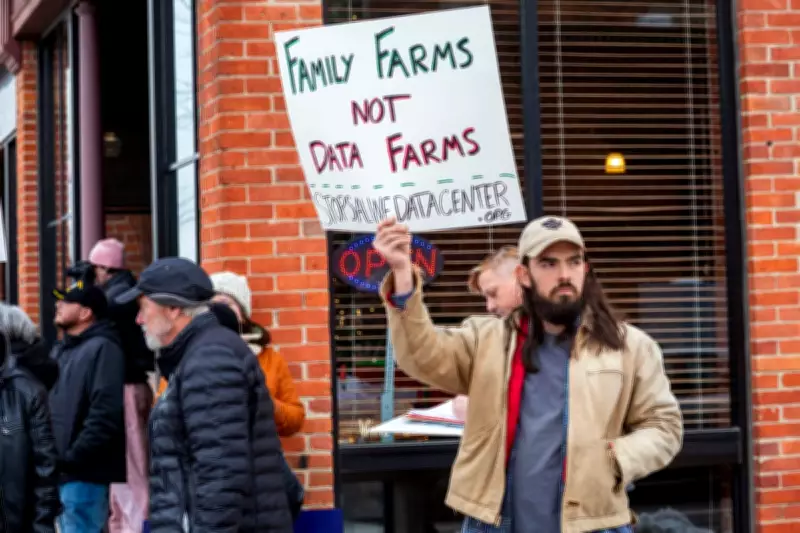
Despite the financial allure, farmers are shutting the door on these deals. At least five of Huddleston's neighbors in Mason county gave categorical rejections, including one who was told he could name any price. In Pennsylvania, a farmer turned down $15 million in January 2025 for land he had worked for 50 years, while a Wisconsin farmer rejected $80 million the same month. Other landowners have declined offers exceeding $120,000 per acre, prices that were unimaginable just a few years ago.
These rebuffs highlight the physical bounds of AI and the limits of financial incentives in the face of deep-rooted cultural values. As tech companies race to build datacenters across the US and worldwide, bids are appearing on rural doorsteps nationwide, yet resistance is mounting.
The Cultural Weight of Land Stewardship
For many farmers, the connection to their land transcends monetary value. Four generations of the Huddleston family have watched the world change from the same fields, with a history dating back to the civil war. Huddleston's daughter, Delsia Bare, 56, recalls hoeing weeds and putting up hay, emphasizing, "There's a bond with the land. There's no way to undo it. That's family, that's history."
This sentiment is echoed by Dr. Timothy Grosser, 75, who rejected an $8 million offer for his 250-acre farm in Mason county, a 3,500% increase over what he paid nearly four decades ago. When developers returned with a "name your price" proposition, he responded, "There is none." Grosser, who lives, hunts, and raises cattle on his land, estimates that at least four other landowners have refused to sell, valuing their lifestyle over financial gain.
Broader Concerns and Local Tensions
Beyond personal attachment, farmers express worries about broader consequences. The number of US farms has dropped more than 70% since 1935, and datacenters can strain power grids, drain local water supplies, contaminate soil, and fragment wildlife habitat. Bare bluntly notes, "You're not going to grow a loaf of bread off of a datacenter."
Not all farmers are holding out; some in Mason county have agreed to sell if the project proceeds, a decision Grosser acknowledges as understandable given the sums involved. However, those who refuse report threats of eminent domain, the government power to seize private property for public use. Dominion Energy used this against a Virginia farmer in April 2024, underscoring the real risk.

Economic Arguments and Identity
Local officials argue that datacenters could sustain future generations by bringing tax revenue and jobs. Mason county's population has shrunk by around 10% since 1980 due to manufacturing losses, and developers claim the project would create 1,000 construction jobs, though only 50 full-time operational roles. In places like Loudoun county, Virginia, datacenter tax revenue nearly equals the entire operating budget.
Tyler McHugh, Mason county's industrial development director, stated at a public hearing in December 2025, "We can continue to shrink – losing population, losing jobs and watching our young people leave for opportunities elsewhere – or we can chart a new course. It's about keeping our people here."
Yet, for farmers like Delsia Bare, who lost most of her vision recently and relies on sounds like singing birds and running creeks to connect with the land, a datacenter's hum represents a spiritual dispossession. As AI promises to transcend physical limits, these standoffs reveal its very constraints and Wall Street's miscalculation of what some people value most. In the rolling hills of Mason county and farmland across America, the gap is measured not in dollars but in identity, a heritage that money cannot buy.