Australia's Ambitious High-Speed Rail Vision: A $93bn Economic Catalyst
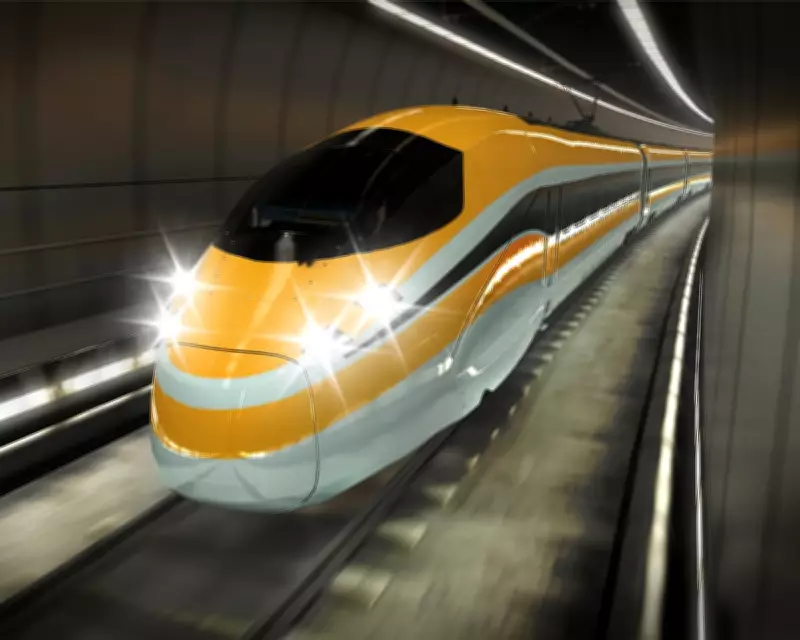
The Australian government has unveiled a transformative high-speed rail project, with an artist's impression showcasing a futuristic link between Newcastle and Sydney. This initiative, projected to deliver a staggering $250bn boost to the economy over 50 years, represents a significant leap in national infrastructure. The High Speed Rail Authority, in collaboration with the government, has prepared a detailed business case, costing over $70m, to bring this vision to life.
Cost and Timeline: A Detailed Breakdown
According to the business case, Australians could pay just $31 for a one-hour high-speed train journey between Newcastle and central Sydney, starting from 2039. The initial rail line is estimated to cost taxpayers $61.2bn. A subsequent stage, extending the line to Parramatta and the Western Sydney international airport, would add an extra $32.4bn, with an opening target of 2043. The total price tag exceeds $93bn, inclusive of stations, signalling systems, and a domestic advanced manufacturing facility for rail parts.
To advance the project, the government has committed an additional $230m for planning and development, aiming to make it "shovel ready" within two years, pending final investment approval. Infrastructure Minister Catherine King emphasised the project's economic rationale, stating it would create over 99,000 jobs and facilitate 160,000 homes along the rail corridor.

Transforming Travel and Environmental Impact
Currently, the train journey between Newcastle and Sydney takes more than two hours and 40 minutes, on a line largely unchanged since its 1899 completion for steam trains. The high-speed rail would slash this to one hour, with trips from the Central Coast to central Sydney reduced to 30 minutes. The business case estimates up to 16 million users annually by 2041, with 53,000 daily trips, significantly cutting road and transport emissions to support Australia's net zero by 2050 goal.
Expert Analysis and Political Perspectives
Professor David Levinson, a transport expert at the University of Sydney, noted the project's high cost per kilometre, largely due to 115km of underground tunnelling through mountainous terrain. He cautioned that such projects often face budget and timeline overruns, citing the Snowy Hydro project's blowout from $2bn to $12bn as a precedent.
Opposition frontbencher Jonathon Duniam expressed support for high-speed rail but raised concerns over affordability, highlighting the need to balance ambition with fiscal responsibility. The government defends the project's cost-benefit ratio, reported as 0.8 to 1.2, though Levinson pointed out this is lower than ideal benchmarks, such as a Sydney bike network's ratio of 2.68 to 1.
This high-speed rail proposal, a long-standing promise in federal elections, now moves into detailed planning phases, with its success hinging on meticulous execution and sustained investment to realise its promised economic and environmental benefits.