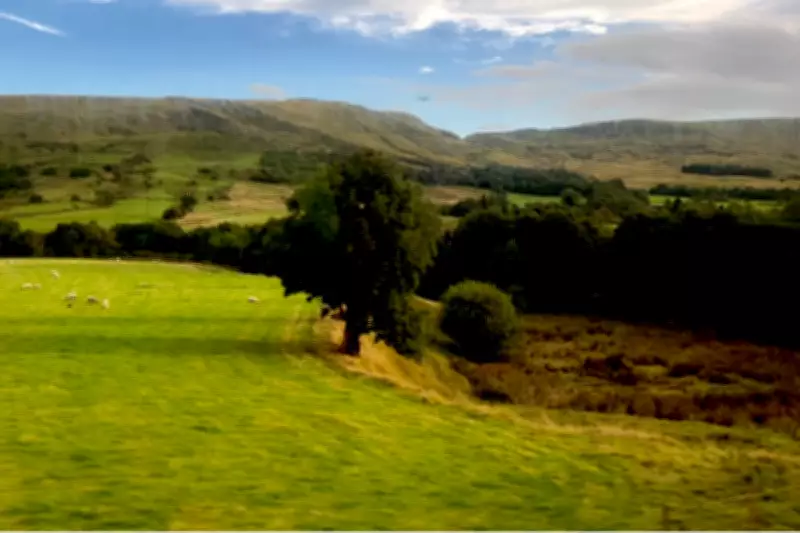
A visionary project dubbed 'Mini-Switzerland' is set to transform public transport in a picturesque corner of England, bringing Swiss-style integration to the Hope Valley in Derbyshire. The initiative, led by former Transport for London strategy director Thomas Ableman, aims to seamlessly connect buses and trains, offering residents and visitors a reliable, car-free travel option.
Inspiration from the Alps
Mr Ableman drew inspiration from his travels to Switzerland, where even the smallest villages enjoy hourly bus services that synchronise perfectly with trains. 'The core of the Swiss system is a bus every hour,' he explains. 'In Paspels, a village of 475 people, the bus arrives at the station at 59 minutes past the hour, and the train departs at two minutes past—every single hour.'
Hope Valley: A Test Case
The Hope Valley line, running through the Peak District National Park between Manchester and Sheffield, already has hourly train services. However, bus connections are sporadic, with only three hours a day where they align. The village of Bradwell, with 1,400 residents, exemplifies the problem: you can reach the nearest station but cannot reliably make the last few miles by bus.

Funding and Implementation
Despite national budget constraints, the government has allocated £6 million to the project, matched by the East Midlands Combined Authority. The plan does not require new infrastructure but focuses on better coordination: timetabling, ticketing, signage, and information systems. The key investment is more buses, running hourly to match trains.
'The hypothesis is not that this will be self-funding, but that the subsidy per passenger will be lower,' says Mr Ableman. 'Well-used buses offer better value than poorly used ones.'
Timeline and Behaviour Change
Mr Ableman aims to have the service operational within a year, but acknowledges that changing travel habits will take longer. 'This is a five-year behaviour change project. People need to see that the buses consistently meet the trains before they trust it enough to use it regularly.'
If successful, the model could be replicated across rural Britain, proving that integrated transport works outside of Switzerland, Austria, Germany, and the Netherlands. 'We have never proved it in British rural areas,' Mr Ableman concludes. 'Now's the chance to find out.'