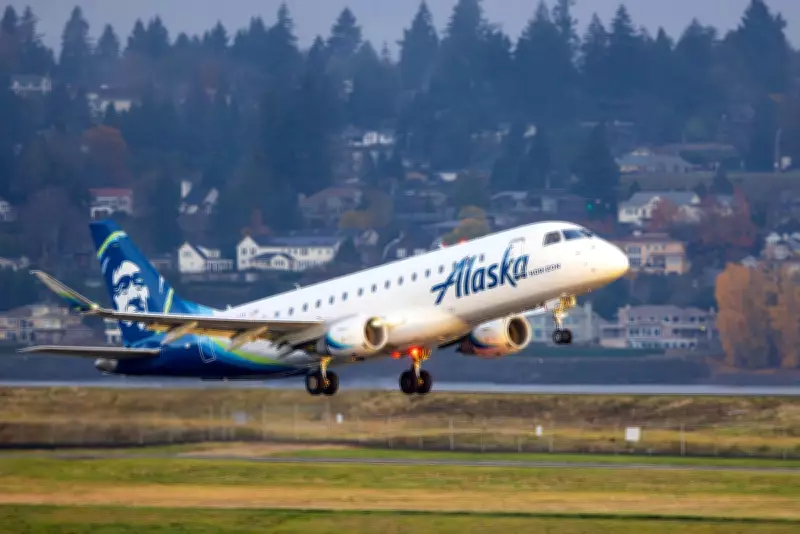
An Alaska Airlines flight was forced to issue an emergency squawk code and divert shortly after take-off when a passenger's power bank caught fire in the cabin, resulting in a significant delay and one hospitalisation for minor burns.
Emergency Diversion and Passenger Injury
Flight AS2117, operated by Horizon Air, an Alaska Air subsidiary, departed from Wichita, Kansas, bound for Seattle, Washington, on Sunday. Minutes after take-off, the Embraer 175 aircraft issued squawk code 7700, signalling a general emergency requiring immediate air traffic control assistance. The flight diverted back to Wichita Eisenhower Airport, landing just 56 minutes after departure.
One of the 76 passengers on board sustained "minor burns" from the incident and was hospitalised, according to reports from Hawaii News Now. A fellow passenger described the event, stating, "She had an external battery charger pack. I was right next to her, and it was just sitting in her lap, not being played with, not being touched and it exploded."

Crew Response and Flight Delay
Cabin crew members reportedly managed to extinguish the smoking device in the aisle, as noted by The Aviation Herald. Following the emergency, the flight continued its journey on a replacement aircraft, departing at 9.16pm local time and arriving at Seattle-Tacoma Airport over seven hours later than scheduled. No other injuries were reported among passengers or crew.
Risks of Lithium-Ion Batteries on Aircraft
Power banks containing lithium-ion batteries pose a significant fire hazard on planes due to "thermal runaway," an uncontrollable self-heating process caused by damage or overheating. This incident underscores ongoing safety concerns in aviation regarding portable charging devices.
In response to such risks, several airlines have implemented bans on the use of portable chargers during flights. Notably, Japan's transport ministry is expected to introduce new restrictions from April, prohibiting the use of power banks on domestic Japanese airlines and limiting passengers to a maximum of two chargers per person in carry-on luggage, each not exceeding 160Wh.
Industry and Regulatory Actions
The Alaska Air Group has been contacted for comment on the incident. As aviation authorities worldwide grapple with the dangers posed by lithium-ion batteries, this event highlights the need for stringent safety measures and passenger awareness to prevent similar occurrences in the future.