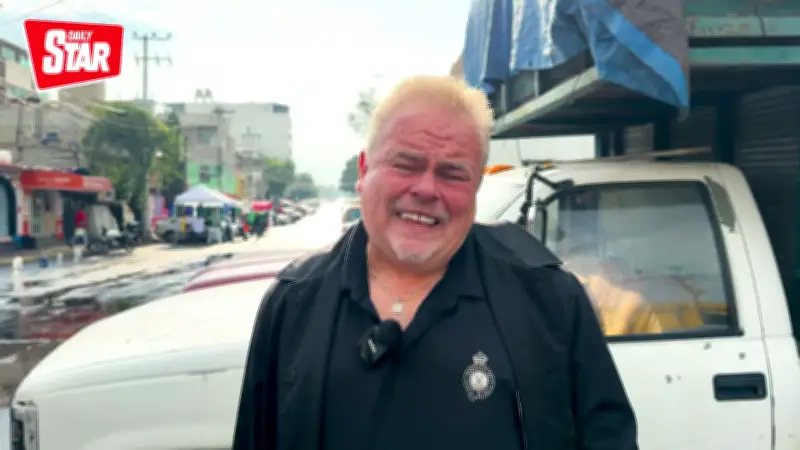
Mexican drug cartels have deliberately halted violence during the World Cup to profit from the influx of fans, a leading investigator has revealed. Rather than engaging in shootouts or kidnappings, the cartels are focusing on selling illicit drugs to the millions of domestic and international supporters attending the tournament.
Cartels Prioritise Profit Over Violence
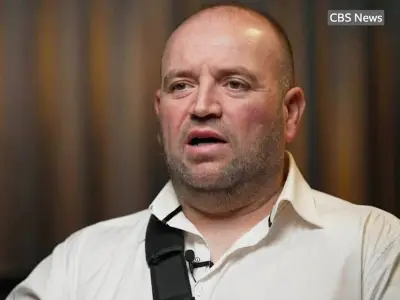
Drug cartel investigator Jon Bonfiglio told the Daily Star that the cartels operate as multinational corporations and recognise that violence would deter customers. 'If we realise that they are primarily multinational corporations, then clearly they have an economic and financial vested interest in the World Cup going off well,' he said. 'It would be kind of counterintuitive - self-defeating - for the cartels to engage in violence when they are amongst the groups that have most to benefit from the smooth running of a World Cup in Mexico.'
Authorities had feared the cartels would disrupt the tournament in revenge for the killing of Jalisco New Generation Cartel leader Nemesio 'El Mencho' Oseguera by Mexican troops in February. However, the cartels have instead chosen to operate discreetly to avoid scaring away customers.

Underground Drug Tunnel Discovered
A US Homeland Security Task Force uncovered a 2,000ft tunnel stretching from Tijuana, Mexico, beneath the border wall to a fake retail store in San Diego called Buy 4 Less. The tunnel featured reinforced walls, rail and ventilation systems, and electricity. Four suspected traffickers have been charged with conspiring to distribute over a ton of cocaine worth £35 million via this underground route.
Mexico has flooded the US with the synthetic opioid fentanyl, which is 50 times stronger than heroin. The US Drug Enforcement Administration has called fentanyl the 'deadliest threat' the nation has ever faced. In Los Angeles' Skid Row, a four-square-mile area known as America's overdose capital, fentanyl kills approximately 2,000 homeless people each year - around six per day - and 199 every 24 hours across the US.
Cartels as Multinational Corporations
Bonfiglio explained that the cartels have successfully infiltrated the Mexican government and police, and their enforcers are responsible for 30 deaths per day. Additionally, up to 250,000 locals known as 'The Disappeared' have vanished after clashing with the crime gangs. Most executions are carried out dispassionately by cartel hitmen on purely financial grounds. 'Their motto is 'it's not personal - it's business'. That is where the cartels differ from most transnational enterprises. If you're in their way you are removed,' Bonfiglio said.
He noted that the Mexican government has limited power and has been forced to make 'unholy alliances' with the cartels to stem bloodshed and maintain control. Some Mexicans 'preferred to live under the protection of the cartels than the government'.
Low Risk for Ordinary Fans
Bonfiglio assured that ordinary fans have 'almost no chance' of encountering cartel violence during the tournament unless they buy drugs. 'As long as you're sensible and not stupid about these things, and you don't go looking for trouble, you're way more likely to come across a taxi driver who overcharges you than to have any kind of significant issue with a cartel,' he said. 'Cartels know that their prime motivating factor is economic drive and if anything happens at the World Cup, it's going to be because it's an accident. It won't be by design.'
US-Mexico Drug Flow and Trump's Threats
Donald Trump has threatened to send US troops to smash the cartels and cut off supply routes. Bonfiglio suspects the US government pressured Mexico into killing El Mencho. While drugs flow north to the US, guns travel south to Mexico to supply cartel hitmen. Mexico serves as both a transit point and a production hub for drugs. 'The cocaine that comes up to the United States has transit through Mexico which is an important bridge, a crucial bridge, the only bridge for the drug going up to the USA,' Bonfiglio said. 'If we think about the drug of our time which is fentanyl it is produced almost exclusively in Mexico with ingredients that come from China and is distributed up into the US from here.'

He emphasised the difficulty of policing the 1,300-mile border: 'Famously there are supermarkets close to the border that sell ladders based on how high the wall is. So there are always ways round these situations. The building of the wall has never had a fundamental deterrent effect on the movement of anything across the border.'
Operation Red Card and Warnings to Fans
Special Agent Joseph Tucker, who oversees Texas and Oklahoma, warned that fans buying cartel drugs are 'playing roulette' because all are laced with potentially fatal pencil-tip amounts of fentanyl to increase addictiveness. 'There's no way to tell the amount of fentanyl that is in a pill, and that could be the last choice you make,' he said. Dealers using mobile phones and apps have been targeting World Cup crowds. Tucker urged fans to leave with memories of Southern hospitality, not a fight for life.
Operation Red Card, launched during the tournament, has led to 197 arrests and the seizure of 175 firearms and 800kg of drugs. 'One pill can kill' billboards have been posted near World Cup stadiums and on trains.
Skid Row: A Grim Destination
Our investigators observed users on Skid Row seemingly battling fentanyl's shutdown symptoms. A local clothing store retailer said: 'It's everywhere here. People on the streets just take it and die. Sometimes they terrify you before they pass away. It's not safe here after 6pm. Like most things to do with this World Cup someone somewhere is making a huge profit without a thought or care.'