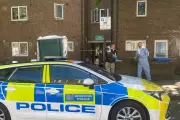








Germany's Largest Bank Heist: €500m Vault Raid Leaves Thousands in Ruin
Germany's Largest Bank Heist: €500m Vault Raid

Germany's Largest Bank Heist: €500m Vault Raid Leaves Thousands in Ruin

In the pre-dawn darkness of December 27, a fire alarm sounded at a Sparkasse savings bank branch in Gelsenkirchen-Buer, western Germany. Firefighters and police arrived promptly, finding no visible signs of fire or smoke. Dismissing it as another false alarm in a city historically nicknamed the 'City of a Thousand Fires', they departed unaware that a meticulously planned bank heist was already unfolding just feet away.

The Audacious Tunnel and 48-Hour Raid

Behind a sealed shutter and a closed archive room door, a professional crew armed with an industrial drill was carving a precise 40-centimetre diameter tunnel through a thick concrete wall. The drilling vibrations were so intense they triggered alarms at a neighbouring jeweller 150 metres away, yet no further alerts sounded within the bank itself. Over the next 48 hours, the gang ransacked more than 3,000 safe-deposit boxes undisturbed, leaving thousands of residents facing potential financial ruin.

Thomas Nowaczyk of Gelsenkirchen Police told the Daily Mail: "We have to assume professionals were at work here. This is obviously not something one spontaneously thinks up one morning and carries out in the evening. There must have been lengthy planning beforehand."

Meticulous Planning and Execution

Evidence reveals the gang's sophisticated preparation:

  • Entry through an adjoining public underground car park using a stolen chip card
  • Sabotaged fire exit locks with silicone sealant to maintain access
  • Taped-over motion detectors to blind the security system
  • Knowledge that internal video surveillance operated only during banking hours
  • Precise drilling location avoiding safe-deposit boxes on the other side

Nowaczyk emphasised: "The fact that this hole was drilled in a precise place where, coincidentally, no safe-deposit box was located, only works if they knew where they would emerge on the other side. They must have known details of the layout. So, one has to assume that insiders, in whatever form, played a role."

The Staggering Scale of Loss

Nearly two months after the raid, authorities still cannot determine the exact value stolen. Estimates range from at least €30 million to an astronomical €500 million. Forensic teams in protective suits work around-the-clock cataloguing discarded valuables found 'spread across the rooms' and stacked 'several metres high'. Precious heirlooms, engraved jewellery, Rolex watches, passports, birth certificates and vital deeds lay strewn carelessly among the chaos.

Lawyer Daniel Kuhlmann, representing over 600 victims, believes the haul could reach €400 million based on his clients' losses alone. He described heartbreaking cases including an elderly woman who lost €390,000 in cash from her home sale, now unable to pay rent and contacting social services.

Security Failures and Legal Action

Kuhlmann's firm has launched test lawsuits against Sparkasse, examining whether security measures met industry standards. He noted concerning gaps:

  1. No alarms triggered during 48 hours of drilling and looting
  2. Missed opportunity with the initial fire alarm caused by drilling smoke
  3. Vibration detectors at neighbouring jeweller triggered five times while bank systems remained silent
  4. Low insurance caps on safe deposit boxes

"There are indications that they did not have the proper security systems in place," Kuhlmann stated. "For example, for some 48 hours while this was all going on, no alarm was triggered at all. That nobody noticed what was happening is remarkable."

Sparkasse chief Michael Klotz has defended the bank's systems: "The branch, including the safe-deposit box room, was secured according to recognised state-of-the-art technology. Nevertheless, the burglars managed to overcome several independent security measures."

Victims' Devastating Stories

The heist has devastated communities in one of Germany's poorest cities. For many victims—particularly elderly residents and those from migrant backgrounds—the vault contained not luxuries but essential lifelines: wedding gold, inherited jewellery, cash from lifetime savings, and documents too valuable to keep at home.

Joachim Wagner, 63, lost around €50,000 in gold, savings and family heirlooms: "What hurts most are the things you've had since childhood… I cried - tears were running down my face." As a single father, he had been saving part of his salary since 2014 for his children and retirement.

Daniel Oryan, 46, lost six-figures worth of items: "It was a surreal moment. You simply cannot imagine that burglars could stay there for several days and break open safe-deposit boxes." He described waiting days to reach the bank's emergency hotline, only learning a week later that he was affected.

The Ongoing Investigation

A special task force—BAO Bohrer—with 350 officers continues investigating, though police admit they have 'no hot leads' yet. The gang, estimated at five to seven men, escaped in a black Audi and white Mercedes van with stolen plates. They reportedly used acid and fire extinguishers to erase forensic evidence and even changed a lock on the room leading to the vault wall.

Police Chief Tim Frommeyer recently offered victims hope: "Based on the numerous leads we have, I'm confident we'll catch these perpetrators eventually." However, with 10,000 hours of video to examine, cell tower data to analyse, and 3,000 victims to interview, the investigation is expected to continue for weeks, if not months.

As victims await answers and potential recovery of their losses, the Gelsenkirchen heist stands as a stark reminder of vulnerability in even the most seemingly secure institutions, leaving an entire community grappling with the aftermath of Germany's largest bank robbery.