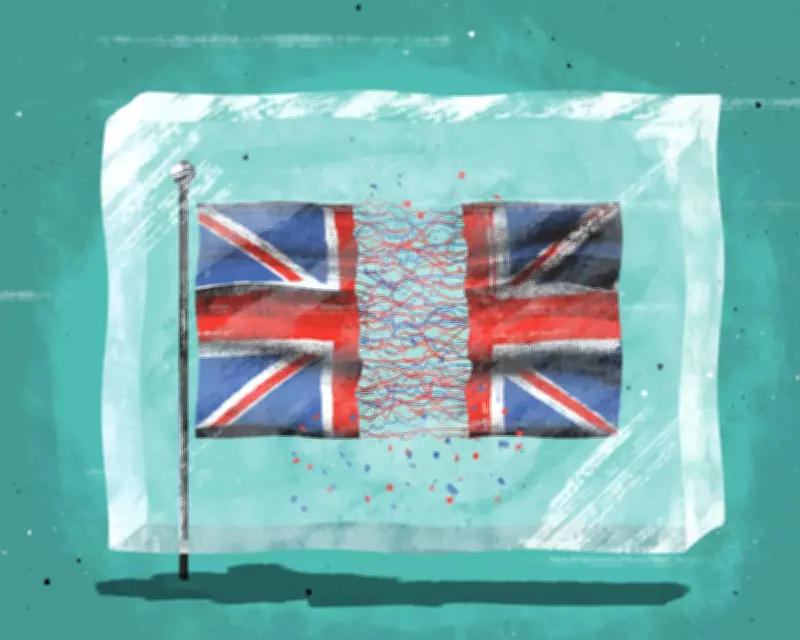
Brexit's Enduring Legacy: A Decade of Tribal Politics Divides Britain
Ten years after the historic Brexit referendum, the United Kingdom remains a nation frozen in time, deeply divided along the lines of a single vote cast in June 2016. New research reveals that rather than fading, the tribal identities of 'Remain' and 'Leave' have solidified, transforming British politics into an arena of entrenched polarisation and fractious debate.
The Birth of a New Political Identity
On 23 June 2016, the British voter underwent a fundamental transformation. Prior to that day, political allegiance typically meant choosing between the traditional red of Labour or blue of the Conservatives. By that morning, however, only two tribes truly mattered: remain or leave. These identities have persisted long after the result was declared, with voters adopting them as core personas. No longer simply 'Labour men' or 'Conservative families', Britons became 'remoaners' or 'Brexiters'. Astonishingly, even today, 60% of Britons still identify themselves by where they placed a single cross in that one-off poll a decade ago.
While discussions about Brexit's impact often focus on policy or high politics—the bumpier economic trajectory, the Tory party's internal conflicts—the referendum's true legacy runs much deeper. The civil war that blazed through the country recruited nearly all citizens to one side or the other, with effects that continue to ripple through elections and media landscapes today.

Brexit as Britain's Defining Identity Politics
Before the murder of George Floyd or the arrival of Covid vaccines, contemporary Britain's most powerful form of identity politics was unquestionably Brexit. Before Gaza dominated headlines, it was the event that radicalised a generation of voters. Without the referendum, there would be no GB News, certainly no 'The Rest Is Politics' podcast, no 'centrist dads', and no 'gammon' heckling on Question Time panels. Nigel Farage and Zack Polanski wouldn't be topping polls or preparing for potential triumphs in next month's elections. Even Tommy Robinson-style racism would likely remain a fringe pursuit. The history of each of these modern British phenomena traces directly back to the summer of 2016.
Research Reveals Deepening Divides
Our evidence comes from a groundbreaking new book by politics professors Sara Hobolt and James Tilley, 'Tribal Politics: How Brexit Divided Britain'. Through extensive surveys conducted over many years, they present a story both simple and radically different from the narrative promoted by figures like Farage. While the Reform UK co-founder presents Brexit as a desire cherished by all right-thinking Britons, the truth reveals that until the referendum, the British public gave little thought to the EU. Most expressed some Euroscepticism when polled, but there was no overwhelming desire for exit.
When David Cameron instructed his party in 2006 to 'stop banging on about Europe', it was precisely because the subject left voters cold. Yet years later, the Tory leader capitulated to his backbenchers, transforming an obsession of a small Westminster elite into a national concern that dominated airwaves and front pages for months. The rest of the population picked sides, debating the issue in pubs and at family dinners.
The Psychology of Political Identity
As bestselling author James Clear explains in 'Atomic Habits', to change behaviour permanently, one must start believing new things about oneself and build identity-based habits. Brexit positions became precisely such identity-based habits, reiterated constantly. Crucially, this process didn't stop on polling day. The narrow result, the Westminster shock, and the scale of impending change meant arguments continued publicly—through street stalls, specially sold EU berets, and marches through central London.
Hobolt and Tilley's research includes a revealing graph tracking 'emotional attachment to Brexit identity' before and after the vote. While modest attachment was visible a month beforehand, strengthening as the vote approached, the most significant jump occurred after results were announced. Once the match ended, the fans kept shouting—and grew considerably louder.

Tribalism That Doesn't Fade
The tribalism hasn't diminished with time; it remains powerfully strong. Whether one voted in or out shapes not only views on Brexit's success but also perceptions of the other side. Remainers see leavers as selfish, hypocritical, and closed-minded, with leavers holding mirror-image views of remainers. By 2025, only about 40% of leavers could bear discussing politics with remainers, with feelings being mutual according to the data. Such numbers represent more than mild opposition; they indicate genuine discrimination, with each side reluctant to share homes or see their children marry someone from the opposing camp.
'Remainers and leavers did not just disagree over Brexit,' the authors write. 'They increasingly disagreed over reality itself.' As late as 2024, the sides argued fundamentally about how well the economy was performing.
The Spectre of Class in Modern Politics
A spectre haunts this new politics: the spectre of class. The 20th century was the era of class politics, but two words changed that: Tony Blair. Previous research co-authored by Tilley shows working-class voters remained staunch until the 1990s, when Labour declared 'we are all middle-class now'. The study concludes: 'The decline of class-based voting was driven by Labour's shift to the political centre-ground.' While Keir Starmer boasts of working-class origins, this remains largely gestural—displaying union jacks (very post-Brexit) without delivering meaningful change.
When class vanishes from politics, all that remains are culture wars. While UK withdrawal from the EU fundamentally concerned changing economic and trading relationships with 27 countries, the leave campaign had no clear ideas about new trade terms—a major reason the post-vote period proved so messy. For Brexiters, immigration became the killer 'baseball bat', as Dominic Cummings termed it, to be swung hard against opposition.
Policy Divides and Empty Politics
Perhaps the most dismal chart in Hobolt and Tilley's book summarises where remainers and leavers differ on policy. Immigration tops the list, followed by foreign aid and the death penalty. The two sides have little to say about whether Britain should be more equal, treat workers better, or increase public ownership. In other words, they debate nothing that significantly affects earnings, bills, or post-tax income. Those who prosper from such empty politics are already prosperous enough—and they prosper even when they lose. By 2016's end, David Cameron no longer lived at Number 10 but reportedly earned nearly as much for a 60-minute talk as his annual prime ministerial salary. His team members secured honours and lucrative consultancies advising businesses on dealing with referendum consequences they had botched.
We live in an era of polarisation and grift, of blatant lying and institutional blame. But Britain only reached this point by passing milestones like the 2016 Brexit vote, where yet another elite debacle transformed into a long, bloody national breakdown that set neighbours, workmates, and families against each other. The question remains: for what?