China's Persistent K-Pop Ban Excludes BTS from Mainland Tour Stops
As the global K-pop phenomenon BTS embarks on a highly anticipated world tour after a three-and-a-half-year hiatus, one significant market remains conspicuously absent: mainland China. This omission highlights the enduring impact of an unofficial ban on South Korean entertainment that has persisted for nearly a decade, driven by geopolitical tensions and cultural concerns.
Geopolitical Roots and Cultural Control
The ban originated in 2016 following South Korea's decision to allow the United States to deploy the THAAD anti-missile system on its soil. China viewed this as a security threat, claiming the radar could monitor its territory. In response, China imposed trade restrictions, including blocking most South Korean films, TV dramas, and music performances. Analysts note that the ban's longevity stems from Beijing's apprehension about the overwhelming popularity of Korean culture among Chinese youth.
Seung-Youn Oh, a professor at Bryn Mawr College, explains: "From China's perspective, these actions go beyond symbolism. They are strategic tools to shape the international environment, signal resolve, and reinforce nationalism at home."Partial Enforcement and Fan Adaptations
While the ban is not absolute—allowing performances by K-pop groups with non-Korean members and limited access to older dramas—it severely restricts new content. Streaming platforms in China offer only about 50 South Korean dramas, all at least four years old, with newer releases often available only through pirated versions. The ban does not apply to special regions like Hong Kong, Macao, and Taiwan, where BTS is scheduled to perform in 2027.

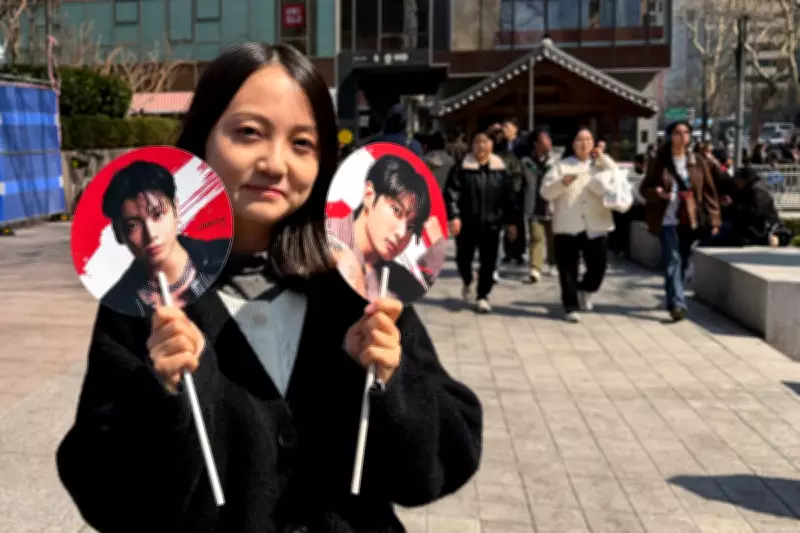
Fans have adapted by traveling abroad, such as to Seoul for concerts, or engaging with pop-up merchandise stores in China. "I'm already really grateful that they can perform in places like Hong Kong, Macao, and Taiwan," said Tian Xin, a fan who attended a Seoul concert. "The rest is a matter of national policy. Of course, I still hope they can come closer to us—fans always want that."
Cultural Governance and Soft Power Ambitions
Initially, China welcomed the "Korean Wave" as a substitute for Western pop culture, but its surging popularity in the 2010s led to tighter controls. The government has since promoted domestic cultural products, banning effeminate-looking men from TV in 2021—a style influenced by South Korean and Japanese performers—to foster its own soft power.
Dong-ha Kim, a professor at Busan University of Foreign Studies, notes: "Beijing's fundamental concern goes deeper. It cannot allow foreign culture to shape the thinking of its young people, especially when its government has no control over the content."Financial analyst Hyunji Lee adds: "China wants cultural governance—to grow its own music industry. If K-pop floods back in, there's a direct conflict."
Diplomatic Nuances and Industry Shifts
Despite hopes for easing the ban amid improved ties between South Korean President Lee Jae Myung and Chinese leader Xi Jinping, progress has been slow. China denies the ban exists, with officials emphasizing support for "healthy and beneficial" cultural exchanges. Recent agreements focus on incremental steps, such as expanding soccer and traditional board game collaborations.
On Chinese social media, debates rage over K-pop's appropriateness for children and its potential to overwhelm domestic entertainment. Meanwhile, South Korean companies have restructured, reducing reliance on China by targeting markets like Japan and North America. "China matters," Lee says, "but it's not something companies are desperately waiting on anymore."
The ban's ripple effects are profound, from lost revenue for drama producers due to piracy to fans enduring costly international travel. As Yu Sang, a fan and event organizer, poignantly states: "The fans in China are incredibly devoted. If you go to the Arctic, I'll go to the Arctic with you." Yet, with geopolitical and cultural barriers firmly in place, the thaw in China's K-pop freeze remains elusive.