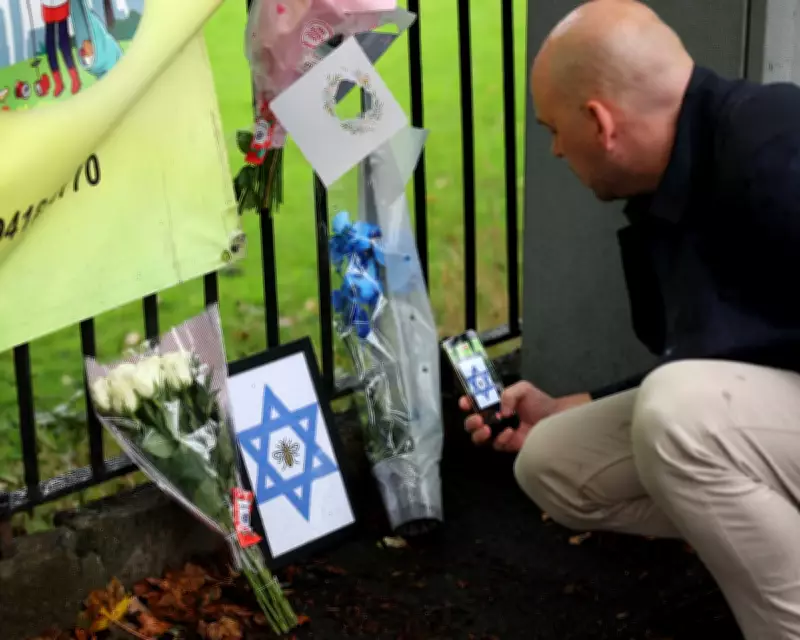
Flowers and tributes were left at the scene of a terror attack at a synagogue in Manchester last October, a poignant reminder of the escalating threats facing Jewish communities across Britain. This visual symbolises the growing fear and violence that has become a distressing reality for many Jews in the 21st-century United Kingdom.
Antisemitism on the Rise in Modern Britain
In a timely article, Jonathan Freedland addressed the dangers confronting Jews in the diaspora, noting that antisemitism, often described as a light sleeper, is stirring once more. This modern wave of hatred draws from multiple sources, including the far right, the extreme left with its obsessive focus on Israel, and Islamist-inspired animosity. Like a pernicious virus, it has infected numerous public-facing institutions, creating an environment of insecurity.
Stark Statistics Highlight the Crisis
The scale of the problem is starkly illustrated by the Community Security Trust's latest Antisemitic Incidents Report, which recorded 3,700 antisemitic incidents across the UK in 2025. This marks the second-highest annual total ever recorded, surpassed only by 2023. Jewish schools now operate behind heavy security measures, a situation that many describe as nothing short of a disgrace in contemporary Britain.

Zaki Cooper from London emphasised that the government and police must continue to act decisively against this tide of hatred. He called for the overwhelming majority of the British public to extend a hand of solidarity to the Jewish community, sending a clear message to zealots and bigots that antisemitism is not only an attack on Jews but an assault on Britain and its shared values.
Personal Accounts of Fear and Sadness
Susan Saffer, also from London, responded to the attacks on the Jewish charity Hatzola, where four community ambulances were burned. She expressed the distress and alarm felt by many in the Jewish community, noting that violent acts under the guise of anti-Israel aggression have become increasingly common. At 74 years old, having lived openly as a Jew all her life in the UK, she now understands the unease that previous generations experienced, a sentiment she never anticipated.
Susan highlighted the absurdity of holding Jews culpable for the actions of the Israeli government, which many in her community abhor. She described this as a thinly veiled disguise for antisemitism, lamenting that she now hesitates to admit her Jewish identity outside familiar circles, a stark departure from her lifelong pride.
Debating the Connection to International Events
John Reizenstein from London criticised David Davidi-Brown for linking the arson attack on Hatzola ambulances in Golders Green to attacks by settlers on Palestinians in the West Bank. John argued that these are separate events, each deplorable in its own right, and that violence against Jews in the UK cannot be justified by actions in the Middle East. He asserted that the harmfulness of the attack in Golders Green is evil in the absolute, independent of other conflicts.
Gratitude Amidst the Hostility
Liz Fewings, a non-Jewish resident living in a Hassidic Jewish area of London, shared a personal story of gratitude. When her husband suffered a cerebral aneurysm, a Hatzola team arrived within minutes to provide resuscitation until NHS teams could take over. She learned that in emergencies in her area, Hatzola is often contacted due to their proximity and rapid response. Liz expressed eternal gratitude for their efforts and disgust at the recent attack on their ambulances, underscoring the vital role these community services play.
The collective voices in these letters paint a troubling picture of a community under siege, calling for urgent action and broader societal support to combat the rising tide of antisemitism in Britain.