British Jews Confront Deepening Loneliness as Antisemitic Attacks Escalate in London
News of another antisemitic attack in London has sent shockwaves through Britain's Jewish community, prompting renewed fears and a profound sense of isolation that can no longer be ignored. Darren Richman reflects on this troubling trend, expressing that he cannot recall a time in his life when being a British Jew has felt this lonely.
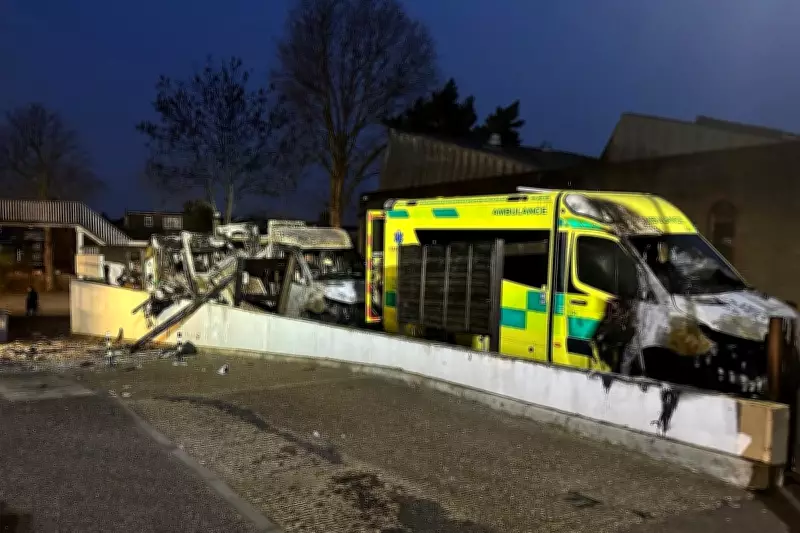
This morning, I was jolted awake by reports of an antisemitic arson attack targeting ambulances belonging to the Jewish community service in Golders Green. A familiar numbness washed over me—a feeling I have come to recognise all too well.
Personal Encounters with Antisemitism Over the Years
I first felt this numbness during my university days, when chants of "One man went to gas, went to gas – a Yiddo" echoed during a Tottenham football match screened in my halls. Years later, in Camden Town Tube station, a group of men sang about Auschwitz while police nearby declined to intervene, as they were assisting a tourist with directions.

More recently, at a small social gathering, someone told a joke with Jews as the punchline. I had long assumed such jokes were confined to rooms without Jewish people present, so it was a shock to discover otherwise.
The Sudden Escalation of Antisemitism in Britain
How did we reach this point? Ernest Hemingway once described bankruptcy as happening "gradually, then suddenly". This analogy now feels eerily accurate for the rise of antisemitism in Britain. Many Jews report never feeling more isolated in this country than they do today, and this sentiment comes from individuals like myself, who do not regularly wear a yarmulke or attend synagogue.
The pattern is distressingly familiar. Following the Yom Kippur attack on a Manchester synagogue last year, conspiracy theories spread rapidly. They are resurfacing now in the wake of the Golders Green incident. Some allege this is a false-flag operation orchestrated by the Israeli government, while others suggest it is insurance fraud by "sneaky Jews", citing the age of the ambulances.
Notably, none of these conspiracy theorists have consulted history books to understand that hatred of Jews predates 2023 or even 1948. In reality, antisemitism has existed for as long as Jewish people have.
Misunderstandings About Jewish Community Services
Another troubling question arises: why do Jews have their own ambulances? This is often asked with suspicion rather than curiosity. The answer is straightforward. Hatzola, the volunteer-run organisation, does not exclusively serve the Jewish community; it assists all Londoners, saving countless lives and alleviating pressure on the NHS.
However, its Jewish identity alone is enough for some to rationalise violence against it. Hatzola, which translates to "rescue" or "relief", embodies the very support our community desperately craves in 2026. Yet, the sense of allyship feels increasingly one-sided.
Justifications and the Impact on a Minority Community
There are also individuals who reject conspiracy theories but still justify attacks as responses to the actions of a foreign state. Jews constitute just 0.4 per cent of the UK population—a number small enough to fit into three Wembley Stadiums. In moments like these, it can seem as though some would prefer that number to diminish further.
What do such attacks accomplish? If someone like me—a lapsed Jew with no strong ties to Israel—feels compelled to speak out, then these senseless acts are not acts of resistance. They are acts of intimidation.
The masked perpetrators may view themselves as revolutionary warriors, but in truth, they are cowardly thugs targeting a minority group they believe deserves such treatment.
A Personal Reflection on Legacy and Hope
My grandfather survived Auschwitz and settled in Britain after the war, never forgetting the British soldiers who saved his life. He considered himself more English than the English, having chosen this country as his home. He passed away on his 93rd birthday in January 2023, after a lifetime of warning against the dangers of prejudice.

He would have remained steadfast in his commitment to eschewing hatred, even on a day like today. While I was inconsolable when he died, I now believe his timing was impeccable. Only a few years have passed, and a once-inconceivable thought occurs: I am grateful he did not live to witness his beloved country in this state.
We must find a way to move forward as a society, because division ultimately benefits no one. The growing isolation felt by British Jews underscores an urgent need for unity and understanding in the face of rising antisemitism.