Hatzola Ambulances Targeted in Overnight Arson Attack in Golders Green
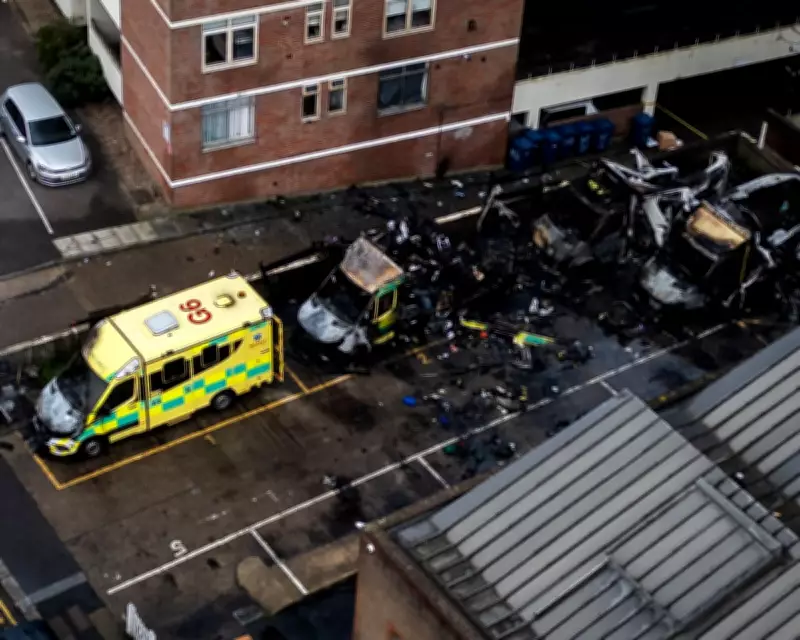
In the early hours of 23 March 2026, four Hatzola ambulances were attacked by arsonists in Golders Green, north London, leaving Jewish communities in shock. Despite the incident, volunteer paramedics continued to respond to emergency callouts, underscoring their commitment to serving the entire community.
Volunteer Paramedics: A Lifeline for All Residents
Yossi Richman, a governance lead at Hatzola in Golders Green, described the dedicated volunteers who make up the service. "Accountants, plumbers, surveyors – whatever it might be, they’ve all got day jobs. Everyone has kits in their car and responds from wherever they are," he said. Richman highlighted that Hatzola, funded by Jewish philanthropy, operates without cost to users and responds even on the sabbath.
Andrew Walters, an Orthodox Jewish councillor in Greater Manchester, where another busy Hatzola service operates, emphasized its inclusive nature. "It’s not just a Jewish service. If a call comes from within the area, they will come to your aid, whoever you are," he stated.

History and Expansion of Hatzola Services
Hatzola ambulances originated in New York during the 1960s, emerging from the United States' private healthcare culture. The concept arrived in north London in the late 1970s following deaths of Jewish individuals waiting for ambulances. In the UK, private ambulances like Hatzola are regulated by the Care Quality Commission.
Services now extend beyond London and Manchester to areas including Canvey Island in Essex, Hertfordshire, and Gateshead in north-east England, which are key centres of Orthodox Jewish life in the UK.
Emergency Response and Community Impact
Hatzola teams serve tight radii, such as 4.5km in Golders Green, ensuring quick response times. Dispatchers are also volunteers, handling calls from home. Walters noted that these charity services, operating 24/7, help ease pressure on NHS ambulance services and are welcomed as autonomous regional charities.
Rabbi Levi Schapiro of the Jewish Community Council in Stamford Hill, London, explained the community's charitable ethos. "Our community is based on charity – and one of the most fundamental parts is Hatzola, which means 'rescue' in Hebrew," he said. He criticized social media misconceptions, stressing that the service saves lives indiscriminately.
Community Reactions and Concerns Over Antisemitism
The arson attack has heightened fears amid rising antisemitism, linked by some to the Middle East conflict. Schapiro reported community members asking about safety and long-term plans, while Walters acknowledged nerves but expressed confidence in resilience. "I think it will be exploited by the fearmongers, but our resilience will pull us through," he added.
Richman shared a poignant example of Hatzola's work, recalling a nine-year-old non-Jewish child in cardiac arrest who was saved due to their quick response. The service handles about 20 calls daily, using a fleet that includes blue-lighted ambulances, fast response cars, and volunteers' personal vehicles.
Moving Forward with Determination
Despite the attack, Hatzola volunteers remain steadfast. Richman noted that they responded to calls even as their ambulances burned. "Today, it’s business as usual. It gives us an ability to be grateful for everything we have," he said, viewing the opportunity to help others as a privilege.
The incident underscores the vital role of community-based emergency services and the ongoing challenges posed by antisemitism in the UK.