Jalisco Cartel Leader El Mencho Laid to Rest in Golden Casket
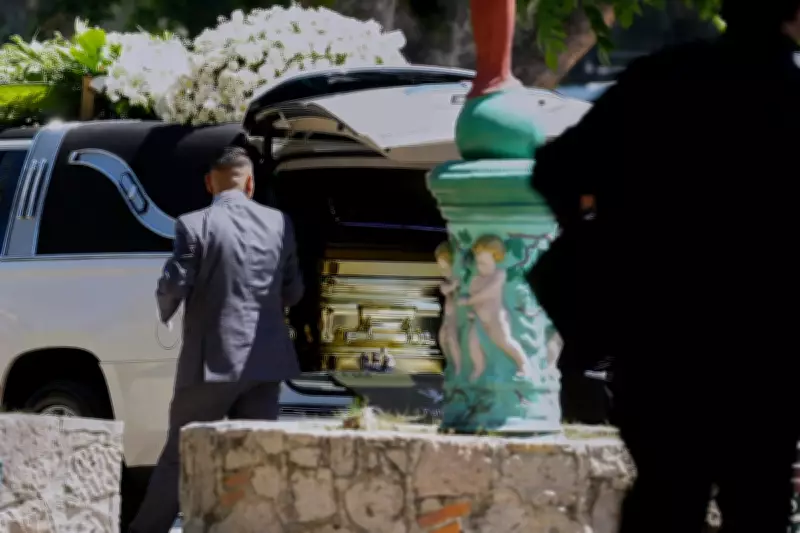
The leader of the Jalisco New Generation Cartel, Nemesio Oseguera Cervantes, widely known by his alias "El Mencho", has been buried in a shiny golden casket in the Mexican state that gave its name to one of the country's most powerful criminal organisations. The funeral took place on Monday in Zapopan, a suburb of Guadalajara, Mexico's second-largest city, as confirmed by a federal official.
Military Presence and Funeral Procession
The burial was conducted under a significant military presence, reflecting the security concerns surrounding the event. Dozens of mourners accompanied the funeral procession, many carrying black umbrellas despite the sunny weather, while a band played traditional Mexican regional music known as banda. The Attorney General’s Office had previously declined to confirm the burial location, citing "security reasons".
Security had been heightened around a funeral home since Sunday, where large, anonymous flower wreaths had been arriving. Some of these wreaths featured the image of a rooster in flowers, a nod to Oseguera Cervantes' nickname, the "Lord of the Roosters".

Death and Aftermath of the Cartel Leader
El Mencho was killed just over a week ago by the Mexican army during an operation to capture him. According to a death certificate obtained by The Associated Press, he died from multiple bullet wounds to his chest, abdomen, and legs. Defense Secretary Ricardo Trevilla described the operation, stating that Oseguera Cervantes and two bodyguards were badly wounded in a gunfight with soldiers outside a home in Tapalpa, Jalisco, and died en route to a hospital.
His death triggered widespread violence in approximately 20 states, resulting in more than 70 fatalities between the military operation and the subsequent retaliation by the cartel. The government has indicated that security operations against other high-ranking members of the Jalisco New Generation Cartel are ongoing.
Forensic Procedures and Security Concerns
Following his death, El Mencho's body was transported to Mexico City for an autopsy before being released to his family on Saturday. The death certificate noted that burial was arranged, which is standard practice in cases of violent deaths to allow for additional forensic evidence collection if needed in the future. The document did not specify the burial location, underscoring the authorities' well-founded security concerns.
Authorities fear that disclosing such details could incite further violence or attempts to glorify the cartel leader, as seen in the past with other drug lords.
Historical Context of Drug Lord Burials in Mexico
It is customary for an air of mystery to surround the burials of drug lords in Mexico, a tactic often exploited by their supporters to elevate them to legendary status. Within hours of El Mencho's death, ballads known as narcocorridos were already being written about his killing.
This phenomenon is not new. In Culiacan, Sinaloa state, there is a cemetery renowned for its luxury crypts and mausoleums for former kingpins, such as Ignacio Coronel—an old associate of El Mencho—and Arturo Beltrán Leyva. Other notable cases include:
- Nazario Moreno, leader of the Knights Templar cartel, who was reportedly killed in 2010 only to be killed again in 2014.
- Heriberto Lazcano, leader of the Zetas, whose body was stolen in 2012.
- Amado Carrillo Fuentes, known as the "Lord of the Skies", who died during botched plastic surgery.
These instances highlight the bizarre and often secretive nature of drug lord burials in Mexico, contributing to their mythologisation within criminal circles and popular culture.