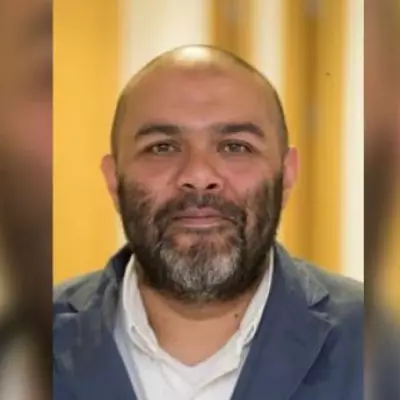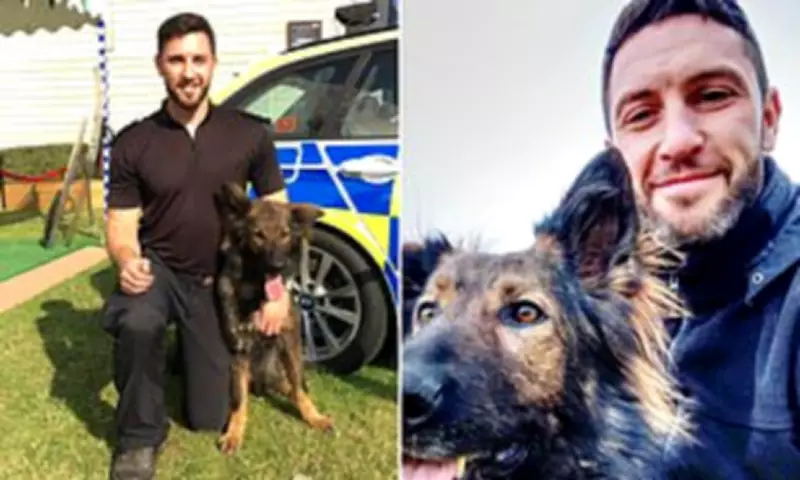
Ryan Llewellyn, a 41-year-old former police dog handler who was banned for life after his own force caught him attempting to import magic mushrooms from the Netherlands, has insisted he holds 'no bitterness' towards his colleagues.
Llewellyn made an online order for psilocybin early in 2024, later claiming he thought he had purchased mushroom truffles. The package was intercepted by a customs officer on February 15, 2024, and was found to contain the Class A hallucinogenic drug.
South Wales Police were informed, and an officer recognised Llewellyn's name as a colleague, triggering an undercover sting operation. A 'dummy parcel' was created and delivered to his address in Glynneath, South Wales, by a police sergeant posing as a delivery driver. After Llewellyn accepted the parcel, further officers arrived and arrested him. His mobile phone was also seized.

Analysis of his device revealed he had made a Google search on whether it was illegal to buy magic mushrooms brought into the UK. Llewellyn, a dog handler and police officer of 17 years, was convicted of being concerned in the fraudulent evasion of a prohibition on the importation of a Class A drug.
Disciplinary Outcome
A disciplinary hearing ruled that the PC should be barred from the police after his career ended in what were described as 'reprehensible' circumstances. Speaking out for the first time since the ruling, Llewellyn said he is 'disappointed' by the outcome.
The dog handler added that he had been experiencing a 'significant mental health crisis and was undergoing private psychiatric therapy' at the time of the offence, for which he says he did not receive adequate support. He said: 'I do not seek to use this as an excuse, but it is important context surrounding the circumstances.'
Llewellyn added: 'I continue to maintain my innocence and maintain that the product in question was not advertised or presented to me as containing illegal substances. I served as a police officer for 17 years, including in specialist dog handling roles, and throughout my career I worked hard to carry out my duties professionally and to the highest standards. I remain proud of that service and of the many colleagues I worked alongside.'
He also expressed concerns about the investigation approach but 'recognises the legal process has now concluded'. Prior to the incident, he had 'raised a number of professional concerns internally relating to matters within the dog section and wider governance issues' with South Wales Police.
Llewellyn said: 'I was particularly disappointed by comments made by the Chief Constable which may give the impression that this conviction reflects my character or suggests a history of drug misuse. I repeatedly offered to provide bodily samples to demonstrate that I had not used illegal substances, but this did not take place. This conviction does not reflect the person I believe myself to be, nor the standards I sought to uphold throughout my service. Despite the circumstances of my departure, I hold no bitterness towards former colleagues or the organisation, and I sincerely wish those still serving the very best.'
Chief Constable's Response
Llewellyn resigned from South Wales Police shortly before the force held a gross misconduct hearing to decide his fate. Chief Constable Jeremy Vaughan said he would have been sacked had he not already quit. In his resignation letter, Llewellyn wrote that he wished to 'state, for the record, that [he] maintains his innocence in this matter'.
Mr Vaughan described his actions as 'premeditated', adding: 'Former PC Llewellyn's behaviour is reprehensible and totally unacceptable. His behaviour continued after he realised, or should have realised, that it was improper. Former PC Llewellyn has not put forward any personal mitigation. He has not even apologised for his actions and there is a complete lack of remorse.'

He further stated: 'Class A drugs form part of a criminal industry that preys on vulnerable people and provokes the most serious form of violence. Organised criminals need customers to operate effectively. You could not be a user of a Class A drug and disassociate yourself with the terrible levels of harm and violence that surround organised criminality. Former PC Llewellyn knew or ought to have known this. This seriously aggravates his misconduct. He has lined the pockets of those who torment our communities.'
Court Proceedings
Newport Crown Court heard that the order was for 24.2g of psilocybin in 18 plastic capsules. In her sentencing remarks, Judge Celia Hughes said she accepted that Llewellyn had severe mental health issues and that he had thought about microdosing hallucinogens to alleviate his symptoms. Judge Hughes said: 'You of all people should have known or been wise enough to realise, when the opportunity presented itself, microdosing hallucinogenic drugs is illegal and would have disastrous effects on your life.'
Llewellyn was sentenced to a 12-month community order and was ordered to carry out 100 hours of unpaid work.